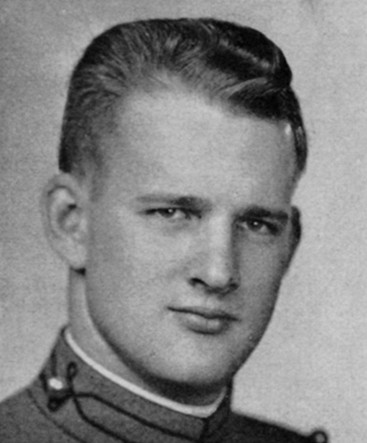
Pace, Ray L.
The President of the United States of America takes pleasure in presenting the Silver Star to Corporal
Ray L. Pace (MCSN: 1100364), United States Marine Corps, for conspicuous gallantry and intrepidity while
serving as a Squad Leader of Company C, First Battalion, Fifth Marines, First Marine Division
(Reinforced), in action against enemy aggressor forces in Korea, on 11 June 1951. Although painfully
wounded when subjected to intense hostile mortar and artillery fire while leading his squad in a mission
to support a tank advance, Corporal Pace steadfastly refused to be evacuated and, undeterred by his
wounds, courageously moved from man to man to skillfully maneuver his unit into covered positions and to
direct their effective fire against the enemy. By his undaunted courage, daring combat tactics and
unwavering devotion to duty, Corporal Pace served to inspire all who observed him and upheld the highest
traditions of the United States Naval Service. Born: Waco, Texas. Home Town: Bellaire, Texas.
Paden, Jerome Jay (posthumous)
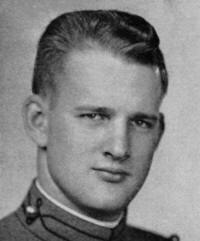
Jerome Jay Paden
(Click picture for a larger view) |
First Lieutenant Jerome Jay Paden (then Second Lieutenant),
059363, Arty, U.S. Army, a member of Battery A, 61st Field
Artillery Battalion, 1st Cavalry Division for gallantly in
action against the enemy on 19 September 1950, near Waegwan,
Korea. Lieutenant Paden was in charge of a forward observation
party providing close artillery support to an infantry battalion
engaged in an attack on a heavily fortified enemy hill position.
After skillfully adjusting artillery fire which enabled the
infantry units to eliminate strong points, Lieutenant Paden
voluntarily accompanied a platoon in the final assault, at great
risk to his own life. He repeatedly exposed himself to heavy
enemy artillery, mortar, and small arms fire in order to afford
friendly units maximum fire support. Lieutenant Paden continued
to successfully adjust fire which made possible the success of
the assigned mission, until he was seriously wounded. Lieutenant
Paden's gallantry and devotion to duty reflect great credit upon
himself and on the military service. Entered military
service from California.
[KWE Note: Jerry was born on December 17, 1926 in Los Angeles, California, where he
attended grade and high schools and Pomona College before entering
the United States Military Academy at West Point in 1945. He
was commissioned a Second Lieutenant upon graduation in 1949, and
spent the following year in basic and branch schools in the United
States. He was married to Miss Elaine Harper in Waverly, New
York, on 8 July 1950. Following a short honeymoon in Canada
and California he was flown to Korea, where he was immediately
placed on front line duty in early August. He died of wounds
September 20, 1950 in Japan. His body was returned to West
Point where he went to rest with full military honors not twenty
paces from the old Cadet Chapel. He was survived by his wife
and parents.]
Padula, Peter A.
The President of the United States of America takes pleasure in presenting the Silver Star to Technical
Sergeant Peter A. Padula (MCSN: 344519), United States Marine Corps, for conspicuous gallantry and
intrepidity while serving as a Platoon Sergeant of Company C, First Battalion, First Marines, First Marine
Division (Reinforced), in action against enemy aggressor forces in Korea on the night of 15 August 1952.
When the platoon leader became a casualty during intensive action on a combat outpost forward of the main
line of resistance, Technical Sergeant Padula unhesitatingly assumed command of the unit at a very crucial
time during the assault phase and, constantly moving among his men, succeeded in maintaining a closely
knit, highly effective fighting team. During the devastating enemy mortar, artillery and small arms
bombardment, he bravely rallied his men for the final assault that gained complete control of the
position. By his outstanding courage, aggressive fighting spirit and steadfast devotion to duty, Technical
Sergeant Padula contributed materially to the success of the platoon's mission and served to inspire all
who observed him, thereby upholding the highest traditions of the United States Naval Service. Born:
Rollings Ford, New Hampshire. Home Town: Tauton, Massachusetts.
Padwa, Maurice Anthony (posthumous)
The President of the United States of America takes pleasure in presenting the Silver Star to Staff
Sergeant Maurice Anthony Padwa (MCSN: 1071406), United States Marine Corps, for conspicuous gallantry and
intrepidity while serving as Noncommissioned Officer in Charge of Division Camouflage attached to
Headquarters Company, First Engineer Battalion, First Marine Division (Reinforced), in action against
enemy aggressor forces in Korea on 13 March 1953. When the area came under a devastating hostile artillery
barrage while he was supervising the assembly of camouflage materials to screen a supply road leading to a
front-line position, Staff Sergeant Padwa immediately ordered his men to the safety of a nearby bunker.
Observing a wounded comrade lying on the road under direct observation of the enemy, he courageously led a
Corpsman through the continuous hostile artillery fire to the side of the stricken Marine and assisted in
administering first aid to the casualty. Mortally wounded while engaged in this heroic action, Staff
Sergeant Padwa, by his aggressiveness, courageous initiative and selfless efforts in behalf of another,
served to inspire all who observed him and upheld the highest traditions of the United States Naval
Service. He gallantly gave his life for his country. Born: July 9, 1931 at North Tonawanda, New York. Home
Town: North Tonawanda, New York. Death: KIA: March 13, 1953.
Pagan, Benjamin
Headquarters, 3d Infantry Division
General Orders No. 16 - 24 January 1951
First Lieutenant Benjamin Pagan, 0959120, Infantry, Company "C", 65th Infantry, 3d Infantry Division,
United States Army. On 28 November 1950, in the vicinity of Chomdang-dong,
Korea, while on patrol, Lieutenant Pagan displayed gallantry in
action. As the patrol was moving, it was fired upon by enemy
forces entrenched on a high ridge. Lieutenant Pagan immediately deployed his platoon in an effort to drive
the enemy from the ridge. After an intense fire fight in which he displayed personal bravery and
leadership he was ordered to cover the withdrawal of the company. The company successfully withdrew, but
upon reaching the assembly area Lieutenant PAGAN discovered that he had two men missing. With utter
disregard for his personal safety, he returned alone to the ridge under enemy fire, located the two men,
and brought them back to the comparative safety of the platoon. Lieutenant Pagan's intrepid leadership and
concern for the men in his command reflect great credit upon himself and the military service. Entered the
military service from the State of New York.
Pagan, Pedro
Headquarters, 3d Infantry Division
General Orders No. 74 - 23 March 1951
Corporal Pedro Pagan, RA30404806, Infantry, Company "B", 65th Infantry, 3d Infantry Division, United
States Army. On 31 January 1951, near Suwon, Korea, Company "B" 65th Infantry had the mission to move and
take Hill 449 in the vicinity of Suwon, Korea. Stiff resistance was encountered and the company was halted
by an undiscovered enemy machine gun. Corporal Pagan immediately volunteered to locate and destroy the
enemy machine gun position. With complete disregard for his personal safety, Corporal Pagan, exposing
himself to heavy enemy fire, moved aggressively toward the enemy positions throwing grenades. He
reached the enemy position, destroyed the machine gun and killed all the enemy who were manning it. The
result of Corporal Pagan's actions enabled the company to advance and complete its mission. Corporal
Pagan's courage, aggressiveness, and heroism reflect great credit upon himself and is in keeping with the
highest traditions of the military service. Entered the military service from Puerto Rico.
Pagani, Federico Jr.
Headquarters, 3d Infantry Division
General Orders No. 17 - 24 January 1951
Master Sergeant Federico Pagani, RA6674617, Infantry, Headquarters and Headquarters Company, 65th
Infantry, 3d Infantry Division, United States Army. On 27 November 1950, near Kowan, Korea, Sergeant
Pagani was in charge of a section of his platoon when it had established contact with a numerically
superior enemy force. The platoon was receiving heavy automatic fire on its front and flanks from the
enemy. With complete disregard for his personal safety, Sergeant Pagani stood erect in the face of intense
enemy fire directing the movement of and issuing orders to his section as they made an enveloping movement
against an enemy-occupied village. Later he personally led his section in an assault across a river, which
was swept by enemy fire, in aiding his platoon secure a hill on the opposite side. Throughout both
maneuvers Sergeant Pagani was at the lead of his section. Sergeant Pagani's outstanding leadership and
gallantry were not only inspirational but were successful in the seizure of the village and the hill. His
actions reflect great credit upon himself and the military service. Entered the military service from
Puerto Rico.
Page, Jack L.
The President of the United States of America takes pleasure in presenting the Silver Star to Private
Jack L. Page, United States Marine Corps, for conspicuous gallantry and intrepidity in action while
serving as Machine Gunner, Company F, Second Battalion, Seventh Marines, First Marine Division
(Reinforced), in action against enemy aggressor forces in Korea from 26 November to 2 December 1950. The
company was tasked with securing the Toktong Pass and providing security along the road between Hagaru-ri
and Yudam-ni. Over the course of five days and six nights of better cold sub-zero weather, Private First
Class Page displayed outstanding courage and initiative in the performance of his duties. On the night of
26 November, the company was repeatedly attacked by Chinese Army soldiers in regimental strength. The
location of the machine gun section and the fires and guns delivered made it a natural objective for the
enemy to attack. Exposing himself without regard to his own personal safety, he was instrumental in
repelling the close-in assaults by the enemy. On more than one occasion, while repairing his
malfunctioning machine gun, he repulsed the enemy with his .45 caliber pistol as they tried to overrun his
position. Later, as the Marines were advancing back through the Toktong Pass to the coast, his machine gun
was placed to help defend the company's southern flank and the road from Hagaru-ri. During the early
morning hours, enemy soldiers attacked down the road towards Private First Class Page's position. He used
his machine gun with telling effect, killing nearly 100 enemy soldiers and stemming the attack. By his
extraordinary heroism in the face of extreme danger, Private First Class Page reflected great credit upon
himself and upheld the highest traditions of the Marine Corps and of the United States Naval Service.
Paige, Billy J. (MIA) (posthumous)
The President of the United States of America, authorized by Act of Congress July 9, 1918, takes pride
in presenting the Silver Star (Army Award) (Posthumously) to Corporal [then Private First Class] Billy J.
Paige (MCSN: 1082927), United States Marine Corps, for conspicuous gallantry and intrepidity in action as
a member of Reconnaissance Company, Headquarters Battalion, 1st Provisional Marine Brigade, First Marine
Division (Reinforced), in action against enemy aggressor forces near Kosong, Korea, on 10 August 1950.
When an estimated enemy company ambushed his platoon, Corporal Paige, with complete disregard for his
personal safety, attacked and destroyed two heavily supported enemy machine gun emplacements. His daring
actions completely demoralized the enemy troops and enabled his platoon to rout them from the area. The
outstanding courage and intrepidity displayed by Corporal Paige were in keeping with the highest
traditions of the United States Naval Service. Headquarters, VIII U.S. Army, Korea (EUSAK), General Orders
No. 473 (June 29, 1951). Born: August 28, 1931. Home Town: Breckenridge, Michigan. Death: MIA: December
10, 1950.
Palatas, Michael V.
The President of the United States of America takes pleasure in presenting the Silver Star to First
Lieutenant Michael V. Palatas (MCSN: 0-43532), United States Marine Corps, for conspicuous gallantry and
intrepidity as a Platoon Commander of Company B, First Battalion, Fifth Marines, First Marine Division
(Reinforced), in action against enemy aggressor forces in Korea from 28 to 30 November 1950. With his
company ordered to relieve a friendly company occupying a high ridge overlooking Yudam-ni during the late
afternoon of 28 November, First Lieutenant Palatas moved forward with his units in an effort to seize
several key terrain features leading to the objective area and heavily defended by a numerically superior
enemy. Voluntarily accompanying the assault platoons to the ridge crest, he located and established an
observation post under intense small arms, automatic weapons and mortar fire laid down by the enemy at
close range. Remaining in his exposed position, he coordinated and directed the fire of his men and,
throughout the subsequent three-day defense of the ridge, consistently braved the enemy's fire to direct
his machine gun sections and assist the company commander in coordination and control of the company's
defensive sector. Boldly leaving his observation post during a concerted attack on several well-fortified
hostile pillboxes, First Lieutenant Palatas expertly directed covering fire for the assault platoons,
aided in the evacuation of casualties and, when the enemy suddenly counterattacked in force, brought
accurate fire to bear to inflict heavy losses on the aggressors and assist in repulsing the onslaught. His
aggressive and determined leadership, daring tactics and heroic actions were contributing factors in the
success achieved by his company and reflect the highest credit upon First Lieutenant Palatas and the
United States Naval Service. Born: Clairton, Pennsylvania. Home Town: Struthers, Ohio.
Palmer, Asa
The President of the United States of America takes pleasure in presenting the Silver Star to
Hospitalman Asa Palmer (NSN: 7197584), United States Navy, for conspicuous gallantry and intrepidity in
action against the enemy while serving with a Marine Infantry Company of the First Marine Division
(Reinforced), in action against enemy aggressor forces in Korea on 28 May 1952. Hospitalman Palmer,
serving as a Corpsman, displayed exceptional courage and professional skill in the performance of his
duties. After taking an enemy hill, the unit set in defensive positions. Almost immediately, enemy
mortars, artillery and small arms fire began to cause many friendly casualties including several other
Corpsmen. Realizing the need of his services, not only in his own platoon sector but throughout the
company area, Hospitalman Palmer ran through intense enemy fire, from platoon to platoon, administering to
the wounded and directing their evacuation. When told of a seriously wounded Marine from another platoon
who was lying in the middle of a mine field, he unhesitatingly went after the man, dressed his wounds,
found a stretcher, and directed another Marine through the field so that they could carry the wounded man
to the evacuation station. He remained on the hill until the last elements had withdrawn in order to care
for all wounded. Through his devotion to duty the lives of his wounded comrades were saved. Hospitalman
Palmer's courageous actions were an inspiration to all who observed him and were in keeping with the
highest traditions of the United States Naval Service. Commanding General, 1st Marine Division
(Reinforced) FMF: Serial 24300 (August 19, 1952).
Palmer, Myron A.
Headquarters, 3rd Infantry Division
General Orders No. 203 - 04 June 1952
The President of the United States of America, authorized by
Act of Congress July 9, 1918, takes pleasure in presenting the
Silver Star to Private First Class Myron A. Palmer (ASN:
RA-12356515), United States Army, for gallantry in action as a
member of Company I, 3d Battalion, 15th Infantry Regiment, 3d
Infantry Division, in action against the enemy in Korea. On 27
March 1952, Company I was assigned the mission of assaulting an
enemy-held hill near Maktae-dong, Korea. Having engaged the
enemy in a fierce fire fight in which the squad leader and
assistant squad leader were wounded, the assault group became
disorganized and started to withdraw. Realizing the necessity of
employing the fire power of the squad, Private Palmer, with
complete disregard for his personal safety, moved from his
position of cover and defied the hail of fire being directed at
him to reach a point in front of the men. From this point, he
encouraged them to remain in their positions and continue firing
on the hostile fortifications. Inspired by their new and
fearless leader, the group commenced their advance, laying a
devastating hail of fire on the enemy positions. Seeing one man
wounded and lying exposed to the intense enemy fire, Private
Palmer again braved the lethal hail, went to the side of his
wounded comrade and brought him back to a place of comparative
safety. Upon assurance that the wounded man had received medical
attention, he courageously returned to his hazardous positions
in front of the men and led them to a successful completion of
their mission. The heroic action displayed by Private Palmer
reflects great credit upon himself and the military service.
Panetta, Anthony F. (posthumous)
Headquarters, 2d Infantry Division
General Orders No. 830
Private First Class Anthony F. Panetta, US51064973, Infantry, Army of the United States, a member of
Company C, 9th Infantry Regiment, 2d Infantry Division, distinguished himself by gallantry in action on 31
August 1951 in the vicinity of Yanggu, Korea. On this date, Company C was attacking vital enemy-held
positions. As Private Panetta, point man for the assault
platoon, progressed up the hill, he heard troops digging in on
the forward slope. Due to a heavy fog, visibility was
poor, but being told that he might contact friendly troops,
Private Panetta halted his platoon and crawled forward to make a
reconnaissance. As he advanced, the enemy commenced firing
upon him with small arms and grenades. Although wounded by
the hostile fire, Private Panetta assaulted the enemy positions,
firing his weapon with deadly accuracy. After accounting
for several enemy casualties, he was mortally wounded by the
hostile fire. His dauntless courage and outstanding
devotion to duty inspired his comrades to rout the enemy and
secure their objective. The gallantry in action displayed
by Private Panetta reflects
great credit upon himself and the military service. Entered the military service from New York.
Panke, Robert E.
General Orders No. 270 - 31 May 1953
Lieutenant Colonel Robert E. Panke, 023831, Artillery, United States Army, a member of Headquarters,
57th Field Artillery Battalion, distinguished himself by gallantry in action near Sokkogae, Korea.
On 21 March 1953, friendly artillery bunkers had been damaged and the hill on which Colonel Panke's
battalion was located was receiving heavy enemy artillery fire. Realizing the importance of first
hand knowledge of the situation, Colonel Panke exposed himself to the enemy fire in order to make a
physical reconnaissance of the artillery observation posts. At one of the outposts, Colonel
Panke
aided the observer to call in effective fire on the enemy. On his way to another outpost, Colonel
Panke ignored the incoming shells in the trench area and made a full appraisal of the damage to the
bunkers before returning to a position of comparative safety. Colonel Panke's consistent disregard
for existing danger, outstanding contribution to the tactical situation, and evident eagerness for a
complete analysis of the existing situation were an inspiration to all the officers and men who witnessed
his actions. The gallantry displayed by Colonel Panke reflects great credit to himself and is in
keeping with the highest traditions of the military service. Entered the Federal service from
Wisconsin.
Paolino, Psquale
The President of the United States of America takes pleasure in presenting the Silver Star to Technical
Sergeant Pasquale Paolino (MCSN: 271412), United States Marine Corps, for conspicuous gallantry and
intrepidity while serving as a Platoon Sergeant of Company C, First Engineer Battalion, First Marine
Division (Reinforced), in action against enemy aggressor forces in Korea on 24 September 1950. With his
unit assigned the hazardous task of leading a company of tanks through a heavily mined area and subjected
to an assault by approximately 250 enemy soldiers, Technical Sergeant Paolino immediately assumed command
of the platoon when his leader was severely wounded and skillfully deployed his men to meet the attack,
directing their fire and shouting words of encouragement. Running from one tank to another and using the
infantry phones, he brought effective tank fire to bear on strategic hostile targets and, as the action
continued, led a squad of men in clearing numerous enemy-held houses, killing several of the enemy and
routing the remainder. By his marked courage, brilliant leadership and unswerving devotion to duty,
Technical Sergeant Paolino contributed materially to the success of his company's assigned mission and
upheld the highest traditions of the United States Naval Service. Born: Worcester, Massachusetts. Home
Town: Worcester, Massachusetts.
Pappas, Sam W. (posthumous)
Headquarters, 2nd Infantry Division
General Orders No. 35 - February 9, 1951 The President of the United States of America, authorized by
Act of Congress July 9, 1918, takes pride in presenting the Silver Star (Posthumously) to Private First
Class Sam W. Pappas (ASN; RA-27043660), United States Army, for gallantry in action as a member of Company
G, 23d Infantry Regiment, 2d Infantry Division, in action against an armed enemy on 12 September 1950, in
the vicinity of Changyong, Korea. On that date his company was engaged in probing enemy lines and defending
the right flank of the regiment. Private Pappas, who was a cook, voluntarily left his safe position in the
rear and went forward as a rifleman to aid his greatly outnumbered and thinly deployed company. He joined
his comrades in an assault against the well-entrenched enemy and during the advance he single-handedly
charged and destroyed a fortified enemy position with hand grenades. While engaged at close quarters with
the enemy, he was killed by hostile fire. The gallantry and inspirational devotion to duty displayed by
Private Pappas reflect great credit upon himself and are in keeping with the high traditions of the military
service.
Pappenheimer, Ernest G.
The President of the United States of America, authorized by Act of Congress July 9, 1918, takes
pleasure in presenting the Silver Star (Army Award) to Staff Sergeant Ernest G. Pappenheimer (MCSN:
572608), United States Marine Corps, for conspicuous gallantry and intrepidity in action against the enemy
while serving with a Marine Infantry Company in Korea on 6 November 1950. Staff Sergeant Pappenheimer,
serving as a Rifle Platoon Leader in Company I, Third Battalion, Seventh Marines, First Marine Division
(Reinforced), was leading his platoon in the vicinity of Sumgori, Korea. The enemy organized a strong
counterattack on the left flank of the platoon which seriously threatened the entire mission of the
company. Staff Sergeant Pappenheimer, realizing the seriousness of the counterattack, skillfully directed
automatic riflemen to fire on the enemy to his front and with complete disregard for his own personal
safety he fearlessly led the remainder of the platoon in a bayonet assault against the counterattacking
enemy. By his courageous action twenty-one of the enemy were killed and the remainder routed. His skillful
and courageous leadership contributed materially to the successful accomplishment of the mission assigned
this company. Staff Sergeant Pappenheimer's heroic actions were in keeping with the highest traditions of
the United States Naval Service. Headquarters, X Corps, General Orders No. 49 (December 2, 1950). Entered
Service From Michigan.
Pardy, Armand W.
Headquarters 3d Infantry Division
General Orders No. 333 - 13 August 1953
Master Sergeant (then Sergeant First Class) Armand W. Pardy, RA32253156, Infantry, Company "F", 65th
Infantry Regiment, 3d Infantry Division, United States Army. On the afternoon of 10 June 1953, in the
vicinity of Sagimak, Korea, Company "F" began an assault of enemy held Hill "412". Sergeant Pardy was
directing the fire of his two squads which were in support of the advancing assault units when he observed
two friendly casualties lying in a shallow trench directly in front of an enemy cave. Sergeant Pardy,
without regard for his personal safety, went forward to the aid of the critically wounded men. Nearing the
trench, he dropped to the ground and crawled up a steep incline towards the men. As he was pulling one man
out of the trench, automatic weapons fire, coming from within the cave, mortally wounded one of the
casualties. Firing his carbine and with supporting fire from another member of the patrol, he quickly
silenced the enemy gun, mortally wounding two of the foe. In his second attempt to evacuate the wounded,
he again came under fire from the enemy position. He immediately threw a hand grenade into the cave,
mortally wounding the three remaining enemy soldiers. Still exposed to machine gun and sniper fire, he
dragged one casualty to cover. He then took a position and fired upon the enemy snipers while a medical
aid man evacuated the second friendly casualty. Sergeant Pardy's outstanding gallantry and devotion to
duty reflect great credit upon himself and the military service. Entered the Federal Service from New
York.
Park, Claire Everett
The President of the United States of America takes pleasure in presenting the Silver Star to
Hospitalman Third Class Claire Everett Park (NSN: 3180738), United States Navy, for conspicuous gallantry
and intrepidity as a Company Corpsman serving with a Marine Infantry Company, Furst Marine Division
(Rein.), FMF, in action against enemy aggressor forces in Korea on 20 September 1950. During a fierce
enemy counterattack against his company, Hospitalman Third Class Park courageously moved through intense
hostile fire, seeking out casualties and administering aid to the wounded. Although painfully wounded a
the height of the fire fight and suffering from loss of blood, he steadfastly refused medical attention
for his own wounds, resolutely continuing his heroic efforts until ordered to submit to treatment. By his
daring initiative, unflagging determination and selfless devotion to duty in the face of grave personal
risk, Hospital Corpsman Third Class Parks was responsible for procuring medical aid for the wounded much
more rapidly than would otherwise have been possible and thereby upheld the highest traditions of the
United States Naval Service. Commanding General 1st Marine Division (Rein), FMF: Serial 17983 (November
20, 1950).
Park, Paul L.
Headquarters, Far East Air Forces
General Orders No. 139 - 7 April 1951
By direction of the President, under the provisions of the Act of Congress approved 9 July 1918 (WD Bul.
43, 1918), and pursuant to authority contained in Air Force Regulation 30-14, 22 August 1950 and Section
VII, General Order Number 63, Department of the Air Force, 19 September 1950, the Silver Star for
gallantry in action on the date indicated is awarded to Captain Paul L. Park, United States Air Force.
Capt Park distinguished himself by gallantry in action against the enemy on 24 January 1951. On this
date, he displayed conspicuous courage by rescuing a downed pilot and observer from behind enemy-held
lines near Anyang-ni, Korea. Piloting an unarmed helicopter, Captain Park flew twenty-five miles behind
enemy-held lines fully aware of the fact that a company of enemy troops had the trapped pilot and observer
pinned down by small arms fire. When he arrived at the pick-up point, Captain Park directed fighter
aircraft to strafe the area, then proceeded to land the helicopter despite intense enemy small arms fire.
As the downed pilot and observer ran toward the waiting helicopter, Captain Park was under constant enemy
fire. The barrage increased during the take-off, whereupon Captain Park reported the positions of the
enemy troops to the fighter aircraft permitting then to close in and inflict heavy casualties on the
enemy. Captain Park's outstanding performance was in keeping with the highest traditions of the service.
His bravery saved the lives of two United States Air Force men, and reflected great credit upon himself,
the Far East Air Forces, and the United States Air Force.
Parker, Austin S.
The President of the United States of America takes pleasure in presenting the Silver Star to First
Lieutenant Austin S. Parker (MCSN: 0-49026), United States Marine Corps, for conspicuous gallantry and
intrepidity as Commanding Officer of a Rifle Company of the Third Battalion, Seventh Marines, First Marine
Division (Reinforced), in action against enemy aggressor forces south of Koto-ri, Korea, on 8 December
1950. Severely handicapped by driving snow and faulty communications during an attack against a
well-entrenched enemy, commanding high ground with superior fire power, First Lieutenant Parker fearlessly
risked his life to move across the contested ground to an adjacent unit of his battalion and present a
plan for a joint attack against the emplacements to avoid a further and costly frontal assault. Seriously
wounded while en route to a point of vantage to locate the positions, he courageously remained to complete
his plans and, upon his return, skillfully directed the execution of the joint attack which carried both
units to the objective. By his brilliant and inspiring leadership, aggressive determination and daring
tactics in the face of heavy odds, First Lieutenant Parker contributed materially to the accomplishment of
his battalion's mission, thereby upholding the highest traditions of the United States Naval Service.
Born: Greenville, South Carolina. Home Town: Charleston, South Carolina.
Parker, Garth O.
Headquarters, 25th Infantry Division
General Orders No. 388 - 22 November 1950
The President of the United States of America, authorized by
Act of Congress July 9, 1918, takes pleasure in presenting the
Silver Star to Sergeant Garth O. Parker (ASN: RA-19361628),
United States Army, for gallantry in action as a member of
Company C, 1st Battalion, 27th Infantry Regiment, 25th Infantry
Division, in action against an armed enemy in Korea. On 19
September 1950 when his light machine gun squad was supporting
the company attack on enemy positions in the vicinity of
Chingdong-ni, Korea, the hostile force laid down an intense
barrage of automatic weapons fire and hand grenades. Heedless of
the heavy fire, Sergeant Parker led his squad forward throwing
hand grenades and firing his rifle, to occupy a forward gun
position, until he was seriously wounded. Sergeant Parker's
conspicuous courage and outstanding leadership inspired his team
to continue its close support to seize the objective. His
actions reflect great credit upon himself and uphold the highest
traditions of the United States Army.
Parker, James A.
Headquarters, 25th Infantry Division
General Orders No. 305 - 29 May 1951
The President of the United States of America, authorized by
Act of Congress July 9, 1918, takes pleasure in presenting the
Silver Star to Second Lieutenant (Infantry) [then Master
Sergeant] James A. Parker (ASN: 0-2262877), United States Army,
for gallantry in action as a member of Company G, 27th Infantry
Regiment, 25th Infantry Division, in Korea. Near Soam-ni, Korea,
on 6 February 1951, Lieutenant Parker's unit was heavily engaged
with a numerically superior hostile force. When the enemy
secured a hill overlooking the left flank, he moved his platoon
through devastating fire to an assault position. Despite
exposure to heavy small arms, automatic weapons and mortar fire,
he ran across open terrain to contact friendly tanks and direct
their fire on the main strongpoints of the entrenched foe.
Returning through the deadly barrage, he led his men in a
spirited charge that routed the enemy from the objective.
Lieutenant Parker's courageous leadership, aggressive spirit and
selfless devotion to duty reflect the highest credit on himself,
his unit and the Armed Forces.
Parker, Richard Vernon (posthumous)
The President of the United States of America takes pride in presenting the Silver Star (Posthumously)
to Private First Class Richard Vernon Parker (MCSN: 1256767), United States Marine Corps, for conspicuous
gallantry and intrepidity while serving as a Rifleman of Company A, First Battalion, Fifth Marines, First
Marine Division (Reinforced), in action against enemy aggressor forces in Korea on 3 February 1953. When
his fire team was pinned down by enemy sniper fire while engaged in a raid against strongly fortified
hostile positions forward of the main line of resistance, Private First Class Parker fearlessly advanced
on the sniper and killed him, thereby aiding the fire team to advance and the evacuation teams to carry
out their mission. Volunteering to assist in evacuating the wounded after the withdrawal had been ordered,
he succeeded in completing numerous trips with wounded comrades, despite extremely heavy enemy small arms,
mortar and artillery fire, before he fell, mortally wounded by an exploding hostile mine. By his dauntless
courage, initiative and selfless efforts in behalf of his fellow Marines, Private First Class Parker
served to inspire all who observed him and upheld the highest traditions of the United States Naval
Service. He gallantly gave his life for his country. Born: March 24, 1931 at Rantoul, Illinois. Home Town:
Mahomet, Illinois.
Parker, William C. Jr.
The President of the United States of America takes pleasure in presenting the Silver Star to Captain
William C. Parker, Jr. (MCSN: 0-30684), United States Marine Corps, for conspicuous gallantry and
intrepidity as Pilot of a Plane in Marine Observation Squadron Six (VMO-6), in action against enemy
aggressor forces in Korea on 26 September 1950. Flying a light, unarmed observation aircraft behind enemy
lines in the suburbs of Seoul, Captain Parker carried out daring reconnaissance runs over the target area
at extremely low altitude to spot concentrations of hostile troops and coordinate gunfire for friendly
artillery emplacements. Despite the grave hazards involved, he boldly directed effective fire on numerous
enemy-occupied buildings, marked their positions with smoke grenades and continued to lead determined
close air support strikes on other targets until he was wounded by hostile fire and forced to return to
base. By his marked courage, brilliant airmanship and devotion to duty, Captain Parker greatly aided
friendly ground troops in successfully advancing toward their objective and upheld the highest traditions
of the United States Naval Service. Born: Providence, Rhode Island. Home Town: Providence, Rhode Island.
Parkins, Clarence W. (1st award)
The President of the United States of America takes pleasure in presenting the Silver Star to Captain
Clarence W. Parkins (MCSN: 0-16949), United States Marine Corps, for conspicuous gallantry and intrepidity
as a Pilot in Marine Observation Squadron Six (VMO-6), in connection with operations against enemy
aggressor forces in Korea on 14 May 1951. Despite the grave personal risk involved, and aware that the
mission would normally have been undertaken by a special rescue team, Captain Parkins volunteered to fly
his unarmed helicopter deep into enemy territory to rescue the pilot of a downed fighter aircraft.
Realizing that time was of great importance to a successful rescue, he skillfully landed his plane at the
scene of the downed aircraft and, despite the presence of enemy troops in the area, quickly recovered the
downed airman, returning him to friendly lines. By his expert airmanship, courageous initiative and
selfless efforts in behalf of another, Captain Parkins was instrumental in saving the life of a fellow
pilot and upheld the highest traditions of the United States Naval Service.
Parkins, Clarence W. (2nd award)
The President of the United States of America takes pleasure in presenting a Gold Star in lieu of a
Second Award of the Silver Star to Captain Clarence W. Parkins (MCSN: 0-16949), United States Marine
Corps, for conspicuous gallantry and intrepidity as a Pilot in Marine Observation Squadron Six (VMO-6),
during the rescue of a downed airman in enemy-held territory in Korea on 28 June 1951. Although keenly
aware that the area of operation contained large enemy troop concentrations, and adverse weather
conditions allowed only a limited protection by covering aircraft, Captain Parkins volunteered to fly an
unarmed, extremely vulnerable helicopter deep into hostile territory in a daring attempt to effect a
rescue. When a temporary mechanical failure impeded the initial effort to hoist the downed pilot aboard,
Captain Parkins bravely hovered at tree-top level despite the severe damage to his aircraft by intense
hostile fire and maintained the hazardous position until the airman was safely aboard the helicopter. By
his marked courage, brilliant airmanship and selfless efforts in behalf of a fellow pilot, Captain Parkins
upheld the highest traditions of the United States Naval Service. Born: Paradise, West Virginia. Home
Town: Paradise, West Virginia.
Parks, Jack Fredrick (posthumous)
Private First Class Jack F. Parks, RA13275808, Infantry, United States Army, a member of Company D,
21st Infantry Regiment, 24th Infantry Division, is awarded the Silver Star posthumously for gallantry in
action on 10 July 1950 near Chonui, Korea. PFC Parks had returned from Chochiwon to the 1st Battalion
Motor Pool in his truck loaded with mortar and machinegun ammunition. He was aware that the enemy had
penetrated forward positions and had set up a road block between the Battalion motor pool and his company.
Realizing the hazard of running a road block with live ammunition and in spite of the fact that his
immediate superior informed him that he did not have to go forward, PFC Parks, knowing the desperate need
for ammunition by his unit volunteered to drive his truck loaded with ammunition to the front lines. In
his attempt to do so he was killed. PFC Parks’ display of courage, fortitude and valor reflect the highest
credit on himself and the United States Army. GO 71, 6 Aug 1950. Entered service from Watertown, NY.
Parks, Lewis Smith (2nd award)
The President of the United States of America takes pleasure in presenting a Gold Star in lieu of a
Second Award of the Legion of Merit with Combat "V" to Rear Admiral [then Captain] Lewis Smith Parks (NSN:
0-59326), United States Navy, for exceptionally meritorious conduct in the performance of outstanding
services to the Government of the United States as Commanding Officer of the U.S.S. Manchester (CL-83) and
Commander Task Element 95.22 during naval operations off the northeast Korean coast during the period 13
September 1950 to 1 June 1951. As Commanding Officer of the U.S.S. Manchester, Flagship of Commander Task
Group 95.9, he led the ships in the naval bombardments of over 250 miles of the enemy's coast,
interdicting vital railroad and highway roads and bridges, inflicting many casualties to enemy troops,
damaging warehouses and factories, and silencing enemy shore batteries. His efficient security control of
the operating area and anti-mine and anti-junk patrols enabled the ships to lay siege to the vital
transport and troop replacement centers at Wonsan, Songjin, and Chongjin, Korea. The destruction of enemy
transportation facilities has been an important factor in the success of friendly forces fighting in Korea
and contributed materially to the extensive and costly damage inflicted on the enemy in Korean operations.
His zealous devotion to duty throughout reflected the highest credit upon himself and the United States
Naval Service. (Rear Admiral Parks is authorized to wear the Combat "V".) Born: April 13, 1902 at at
Bayport, L.I., New York. Home Town: Wilmington, Delaware. Death: April 27, 1982.
Parks, William M.
Private First Class William M. Parks, RA16311316, Field Artillery, United States Army, a member of
Battery B, 63d Field Artillery Battalion, 24th Infantry Division, is awarded the Silver Star for gallantry
in action against the enemy on 8 July 1950 at Chonan, Korea, and again on 9 July 1950 at Pudae-ri, Korea.
PFC Parks distinguished himself when his position as a forward observer was surrounded by the enemy and
was under intense enemy fire. When his superior officer found it necessary to move to a position to enable
him to observe the effect of fire commands, PFC Parks immediately assumed command of radio contact with
the fire direction center, calmly and skillfully conducted several fire missions and relayed messages on
foot to his superior officer with complete disregard for personal safety. On 9 July 1950 an enemy patrol
of three men penetrated their position and PFC Parks, together with another soldier, halted and killed the
enemy. Although wounded in this encounter, PFC Parks continued as radio operator until ordered to leave.
His daring courage and exercise of good judgment while under fire reflects great credit on himself and the
military service. GO 79, 8 Aug 1950. Entered service from Gary, IN.
Parr, Ralph Sherman
The President of the United States of America, authorized by Act of Congress July 9, 1918, takes
pleasure in presenting the Silver Star to Captain Ralph Sherman Parr (AFSN: 0-28206), United States Air
Force, for conspicuous gallantry and intrepidity in action against an enemy of the United Nations as
Pilot of an F-86 aircraft, 4th Fighter-Interceptor Wing, FIFTH Air Force, in action on 18 June 1953 in
Korea. On that date, while leading a formation of two F-86s on a combat patrol deep in enemy territory
near the Yalu River, Captain Parr sighted three enemy aircraft and immediately initiated a vertical
diving attack. In executing the violent maneuvers for the attack, Captain Parr and his wingman became
separated. Although outnumbered three-to-one, Captain Parr gallantly continued his attack, focusing his
action on one of the MiGs. By skillfully maneuvering, Captain Parr raked his target with accurate fire
along the fuselage, causing the MiG to crash and explode. He immediately turned to face the threat of
the other two enemy MiGs, and became involved in a desperate dogfight. In the ensuing action, Captain
Parr fired a concentrated burst which ripped a wing completely off one of the MiGs, causing the enemy
aircraft to disintegrate, and the remaining MiG to flee across the Yalu River. Through this
demonstration of superb airmanship, high courage and gallantry in the face of a determined enemy,
Captain Parr reflected great credit upon himself, the Far East Air Forces and the United States Air
Force.
Parrish, Luther M. Jr.
The President of the United States of America takes pleasure in presenting the Silver Star to Private
First Class Luther M. Parrish, Jr. (MCSN: 424402), United States Marine Corps, for conspicuous gallantry
and intrepidity while serving as a Squad Leader of Company A, First Battalion, Seventh Marines, First
Marine Division (Reinforced), in action against enemy aggressor forces in Korea from 1 November to 4
December 1950. With his company under attack by numerically superior hostile forces during a patrol
mission in the vicinity of Hansan-ni, Private First Class Parrish boldly moved his squad to a favorable
firing position to cover the deployment and attack of his platoon. Braving the blistering shellfire, he
emplaced his gun in an exposed position and delivered a deadly barrage against the attackers, thereby
enabling the platoon to overwhelm the foe with a minimum of casualties in its own ranks. Painfully wounded
in the leg when the enemy violently counterattacked, Private First Class Parrish staunchly remained at his
gun, delivering accurate fire to assist in repulsing the attack and, when a fellow Marine was struck down
by hostile fire, voluntarily assisted in evacuating him over approximately five miles of treacherous,
ice-covered mountain trails to the battalion aid station. By his daring initiative, fortitude and grave
concern for another despite his own intense suffering, Private First Class Parrish served as an
inspiration to all who observed him, and his heroic actions throughout reflected great credit upon himself
and upheld the highest traditions of the United States Naval Service. Born: Nacogdoches, Texas. Home Town:
Nacogdoches, Texas.
Parrott, Robert E.
The President of the United States of America takes pleasure in presenting the Silver Star to Colonel
[then First Lieutenant] Robert E. Parrott, United States Marine Corps, for conspicuous gallantry and
intrepidity in action while serving in the vicinity of Yudam-ni west of the Chosin Reservoir, North Korea,
from 28 November to 3 December 1950. Colonel Parrott became the Commanding Officer of K Battery, Fourth
Battalion, Eleventh Marines, First Marine Division, after his Battery Commander was captured by Chinese
Communist Forces. His battery was positioned in an open valley in sub-zero temperatures and snow with the
enemy firing artillery, mortar, and machine gun fire into his position throughout the period. On 1
December when friendly troops were moving off the surrounding hills, Colonel Parrott observed advancing
enemy troops, and adjusted the direct laid 155-mm. Howitzer fire of his battery from his exposed position
on the Chinese enemy advancing in strength, killing many of them and forcing the remainder to retreat.
Fighting off many attacks and overcoming road blocks in the extreme cold, his battery was halted two and a
half miles short of the Hagaru-ri perimeter to negotiate around a blown out bridge. In the freezing
darkness, his battery was attacked by a large enemy force with automatic weapons and grenades. Colonel
Parrott immediately directed the emplacement of defensive line. As the enemy charged the position, Colonel
Parrott personally engaged them with his carbine and was wounded. Despite his wound, he prepared his men
for a second enemy assault. He was wounded in the legs in this assault but continued in command until he
could assure himself that the enemy would not renew the attack. Colonel Parrott's unswerving courage,
perceptive judgment, and loyal devotion to duty reflected great credit upon himself and were in keeping
with the highest traditions of the United States Naval Service.
Parry, Francis Fox
The President of the United States of America takes pleasure in presenting the Silver Star to Major
Francis Fox Parry (MCSN: 0-7187), United States Marine Corps, for conspicuous gallantry and intrepidity as
Commanding Officer of the Third Battalion, Eleventh Marines, First Marine Division (Reinforced), in action
against enemy aggressor forces in Korea on 2 and 3 December 1950. Displaying outstanding courage and
initiative in directing the operations of his battalion, Major Parry skillfully kept all his weapons in
action and rendered continuous and highly effective artillery support to the infantry operations, despite
sub-zero weather, rocky and mountainous terrain, critical ammunition shortages, personnel and equipment
casualties and almost constant displacements. In one instance, he dauntlessly proceeded with the point of
the leading infantry unit to make a timely reconnaissance for artillery positions in terrain where
suitable positions were almost impossible to find. In order to get his leading battery into position to
prevent the interruption of artillery support, he personally reconnoitered an area that was still being
fought for by infantry units and, gallantly moving the battery into the area in the face of murderous
hostile fire, directed its emplacement. After establishing a defensive perimeter, he successfully defended
the position against constant enemy efforts to dislodge the unit and capture the friendly guns, displacing
his weapons only after the rear guard of the infantry approached his position and artillery support was
assumed by another of his batteries. By his outstanding leadership, gallant fighting spirit and inspiring
devotion to the fulfillment of a vital task, Major Parry was materially responsible for the success
achieved by his battalion and upheld the highest traditions of the United States Naval Service. Born:
Philadelphia, Pennsylvania. Home Town: Pottstown, Pennsylvania. Death: October 28, 2009.
Parsons, Jackie Edwin (posthumous)
The President of the United States of America takes pride in presenting the Silver Star (Posthumously)
to Corporal Jackie Edwin Parsons (MCSN: 615904), United States Marine Corps, for conspicuous gallantry and
intrepidity while serving as a Radioman in Headquarters and Service Company, First Battalion, Fifth
Marines, First Marine Division (Rein.), FMF, in action against enemy aggressor forces in Korea on 22
September 1951. Although severely wounded when his ten-man squad unknowingly entered a mine field,
Corporal Parsons heroically concealed the extent of his own wounds, realizing that the immediately
available Corpsman could treat only a few of the seven men wounded. Despite intense pain, he courageously
continued to radio for help, successfully obtaining additional medical aid and stretchers, which
contributed immeasurably to saving the lives of many of those wounded, although he himself later died of
his wounds. By his unwavering determination and inspiring devotion to duty in the face of grave personal
risk, Corporal Parsons upheld the highest traditions of the United States Naval Service. He gallantly gave
his life for his country. Born: August 1, 1928 at Wichita, Kansas. Home Town: Kansas City, Missouri.
Death: KIA: September 22, 1951.
Partin, Andy
Headquarters, 25th Infantry Division
General Orders No. 367 - 20 November 1950
The President of the United States of America, authorized by
Act of Congress July 9, 1918, takes pleasure in presenting the
Silver Star to Master Sergeant Andy Partin (ASN: RA-34721729),
United States Army, for gallantry in action as a member of
Company I, 3d Battalion, 35th Infantry Regiment, 25th Infantry
Division, in action against an armed enemy in Korea. On 14
September 1950, while leading his platoon to assault an enemy
strong point in the vicinity of Saga, Korea, Master Sergeant
Partin courageously moved among his men to encourage them and
direct their fire. Even after his leg was broken by an enemy
rifle bullet, he continued to direct the platoon until he became
unconscious. Master Sergeant Partin's conspicuous heroism,
gallant devotion to duty and exemplary leadership, inspired his
men to storm the objective and accomplish the mission. His
action was in keeping with the highest traditions of the
military service and reflect great credit upon himself, his
unit, and the United States Army.
Partridge, Earle Everard
Headquarters, Far East Air Forces
General Orders No. 97 - 24 October 1950
The President of the United States of America, authorized by
Act of Congress, July 9, 1918, takes pleasure in presenting the
Silver Star to Major General Earle Everard Partridge (ASN:
0-15502/33A), United States Air Force, for gallantry in
connection with military operations against an opposing armed
force while serving as Commanding General of the FIFTH Air
Force, in Korea. Major General Partridge distinguished himself
by conspicuous gallantry in action in the Korean campaign during
the period 19 through 20 October 1950. On 19 October General
Partridge made a reconnaissance flight over P'yongyang and, in
spite of heavy ground fire aimed at his unarmed aircraft,
directed air attacks which enabled forward units of the First
Cavalry Division, U. S. Army, and the First Division, Republic
of Korea, to hold their positions against the enemy. On 20
October, accompanied by his Army counterpart, Lieutenant General
Walton H. Walker, commanding General of the Eighth Army, he flew
an unarmed aircraft at low altitudes over the Sukch'on and
Sonch'on areas, reconnoitering well behind enemy lines in
preparation for the parachute drop of the 187th Regimental
Combat Team. He remained to observe the activities of Air Force
units participating in the attack. He also reconnoitered in the
Chinnamp'o area where his aircraft was hit by automatic weapons
and small arms fire. On 20 October, General Partridge made one
of the first landings at the P'yongyang airport in order to make
certain that this airport was sufficiently secure to permit the
landing thereat of the Commander-in-Chief, United Nations
Command. During the flights of 19 and 20 October, General
Partridge's aircraft was also subject to attack by enemy
aircraft known to be based at Sinuiju. The knowledge gained from
these missions was invaluable in making tactical decisions and
contributed largely to United Nations successes in North Korea.
General Partridge's aggressiveness and courage in these
instances have been outstanding sources of inspiration to the
personnel of this command. They are in keeping with the highest
traditions of the military service and reflect great credit on
General Partridge and the United States Air Force. Entered
military service from Massachusetts.
Patrick, Floyd F.
Headquarters, 3rd Infantry Division
General Orders No. 89 - 29 February 1952
The President of the United States of America, authorized by
Act of Congress July 9, 1918, takes pleasure in presenting the
Silver Star to Corporal [then Private First Class] Floyd F.
Patrick (ASN: US-52005440), United States Army, for gallantry in
action as a member of Company G, 2d Battalion, 7th Infantry
Regiment, 3d Infantry Division, in action against the enemy in
Korea. On 22 - 23 May 1951, Company G, 2d Battalion, occupying
defensive positions on a ridge near Changyong-ni, Korea, was
attacked by a numerically superior enemy force, employing
automatic weapons and small arms fire. During this action,
Corporal Patrick, a rifleman in the Second Platoon, realizing
that his position afforded him the advantage of covering his
platoon's withdrawal for necessary reorganization, fearlessly
exposed himself to the devastating hostile fire, shooting his
rifle as rapidly as possible and throwing hand grenades with
precise accuracy, which inflicted heavy casualties among the
onrushing enemy. Remaining at his position, he continued this
daring action until a wounded comrade was safely evacuated and
his unit had successfully reorganized. Corporal Patrick's
gallantry and exemplary initiative reflects the highest credit
upon himself and the military service.
Patterson, Calvin W.
Sergeant First Class Calvin W. Patterson, RA 39302102, Infantry, US Army, a member of Company C, 21st
Infantry Regiment, 24th Infantry Division, is awarded the Silver Star for gallantry in action on 5 July
1950, at Chonan, Korea. SFC Patterson was acting as a forward observer for a mortar unit. The position was
being assaulted by an overwhelmingly large force of the enemy . When SFC Patterson was wounded in the
neck, he refused to leave his position and have the wound treated. He remained in the forward area
directing his own mortar fire. When the position was finally overrun and a withdrawal became necessary,
SFC Patterson was the last man to leave. His heroic action was an inspiration to all who witnessed it. GO
55, 24 Jul 1950. Home of record: Douglas County, Oregon.
Patterson, James M.
Headquarters, 2nd Infantry Division
General Orders No. 720 - 15 November 1951
The President of the United States of America, authorized by
Act of Congress July 9, 1918, takes pleasure in presenting the
Silver Star to Sergeant James M. Patterson (ASN: US-52033415),
United States Army, for gallantry in action as a member of
Medical Company, 23d Infantry Regiment, 2d Infantry Division, in
action against the enemy on 9 September 1951 in the vicinity of
Tumil-li, Korea. On that date Sergeant Patterson was a medical
aidman attached to a unit which had the mission of evacuating a
wounded comrade lying in a mine field. Undaunted by the danger
involved, Sergeant Patterson, crossed the hazardous terrain to
the side of the wounded man, who by now was bleeding profusely
from a leg wound. By immediately applying a tourniquet to the
leg, the potentially fatal hemorrhage was placed under control.
During this action several other medical aidmen in an attempt to
advance and assist Sergeant Patterson were seriously wounded by
a mine explosion. With complete disregard for his personal
safety, Sergeant Patterson left his position to assist his
comrades, but in doing so stepped on a mine himself and was
seriously wounded. The selfless devotion to his comrades and
gallantry in action displayed by Sergeant Patterson on this
occasion reflects great credit upon himself and the military
service.
Patterson, James T.
Sergeant James T. Patterson, 21st AAA AW Battalion (SP). On
the night of 24-25 April 1951, the halftrack on the left of
Sergeant Patterson's vehicle was virtually isolated during a
strong hostile attack. After several casualties had been
sustained, he secured a machine gun and fought his way through
the surrounding enemy to enable an aid man to reach the
beleaguered crew. After locating the main strongpoint of the
foe, he exposed himself again to deadly fire to direct its
complete destruction. Sergeant Patterson's valorous initiative
and selfless devotion to duty and his fellow soldiers are in
keeping with the high traditions of the United States Army.
Entered military service from Arkansas.
Patton, Estle A.
The President of the United States of America takes pleasure in presenting the Silver Star to Corporal
Estle A. Patton (MCSN: 1275650), United States Marine Corps, for conspicuous gallantry and intrepidity
while serving as an Automatic Rifleman of Weapons Company, Third Battalion, First Marines, First Marine
Division (Reinforced), in action against enemy aggressor forces in Korea on 25 July 1953. Although he was
painfully wounded and his weapon was disabled by enemy fire during an attack by a numerically superior
hostile force on a critical sector of the main line of resistance, Corporal Patton, aware that he was the
only able man remaining on the flank, quickly secured a serviceable weapon and delivered a deadly hail of
fire upon the attackers, remaining at his position throughout the night to hold the hostile forces out of
the trench lines. Seriously wounded a second time during the engagement, he courageously refused
evacuation until the following day when the attack had been repulsed. By his indomitable fighting spirit,
marked fortitude and unyielding devotion to duty, Corporal Patton contributed materially to the successful
defense of the sector and upheld the highest traditions of the United States Naval Service. Born:
Carpenter, Oklahoma. Home Town: Itasca, Texas.
Paulson, Gotfried Jr. (posthumous)
The President of the United States of America takes pride in presenting the Silver Star (Posthumously)
to Private First Class Gotfried Paulson, Jr. (MCSN: 1101516), United States Marine Corps, for conspicuous
gallantry and intrepidity while serving as an Ammunition Carrier in Company C, First Battalion, First
Marines, First Marine Division (Reinforced), in action against enemy aggressor forces in Korea on 23 and
24 April 1951. When his platoon was subjected to a series of attacks during the hours of darkness, Private
First Class Paulson repeatedly exposed himself to intense hostile fire to move up and down the line,
resupplying the men with ammunition and hand grenades. On the following morning, when the platoon again
came under heavy enemy fire while beginning to cross an open rice paddy as rear guard for the battalion,
he rushed from his covered position to an open area and delivered accurate fire against the enemy position
on the right flank, thereby allowing other elements of the platoon to advance and overrun it. Mortally
wounded during this action, Private First Class Paulson, by his outstanding courage and initiative, served
to inspire all who observed him and upheld the highest traditions of the United States Naval Service. He
gallantly gave his life for his country. Born: March 26, 1931 at Lyndhurst, New Jersey. Home Town:
Lyndhurst, New Jersey. Death: KIA: April 24, 1951.
Pavlic, Richard L.
The President of the United States of America takes pleasure in presenting the Silver Star to Sergeant
Richard L. Pavlic (MCSN: 1180886), United States Marine Corps, for conspicuous gallantry and intrepidity
while serving as a Squad Leader of Company E, Second Battalion, Seventh Marines, First Marine Division
(Reinforced), in action against enemy aggressor forces in Korea on 6 September 1952. Although painfully
wounded when the forward outpost was hit by an intense enemy artillery and mortar barrage, followed by an
aggressive assault by a numerically superior enemy force, Sergeant Pavlic fearlessly made his way through
the heavy fire to control his squad in the defense of the position. When an enemy shell ignited a fire in
the ammunition dump, causing the ammunition to explode, he unhesitatingly moved into the extremely
dangerous area and personally extinguished the fire. With the fire fight ended and the squad ordered to
return to friendly lines, he accounted for each of his men and supervised the evacuation of casualties
before leaving the outpost. By his marked fortitude, aggressive fighting spirit and courageous initiative,
Sergeant Pavlic served to inspire all who observed him and upheld the highest traditions of the United
States Naval Service. Born: Chicago, Illinois. Home Town: Chicago, Illinois.
Payne, Charles E.
Headquarters, 24th Infantry Division
General Orders No. 159 - 5 October 1950
The President of the United States of America, authorized by
Act of Congress July 9, 1918, takes pleasure in presenting the
Silver Star to Captain (Infantry), [then First Lieutenant]
Charles E. Payne (ASN: 0-1688286), United States Army, for
gallantry in action as a member of Headquarters Company, 3d
Battalion, 19th Infantry Regiment, 24th Infantry Division, in
action against the enemy near Naegok, Korea, on 6 August 1950.
During an attack on strong enemy positions, the leading company,
the battalion commander, and Captain Payne wee cut off from the
main body and suffered many casualties. The major portion of the
group was successful in rejoining the battalion, but Captain
Payne volunteered to remain with the wounded and assist in their
evacuation. The enemy soon located his position and throughout
the day attacked time after time without success. For eight
hours, while the enemy moved within feet of the group, Captain
Payne directed their fire against overwhelming odds inflicting
many casualties until relieved by an armored column coming to
their rescue. While assisting in the evacuation of the wounded
he was himself wounded. His superior leadership and gallant
actions reflect the greatest credit on himself and the United
States Infantry. Home Town: Neosho, Missouri.
Payne, Earle J.
The President of the United States of America takes pleasure in presenting the Silver Star to Staff
Sergeant Earle J. Payne (MCSN: 322338), United States Marine Corps, for conspicuous gallantry and
intrepidity while serving as a Platoon Sergeant of Company C, First Battalion, Seventh Marines, First
Marine Division (Reinforced), in action against enemy aggressor forces in Korea from 1 November to 3
December 1950. With his company disposed at an outpost south of Yudam-ni, and subjected to continuous
attack by numerically superior hostile forces on 28 November, Staff Sergeant Payne continually exposed
himself to the enemy's intense small arms and automatic weapons fire to direct and control the deadly
return fire of his platoon. When communications failed and it became apparent that artillery and other
fire support could not be brought to bear, he voluntarily manned an exposed machine gun position,
delivering accurate fire to assist in neutralizing the position and to inflict heavy casualties among the
enemy. By his daring initiative, inspiring leadership and fearless tactics, Staff Sergeant Payne
contributed materially to the successful defense of the outpost and to the success achieved by his
company. His cool courage throughout this period of intensive action was in keeping with the highest
traditions of the United States Naval Service. Born: Morristown, New Jersey. Home Town: Louisville,
Kentucky.
Payne, Ernest W.
The President of the United States of America takes pleasure in presenting the Silver Star to Captain
Ernest W. Payne (MCSN: 0-31044), United States Marine Corps, for conspicuous gallantry and intrepidity as
Commanding Officer of Battery G, Third Battalion, Eleventh Marines, First Marine Division (Reinforced), in
action against enemy aggressor forces in Korea on 7 December 1950. Immediately rallying his battery which
had suffered heavy casualties from intense hostile mortar, automatic weapons and small arms fire, Captain
Payne redeployed his howitzers in strategic positions and directed effective counterfire which inflicted
heavy casualties and repelled the enemy attack. Fearlessly and repeatedly exposing himself to hostile fire
throughout the action, he was primarily responsible for the success of his unit in preventing the almost
certain annihilation of a large truck convoy stopped opposite his battery's position and the establishment
of an enemy roadblock which would have cut off the major portion of the division from its objective. His
skilled leadership, indomitable courage and inspiring devotion to duty reflect great credit upon Captain
Payne and the United States Naval Service. Born: Washington, D.C.. Home Town: Washington, D.C.
Payne, John Allen
Headquarters, 3rd Infantry Division
General Orders No. 244 - 18 July 1952
The President of the United States of America, authorized by
Act of Congress July 9, 1918, takes pleasure in presenting the
Silver Star to Private First Class John Allen Payne (ASN:
US-26240641), United States Army, for gallantry in action as a
member of the Medical Company, 7th Infantry Regiment, 3d
Infantry Division, in action against the enemy in Korea. On the
night of 5 April 1952, near Chokko-Ri, Korea, a reinforced squad
from Company A was occupying an outpost position approximately
two miles forward of the friendly main line of resistance when
the outpost was subjected to a devastating barrage of hostile
mortar fire. The intense enemy fire immediately inflicted
numerous casualties. Completely disregarding his personal safety
Private Payne, a medical aidman, moved over the fire-swept
terrain, administering first aid and offering words of
encouragement to the wounded. When it became apparent that they
could not withstand the tremendous enemy onslaught, the friendly
troops were ordered to withdraw. Observing a seriously wounded
man unable to withdraw unassisted, Private Payne stopped, placed
a tourniquet on the man's shattered leg, then personally carried
him to a protected place along the route of withdrawal, despite
the fact that he also was injured and that the added burden
greatly endangered his own chance of reaching safety. After
placing his wounded comrade in the protected position, Private
Payne took an automatic rifle and covered the withdrawal of the
squad but while he was attempting to withdraw, he was fatally
wounded by the withering hail of enemy fire. Private Payne's
skill as a medical aidman, his devotion to duty and his gallant
and daring actions were instrumental in saving the life of a
fellow soldier and reflects the highest credit upon himself and
the military service.
Payne, John S.
The President of the United States of America takes pleasure in presenting the Silver Star to
Lieutenant Colonel John S. Payne (MCSN: 0-11234), United States Marine Corps, for conspicuous gallantry
and intrepidity as a Pilot and Flight Leader of Marine Fighter Squadron Three Hundred Eleven (VMF-311), in
action against enemy aggressor forces in Korea on 29 December 1951. After detaching himself from his
flight and descending to a low altitude to successfully locate a well-camouflaged enemy supply center and
mark the target with his bombs, Lieutenant Colonel Payne directed an initial attack over the area which
resulted in the damage and scattering of numerous supplies, making them vulnerable to the follow-up napalm
attack. Coordinating and leading his flight in repeated passes over the area until all ordnance was
expended, he personally carried out a low-level reconnaissance run over the target through hostile
anti-aircraft fire to make a thorough assessment of the damage. By his expert tactical skill, daring
leadership and courageous devotion to duty, Lieutenant Colonel Payne aided materially in destroying one
supply revetment, damaging three others and causing several fires, thereby upholding the highest
traditions of the United States Naval Service. Born: Fostoria, Ohio. Home Town: Columbus, Ohio.
Payne, James E.
Headquarters, 25th Infantry Division
General Orders No. 125 - 17 February 1951
The President of the United States of America, authorized by
Act of Congress July 9, 1918, takes pleasure in presenting the
Silver Star to First Lieutenant (Infantry), [then Second
Lieutenant] James E. Payne (ASN: 0-2262117), United States Army,
for gallantry in action as a member of Company L, 3d Battalion,
27th Infantry Regiment, 25th Infantry Division, in action
against an armed enemy in Korea. A company occupying defensive
positions on Sobuk-san on 17 September 1950 near Haman, Korea,
was attacked by a large hostile force which succeeded in
penetrating the positions of the right flank platoon. When the
ammunition supply was virtually exhausted, Lieutenant Payne
organized and led a small detail through withering hostile fire
to deliver ammunition to the company. Upon arriving thereat and
learning that a platoon leader had become a casualty, he
organized the scattered elements of the platoon into a cohesive
force and led it in a counterattack which restored the defensive
position . Lieutenant Payne's conspicuous courage, exemplary
leadership and notable military skill are in keeping with the
highest traditions of the military service and reflect great
credit upon himself and the United States Army.
Payne, Lawrence E.
The President of the United States of America takes pleasure in presenting the Silver Star to Corporal
Lawrence E. Payne (MCSN: 1078669), United States Marine Corps, for conspicuous gallantry and intrepidity
while serving as a Machine Gun Squad Leader of Company G, Third Battalion, Seventh Marines, First Marine
Division (Reinforced), in action against enemy aggressor forces in Korea on 27 November 1950. Skilled and
aggressive in combat, Corporal Payne boldly led his squad in the attack against the enemy over rugged
mountain terrain swept by intense machine gun and small arms fire, expertly deploying his guns for maximum
fire power and fearlessly moving among his men to direct their fire and offer words of encouragement.
During the period of reorganization, after his company had obtained its objective, he was quick to act
when the enemy launched a strong counterattack and, delivering his deadly crossfire against the oncoming
force, inflicted heavy casualties in their ranks and contributed to the repelling of the onslaught. By his
inspiring leadership, cool courage under fire and heroic efforts throughout the engagement, Corporal Payne
contributed to the success achieved by his company and upheld the highest traditions of the United States
Naval Service. Born: Birmingham, Alabama. Home Town: Sawyerville, Alabama.
Payne, Lloyd G.
Headquarters, 2nd Infantry Division
General Orders No. 769 - 26 November 1951
The Silver Star is awarded to First Lieutenant Lloyd G.
Payne, 01332729, Infantry, United States Army, a member of
Company K, 3d Battalion, 23d Infantry Regiment, 2d Infantry
Division, who displayed gallantry in action on 13 and 14
September 1951 in the vicinity of Satae-ri, Korea. On these
dates, Company K was in defensive positions under continuous
enemy artillery and mortar fire and repelling the fanatical
assaults of a numerically superior hostile force. During this
entire action Lieutenant Payne remained exposed to the enemy
fire in order to direct his men in delivering accurate and
effective counterfire on the attacking forces. Moving about the
perimeter, he assisted in the care and evacuation of his wounded
men. In the course of this action, it became necessary for his
unit to join forces with Company I, whose officers had become
casualties. Assuming command of both units, he continued over
the fire-swept area, shouting words of encouragement and
rallying the men to hold their positions against the onrushing
hostile force. His fearless conduct in the face of the enemy
fire was an invaluable source of inspiration to all who observed
him, and his aggressive leadership was a major factor in the
successful defense of the friendly unit’s positions. The
gallantry in action displayed by Lieutenant Payne reflects great
credit upon himself and the military service. Entered the
military service from Iowa.
Payne, Samuel C. Jr.
Headquarters, 7th Infantry Division
General Orders No. 421 - 4 October 1952
The President of the United States of America, authorized by
Act of Congress July 9, 1918, takes pleasure in presenting the
Silver Star to Sergeant Samuel C. Payne (ASN: RA-13355786),
United States Army, for gallantry in action as a member of
Company A, 187th Airborne Infantry Regiment, 7th Infantry
Division, in action near Kumhwa, Korea. On 14 August 1952,
Sergeant Payne was in command of a six-man reconnaissance patrol
when the patrol made contact with an enemy force which greatly
outnumbered them. In the initial phase of the fire-fight which
ensued, Sergeant Payne and several members of his patrol were
seriously wounded. Despite his wounds and the immediate danger
of being overrun by the numerically superior enemy force,
Sergeant Payne remained calm and quickly directed his patrol
into a narrow ravine from which they could hold off the enemy
until friendly artillery could be called in. The outstanding
leadership and cool judgment displayed by Sergeant Payne in the
face of almost overwhelming odds, inspired his men and enabled
them to effectively resist the enemy force until friendly
assistance was available. The gallantry displayed by Sergeant
Payne reflects great credit upon himself and is in keeping with
the highest traditions of the military service.
Paz-Ayala, Isaac
Headquarters, 3d Infantry Division
General Orders #305 - 24 July 1951
The President of the United States takes pleasure in presenting the Silver Star Medal to Isaac
Paz-Ayala (RA30432566), Master Sergeant, U.S. Army, for conspicuous gallantry and intrepidity in action
while serving with Company B, 1st Battalion, 65th Infantry Regiment, 3d Infantry Division. On 27 April
1951, Company B, occupying a blocking position on Hill 476 near Uijongbu, Korea, had been viciously
attacked by a numerically superior enemy force which managed to surround the area. When the company was
ordered to withdraw, it was necessary to assault the hostile positions with a bayonet charge to create an
escape gap in the enemy line. Moving forward with his platoon, Sergeant Paz-Ayala located an enemy machine
gun which was inflicting casualties on his unit and, maneuvering himself to within approximately 60 yards
of the weapon, he killed its crew with the accurate fire of his carbine. Having eliminated the gun crew,
Sergeant Paz-Ayala ran through vicious enemy cross fire to the position and turning the weapon around,
began firing on a group of retreating hostile soldiers, killing and wounding several. Sergeant Paz-Ayala's gallant and aggressive behavior materially aided the successful withdrawal of his unit and
reflects the highest credit upon himself and the military service.
Pearce, John
Headquarters, 24th Infantry Division
General Orders No. 228 - 20 November 1950/Amended by General
Orders No. 231 - 1950
The President of the United States of America, authorized by
Act of Congress July 9, 1918, takes pleasure in presenting the
Silver Star to Sergeant John Pearce (ASN: RA-32271082), United
States Army, for gallantry in action as a member of Medium Tank
Company, 5th Infantry Regiment, 24th Infantry Division, in
action near Kumchon, Korea, on 22 September 1950. During an
attack, the infantry, which he was supporting, was halted by
intense small arms fire. Moving his tank into the lead, when the
platoon leader's tank was hit, he remained in a forward and
exposed position during the entire night. Enemy troops crept to
within four feet of his tank in an effort to destroy it, but
disregarding his own safety he remained outside the turret,
firing his pistol and throwing grenades until he had destroyed
six of the enemy and routed the remainder. During the gallant
action Sergeant Pearce was wounded, but tenaciously remained in
his position until daylight when enemy action subsided. His
fearless actions reflect the greatest credit on himself and the
United States Armor. Home Town: Camden, New Jersey.
Pearson, Gerald L.
Headquarters, 2ID
General Orders No. 83 - 30 October 1950
The Silver Star is awarded to Private First Class Gerald L.
Pearson, RA17272688, Artillery, U.S. Army, a member of Battery
B, 37th Field Artillery Battalion, 2nd Infantry Division, who
displayed gallantry in action against an armed enemy on 22
August 1950 in the vicinity of Taegu, Korea. On that date,
Private Pearson’s battery was subjected to an intense enemy
artillery and mortar barrage which prevented the artillerymen
from servicing their howitzers and inflicted severe casualties
upon them. Orders were received to vacate the position
immediately, leaving the guns and equipment in the area. Later
that day, volunteers were called for to reenter the vacated
position in an attempt to secure a howitzer and take it to the
new battery position. Private Pearson volunteered for this
hazardous mission and, with two comrades, entered the area which
still was under observation by the enemy and still under heavy
concentrations of artillery and mortar fire. With complete
disregard for personal safety and indifference to the hostile
fire, he moved calmly through the area and, added by his
comrades, succeeded in placing the piece in traveling position,
hooked it to a truck and moved it to the new position. The
timely arrival of this desperately needed howitzer allowed the
battery to furnish support to the hard pressed infantry, and the
fire delivered by the gun succeeded in breaking up an enemy
attack. The gallantry and high devotion to duty displayed by
Private Person on this occasion reflect great credit upon
himself and the military service. Entered the military service
from Minnesota.
Peavers, William Eugene (posthumous)
Headquarters, 2nd Infantry Division
General Orders No. 60 - 14 October 1951
The President of the United States of America, authorized by
Act of Congress July 9, 1918, takes pride in presenting the
Silver Star (Posthumously) to Private William Eugene Peavers (ASN:
RA-15293039), United States Army, for gallantry in action as a
member of Company B, 38th Infantry Regiment, 2d Infantry
Division, in action against the enemy on 1 September 1951 in the
vicinity of Mandae-ri, Korea. On that date during an attack upon
an enemy-held hill, the unit met heavy resistance from
well-entrenched enemy forces. Private Peavers' squad was
steadily continuing in the advance when enemy sniper fire
wounded several members of the squad. Realizing that the sniper
would first have to be removed if they were to continue in the
attack, Private Peavers, with complete disregard for his
personal safety, exposed himself to intense enemy fire and
advanced towards the sniper. He succeeded in destroying him and
immediately, Private Peavers reorganized the squad and led them
forward. During the ensuing action the unit was subjected to
intense enemy mortar and artillery fire by which Private Peavers
was fatally wounded. The gallantry in action demonstrated by
Private Peavers on this occasion reflect great credit upon
himself and the military service.
Pebles, George
Headquarters, 2d Infantry Division
General Orders No. 65 - 1951
CITATION NOT YET FOUND.
First Lieutenant (Infantry) George D. Pebles, United States
Army, was awarded the Silver Star for conspicuous gallantry and
intrepidity in connection with military operations against the
enemy in Korea, while serving with Company E, 9th Infantry
Regiment, 2d Infantry Division, on 9 August 1950.
Peck, Robert O.
The President of the United States of America takes pleasure in presenting the Silver Star to Captain
Robert O. Peck (MCSN: 0-49100), United States Marine Corps, for conspicuous gallantry and intrepidity as a
Pilot in carrier-based Marine Attack Squadron Three Hundred Twelve (VMA-312), in action against enemy
aggressor forces in Korea on 24 February 1953. Participating in the rescue of a downed Marine aviator who
was surrounded and being fired upon by enemy troops deep in hostile territory, Captain Peck conducted a
series of daring low-level strafing assaults, intentionally drawing the heavy enemy fire away from the
helpless pilot. Although his plane was hit several times and heavily damaged by intense barrages of
hostile anti-aircraft fire, he continued to maneuver the aircraft at minimum altitude and, on several
occasions, succeeded in completely suppressing all enemy ground fire directed at the downed aviator. After
expending his remaining ordnance, he conducted repeated dummy strafing runs on the hostile positions in
the face of the increasingly accurate enemy fire which was bursting all around his stricken aircraft.
Undeterred when the plane's fuel supply became dangerously low, he dauntlessly remained in the area until
a rescue helicopter arrived and the mission was completed. By his superb airmanship, indomitable courage
and gallant devotion to duty, Captain Peck was greatly responsible for the success of a mission that
resulted in the saving of a fellow Marine's life and in inflicting heavy casualties upon the enemy,
thereby upholding the highest traditions of the United States Naval Service. Born: Crawfordsville, Iowa.
Home Town: Crawfordsville, Iowa.
Peed, Ralph Emery
Headquarters, 2nd Infantry Division
General Orders No. 424 - 22 October 1953
The President of the United States of America, authorized by
Act of Congress July 9, 1918, takes pleasure in presenting the
Silver Star to First Lieutenant (Infantry) Ralph E. Peed (ASN:
0-999189), United States Army, for gallantry in action as a
member of Company I, 38th Infantry Regiment, 2d Infantry
Division in action against an armed enemy on 17 and 18 July
1953, in the vicinity of Chung-Noksil, North Korea. At 2100
hours on 17 July 1953, Lieutenant Peed led a reconnaissance
patrol out past the Main Battle Positions where they were
suddenly hit by a devastating enemy mortar and artillery
bombardment which inflicted several friendly casualties and
caused the patrol to withdraw. However, Lieutenant Peed,
completely disregarding his own safety, repeatedly returned to
the impact area to evacuate the wounded. He continually exposed
himself to the intense fire to assure the safe withdrawal of all
his men. Later, a numerically superior enemy force, supported by
a blistering barrage, hit the positions of Company I and
threatened to overrun the beleaguered defenders. Seizing the
initiative, Lieutenant Peed rushed the enemy soldiers and held
them off with grenades and small arms fire. Shielding one of his
men with his own body, he then withstood a small hostile force
armed with burp guns managing to kill at least one and wounding
several more. The intrepid actions of Lieutenant Peed were a
major contribution to the successful defense of the positions
and subsequent repulsion of the enemy. The gallantry in action
displayed by Lieutenant Peed on this occasion reflects great
credit upon himself and the military service.
Peeler, John J. (1st award)
The President of the United States of America takes pleasure in presenting the Silver Star to First
Lieutenant John J. Peeler (MCSN: 0-54010), United States Marine Corps, for conspicuous gallantry and
intrepidity as an Outpost Commander of Company I, Third Battalion, First Marines, First Marine Division
(Reinforced), in action against enemy aggressor forces in Korea on 27 - 28 March 1953. When the outpost
was subjected to intense hostile artillery, mortar and machine gun fire and attacked by enemy troops,
First Lieutenant Peeler exposed himself to persistent hostile small arms fire to organize and lead the
defense and, at the same time, delivered accurate fire upon the enemy in an attempt to repel the attack.
When the overwhelming hostile force secured a portion of the outpost and attempted to move over the crest,
he directed his own men to shelter and called down friendly artillery fire on the position. Following the
artillery barrage, he personally led a fire team over the crest in the face of heavy enemy hand grenade
and small arms fire and, although painfully wounded during the assault, continued the attack, routing the
enemy from their captured positions. Refusing medical attention for his own wounds, he skillfully
organized the defense and effected the speedy evacuation of all casualties before allowing himself to be
moved to the rear. By his outstanding courage, forceful leadership and steadfast devotion to duty, First
Lieutenant Peeler served to inspire all who observed him and upheld the highest traditions of the United
States Naval Service.
Peeler, John J. (2nd award)
The President of the United States of America takes pleasure in presenting a Gold Star in lieu of a
Second Award of the Silver Star to First Lieutenant John J. Peeler (MCSN: 0-54010), United States Marine
Corps, for conspicuous gallantry and intrepidity as Executive Officer of Company I, Third Battalion, First
Marines, First Marine Division (Reinforced), in action against enemy aggressor forces in Korea on the
night of 24 - 25 July 1953. When his company was assigned the mission of reinforcing another company which
was under heavy enemy attack on an advanced outpost well forward of the main line of resistance, First
Lieutenant Peeler repeatedly exposed himself to the withering barrage of mortar and artillery fire as he
led his men through the darkness over unfamiliar terrain to the new position. With both companies depleted
by numerous casualties, he immediately organized and led groups of Marines from the two companies in a
series of local counterattacks, driving the enemy from friendly positions and personally accounting for a
number of enemy casualties. In addition, he directed the re-supply of ammunition and medical supplies to
the forward positions, organized and directed stretcher details and expedited the evacuation of the
wounded. On occasion, he deliberately exposed himself to hostile small arms fire in order to locate enemy
troops who were attempting last stands. By his forceful leadership and great personal valor in the face of
a numerically superior enemy, First Lieutenant Peeler was directly instrumental in repulsing the hostile
forces and in restoring the company's lines. His inspiring actions were in keeping with the highest
traditions of the United States Naval Service. Born: San Antonio, Texas. Home Town: San Antonia, Texas.
Peifer, William J. (posthumous)
Headquarters, 24th Infantry Division
General Orders No. 498 - 1951
The President of the United States of America, authorized by Act of Congress, July 9, 1918, has awarded
the Silver (Posthumously) to Sergeant William J. Peifer, United States Army, who as a member of Company M,
21st Infantry Regiment, 24th Infantry Division distinguished himself by courageous action near Kanyong,
Korea, on 25 April 1951. He was leading his squad in an assault on two enemy machine gun positions in the
fog-bound area surrounding the town. Alone, he knocked out one gun emplacement and then started toward the
other, but heavy enemy fire held him down and finally forced his squad to withdraw. He voluntarily covered
the withdrawal and, while engaged in a fierce fire duel with enemy troops, was mortally wounded by an
enemy round when trying to make his own withdrawal. Sergeant Peifer's
courageous actions reflect the highest credit on himself and the
United States Infantry. Born: 1926. Home Town:
Northumberland County, Pennsylvania. Death: KIA: April 25, 1951
- Buried at: Northumberland Memorial Park - Stonington,
Pennsylvania.
Peinovich, Milan
Headquarters, 25th Infantry Division
General Orders No. 404 - 24 November 1950
The President of the United States of America, authorized by
Act of Congress July 9, 1918, takes pleasure in presenting the
Silver Star to Private First Class Milan Peinovich (ASN:
RA-16325074), United States Army, for gallantry in action as a
member of the Medium Tank Company, 5th Regimental Combat Team,
25th Infantry Division, in action against an armed enemy Korea.
On 11 August 1950, near Mason, Korea, when enemy fire ignited
the ammunition supply secured on the rear of his tank, Private
First Class Peinovich, despite the enemy fire directed at him,
immediately dismounted, crawled along the top of the deck,
untied the burning ammunition boxes and jettisoned them. By his
timely and courageous action, Private First Class Peinovich
prevented the destruction of the tank and injury to its crew.
His notable courage and outstanding devotion to duty reflect
great credit upon himself and uphold the highest traditions of
the Military Service of the United States.
Pelosi, Louis M.
The President of the United States of America takes pleasure in presenting the Silver Star to Second
Lieutenant Louis M. Pelosi (MCSN: 0-55938), United States Marine Corps (Reserve), for conspicuous
gallantry and intrepidity as a Platoon Commander of Company F, Second Battalion, Fifth Marines, First
Marine Division (Reinforced), in action against enemy aggressor forces in Korea on 25 February 1953. When
the platoon sustained numerous casualties after it was pinned down by hostile mortar, hand grenade,
machine gun and small arms fire during an attack against a well-fortified enemy hill position, Second
Lieutenant Pelosi immediately reorganized the unit and continued his advance. A brave and determined
leader, he moved from one position to another, encouraging his men and directing their fire and maneuver.
Although painfully wounded himself, and despite poor visibility, he succeeded in killing twenty-five of
the enemy, knocking out several bunkers and automatic weapons and destroying hostile trench lines. When
ordered to withdraw, he overcame the obstacles of enemy fire and difficult terrain features and skillfully
returned his platoon and its casualties to friendly lines. By his outstanding courage, resolute
determination and gallant devotion to duty, Second Lieutenant Pelosi served to inspire all who observed
him and upheld the highest traditions of the United States Naval Service. Born: Boston, Massachusetts.
Home Town: East Boston, Massachusetts.
Pendergast, Joseph D.
Headquarters, 2nd Infantry Division
General Orders No. 723 - 15 November 1951
The President of the United States of America, authorized by
Act of Congress July 9, 1918, takes pleasure in presenting the
Silver Star to Corporal [then Private First Class] Joseph D.
Pendergast (ASN: RA-11144722), United States Army, for gallantry
in action as a member of Company G, 23d Infantry Regiment, 2d
Infantry Division, in action against the enemy on 24 September
1951 in the vicinity of Samtae-dong, Korea. On that date
Corporal Pendergast was a rifleman with a company which had the
mission of assaulting a strongly fortified enemy-held hill.
During the ensuing action Corporal Pendergast noticed a wounded
comrade lying in a forward position under intense hostile fire.
Without hesitation, he left his covered emplacement and advanced
over the fire-swept area to the side of his comrade. At this
point he observed that the stricken man's leg was broken and
upon improvising a splint he placed it on the shattered limb. In
the course of this, Corporal Pendergast was wounded but only
after he had placed his comrade in a comparatively safe position
did he attempt to aid himself. His courageous action was highly
responsible for saving his comrade's life. The gallantry and
devotion to duty displayed by Corporal Pendergast on this
occasion reflects great credit upon himself and the military
service.
Penfold, Lyle B.
Headquarters, 3rd Infantry Division
General Orders No. 339 - 14 November 1952
The President of the United States of America, authorized by
Act of Congress July 9, 1918, takes pleasure in presenting the
Silver Star to Master Sergeant [then Sergeant First Class] Lyle
B. Penfold (ASN: RA-38006536), United States Army, for gallantry
in action as a member of Company G, 2d Battalion, 15th Infantry
Regiment, 3d Infantry Division, in action against the enemy in
Korea. On 3 October 1951, Company G was assigned the mission of
attacking and seizing a strategically important hill near
Chorwon, Korea. Two friendly assaults were repulsed when the
enemy retaliated with a heavy concentration of small arms and
artillery fire. The heavy enemy fire inflicted many casualties
upon the friendly unit and, without leadership, the remaining
men became confused and disorganized. Sergeant Penfold, an
assistant platoon sergeant, unhesitatingly moved across the
shell-torn area organizing and instilling confidence in his men.
Placing himself at the head of the group, he fearlessly led them
in a frontal attack against the foe. Although painfully wounded,
Sergeant Penfold engaged the enemy in hand-to-hand combat and so
inspired his men that they were successful in routing the
hostile force. Upon securing the objective, he quickly organized
a perimeter of defense against possible enemy counter-attacks
and held the position until reinforcements arrived. Sergeant
Penfold's gallantry and inspirational leadership were
instrumental in the successful completion of the mission and
reflects the highest credit upon himself and the military
service.
Penn, Homer R.
The President of the United States of America takes pleasure in presenting the Silver Star to Private
First Class Homer R. Penn (MCSN: 1114781), United States Marine Corps, for conspicuous gallantry and
intrepidity while serving as a Squad Leader of Company F, Second Battalion, Seventh Marines, First Marine
Division (Reinforced), in action against enemy aggressor forces in Korea on 28 and 29 November 1950. With
his squad nearly overrun and its ranks badly depleted when a large enemy force attacked the company
defense position during the hours of darkness, Private First Class Penn fearlessly exposed himself to
devastating hostile automatic weapons, hand grenade and small arms fire to reorganize his unit and
effectively directed its fire, forcing the enemy to withdraw and maintaining the integrity of the
position. Although painfully wounded on the following morning while personally leading his men in the
assault on a strongly defended enemy position, he refused medical aid and, continuing forward through
withering enemy fire, directed the seizure of the objective. Only after he had directed the establishment
of the defense did he consent to be evacuated. By his skilled leadership, courageous initiative and
inspiring devotion to duty, Private First Class Penn contributed materially to the success achieved by the
company and upheld the highest traditions of the United States Naval Service. Born: Rarden, Ohio. Home
Town: Rarden, Ohio.
Pepin, Leo E.
Private Leo E. Pepin, RA21195695, Infantry, United States
Army, Company L, 279th Infantry Regiment, 45th Infantry
Division, distinguished himself by gallantry in action against
an armed enemy near Agok, Korea. On the night of 10 June
1952, Private Pepin was a member of a platoon-size patrol which
was assigned the mission of contacting the enemy and capturing
prisoners. As Private Pepin's squad neared enemy positions, they
were subjected to severe hostile fire from three sides, forcing
them to withdraw and establish a perimeter defense. While
setting up defensive positions, the automatic rifleman in
Private Pepin's squad was seriously wounded. Private Pepin
immediately left his protected position and dashed through an
exposed area saturated with enemy mortar, grenade, and
small-arms fire to aid his comrade. While Private Pepin
was carrying the wounded man to a less exposed position, he
himself was seriously and painfully wounded in the back by
mortar fragments, but he refused to abandon his comrade, and was
able to evacuate him to a safer position. The gallantry
and selfless devotion to his comrade displayed on this occasion
reflect the greatest credit on Private Pepin and are in keeping
with the highest traditions of the United States Army.
Entered the Federal service from Maine.
Peploe, George Bateman (2ID) (1st award of 3)
Headquarters, 2nd Infantry Division
General Orders No. 49 - September 18, 1950, amended by G.O. 55 (1950) The President of the United
States of America, authorized by Act of Congress July 9, 1918, takes pleasure in presenting the Silver Star
to Colonel (Infantry) George Bateman Peploe (ASN: 0-16246), United States Army, for gallantry in action
while serving as Commanding Officer, 38th Infantry Regiment, 2d Infantry Division, in action on 1 September
1950, near Mojon-Ni, Korea. On 1 September 1950, elements of the 38th Infantry Regiment were attacking the
enemy in the vicinity of Mojon-Ni, Korea. When the attacking units were temporarily halted and pinned down
by an intense amount of enemy mortar, machine gun, small arms, and sniper fire, Colonel Peploe advanced to
the lead elements of the pinned down attack. With complete disregard for his personal safety, and
continually being exposed to intense enemy fire, he personally spurred the troops on to resume the attack.
Under his fearless personal example, cool leadership and direction, the attack was able to advance far
beyond its original objective. Through his inspiring leadership, tactical ability, and unremitting devotion
to duty, Colonel Peploe fully upheld the finest traditions of the military service.
Peppin, David D.
The President of the United States of America takes pleasure in presenting the Silver Star to First
Lieutenant David D. Peppin (MCSN: 0-45358), United States Marine Corps, for conspicuous gallantry and
intrepidity as a Platoon Leader of Company D, First Engineer Battalion, First Marine Division
(Reinforced), in action against enemy aggressor forces in Korea from 2 to 10 December 1950. Initially
assigned the mission of assisting in the defense of Hagaru-ri, First Lieutenant Peppin fearlessly exposed
himself to intense enemy fire to direct his platoon. During the subsequent movement in Koto-ri, he
materially assisted in the transportation of critical supplies. Later, moving with his platoon as the
engineer point in a regimental attack to Sudong, he labored long, arduous hours, frequently under heavy
enemy fire, to direct the construction of bypasses, removal of enemy roadblocks and the repairing of
bridges and road craters. By his inspiring leadership, courageous initiative and selfless devotion to
duty, First Lieutenant Peppin contributed materially to the successful attack of the Division to Sudong
and upheld the highest traditions of the United States Naval Service. Born: Dawson, New Mexico. Home Town:
Dawson, New Mexico.
Pereles, Pedro Jose (posthumous)
The President of the United States of America takes pride in presenting the Silver Star (Posthumously)
to Private First Class Pedro Jose Pereles (MCSN: 1259612), United States Marine Corps, for conspicuous
gallantry and intrepidity while serving as a Rifleman of Company H, Third Battalion, Seventh Marines,
First Marine Division (Reinforced), in action against enemy aggressor forces in Korea on 27 October 1953.
When the unit was subjected to an intense enemy hand grenade assault after retaking a vital hill sector,
Private First Class Pereles unhesitatingly left the comparative safety of his position and, standing above
the trench line, utilized his rifle as a bat to drive the deadly missiles away from his comrades and back
toward the hostile forces. Undeterred by heavy enemy artillery and mortar fire, he bravely made his way
across open terrain in company with another Marine in an effort to assist a wounded man. Quick to observe
one of the enemy in the act of drawing a bead on his position with a sub-machine gun, he immediately
warned his companion of the imminent danger, enabling his comrade to take cover prior to the initial burst
of fire. Mortally wounded before he could seek cover for himself, Private First Class Pereles, by his
outstanding courage, exceptional initiative and selfless efforts in behalf of his fellow Marines, served
to inspire all who observed him and upheld the highest traditions of the United States Naval Service. He
gallantly gave his life for his country. Born: November 5, 1932 at Coamo, Puerto Rico. Home Town: Juana
Diaz, Puerto Rico. Death: KIA: October 27, 1952.
Perez, Gines
Headquarters, 24th Infantry Division
General Orders No. 224 - 19 November 1950
The President of the United States of America, authorized by
Act of Congress July 9, 1918, takes pleasure in presenting the
Silver Star to Lieutenant Colonel (Infantry) Gines Perez (ASN:
0-30126), United States Army, for gallantry in action as
Commanding Officer, 2d Battalion, 21st Infantry Regiment, 24th
Infantry Division, in action near Angang-ni, Korea, on 2
September 1950. His battalion was in defensive positions
supporting allied units when the enemy brought heavy pressure to
bear all along the sector. The friendly forces were being
overrun and the town threatened. Company E was ordered to attack
in an attempt to regain lost ground and prevent a collapse of
the front in that sector. With utter disregard for his own
safety Colonel Perez advanced through intense mortar, small arms
and tank fire, assured personal command of the company.
Remaining exposed to the enemy's heavy fire he directed the
assault and his men, inspired by his gallant example, overran
the position. Colonel Perez's heroic action and outstanding
leadership reflect the greatest credit on himself and the United
States Infantry. Home Town: Morenci, Arizona.
Perez, Manuel
The President of the United States of America takes pleasure in presenting the Silver Star to Staff
Sergeant Manuel Perez (MCSN: 316137), United States Marine Corps, for conspicuous gallantry and
intrepidity while serving as a Platoon Sergeant of Company G, Third Battalion, Fifth Marines, First Marine
Division (Reinforced), in action against enemy aggressor forces in Korea on 24 September 1950. When a
well-entrenched hostile force subjected his platoon to devastating small arms fire during a company
maneuver to close the gap between two friendly units, Staff Sergeant Perez quickly moved forward with a
fire team and succeeded in locating the enemy's exposed right flank without drawing hostile fire.
Supported by a base of fire from the remaining members of his platoon, he skillfully directed the small
unit in destroying the flanking position of the enemy, thereby greatly aiding in inflicting fifty
casualties upon the hostile troops with no further casualties to his platoon. By his outstanding
leadership, daring initiative and zealous devotion to duty in the face of intense enemy fire, Staff
Sergeant Perez contributed materially to establishing contact with adjacent friendly units and served to
inspire all who observed him. His courageous actions were in keeping with the highest traditions of the
United States Naval Service. Born: San Bernardino, California. Home Town: San Bernardino, California.
Perez-Garcia, Santiago
The President of the United States takes pleasure in presenting the Silver Star Medal to Santiago
Perez-Garcia (US50102344), Private First Class, U.S. Army, for conspicuous gallantry and intrepidity in
action while serving with Company I, 65th Infantry Regiment, 3d Infantry Division. On 30 September 1951,
the Third Platoon of Company I, while attacking an enemy held hill near Chorwon, Korea, encountered
overwhelming fire from enemy machine guns in heavy wooden bunkers. Although the platoon was halted and two
advance scouts were wounded, Private Perez-Garcia volunteered to go forward and wipe out the emplacements.
Despite the intense fire spraying the area, he fearlessly advanced and, with grenades, successfully
knocked out the hostile machine gun nests. This action proved decisive, permitting a central penetration
of enemy defenses which forced them completely from the hill, leaving the original objective secure in
friendly hands. The inspiring gallantry and courageous devotion to duty displayed by Private Perez-Garcia
reflect high credit upon himself and the military service.
Perez-Sosa, Ivan J.
The President of the United States of America takes pleasure in presenting the Silver Star to Private
First Class Ivan J. Perez-Sosa (MCSN: 1287264), United States Marine Corps, for conspicuous gallantry and
intrepidity while serving as a Machine Gunner of Company F, Second Battalion, Seventh Marines, First
Marine Division (Reinforced), in action against enemy aggressor forces in Korea on 26 July 1953. With his
bunker destroyed by a devastating enemy mortar and artillery barrage which preceded a vicious assault by a
numerically superior hostile force against a friendly outpost far forward of the main line of resistance,
Private First Class Perez-Sosa moved his machine gun to an exposed position in the trench line and
continued to deliver murderous fire upon the hostile troops. When his squad leader became a casualty, he
immediately took charge of the squad and moved through the trench line, shouting words of encouragement to
his men. Throughout the night, he remained at his position in the face of the heavy barrage and delivered
accurate fire upon the enemy which contributed greatly to the successful defense of the vital outpost
position. By his aggressive fighting spirit, courageous initiative and steadfast devotion to duty, Private
First Class Perez-Sosa served to inspire all who observed him and upheld the highest traditions of the
United States Naval Service. Born: Orecibo, Puerto Rico. Home Town: Santurce, Puerto Rico.
Perilli, Charles
Headquarters, 25th Infantry Division
General Orders No. 139 - 19 February 1951
The President of the United States of America, authorized by
Act of Congress July 9, 1918, takes pleasure in presenting the
Silver Star to Captain (Infantry) Charles Perilli (ASN:
0-1323731), United States Army, for gallantry in action as a
member of Headquarters and Headquarters Company, 24th Infantry
Regiment, 25th Infantry Division, in action against an armed
enemy in Korea. On 1 September 1950, near Haman, Korea, Captain
Perilli's battalion was securing new positions to block
infiltrating hostile troops. After returning to the command post
from a reconnaissance patrol, he voluntarily remained behind to
destroy the stocks of ammunition left by the displacing units.
Despite exposure to intense automatic weapons and anti-tank
fire, he accomplished his mission. He then organized and led a
large group of soldiers through a heavy mortar and artillery
barrage to the main line of resistance. Captain Perilli's
courage, resolute leadership, and selfless devotion to duty
reflect great credit upon himself and uphold the highest
traditions of the United States Army.
Perkins, James
The President of the United States of America takes pleasure in presenting the Silver Star to Corporal
James Perkins (MCSN: 1016689), United States Marine Corps, for conspicuous gallantry and intrepidity while
serving as a member of the Division Postal Section, Headquarters Battalion, First Marine Division
(Reinforced), in action against enemy aggressor forces in Korea on 2 November 1950. Despite the grave
danger involved, Corporal Perkins volunteered to deliver mail to a battalion occupying a forward outpost.
When the convoy in which he was traveling was ambushed by a large enemy force, he remained in a position
exposed to withering hostile automatic weapons and small arms fire to deliver effective return fire on the
enemy. Although twice wounded during the engagement, he fearlessly continued to pour fire on the attackers
until he was wounded a third time and was unable to operate his weapon. Refusing medical attention, he
remained in his position under intense fire, loading magazines for his comrades so they could continue the
engagement. When the enemy was finally repulsed, he assisted in aiding the other wounded and, after all
casualties had been treated, consented to medical aid. Throughout the engagement, he maintained personal
control of the mail in his charge and ultimately delivered it intact to the proper authority. By his
aggressive fighting spirit, marked fortitude and courageous initiative, Corporal Perkins served to inspire
all who observed him and upheld the highest traditions of the United States Naval Service. Born:
Cumberland, Kentucky. Home Town: Lynch, Kentucky.
Perkins, Robert F.
The President of the United States of America takes pleasure in presenting the Silver Star to Private
First Class Robert F. Perkins (MCSN: 661791), United States Marine Corps, for conspicuous gallantry and
intrepidity while serving as a Member of a Rocket Team of Company F, Second Battalion, First Marines,
First Marine Division (Reinforced), in action against enemy aggressor forces in Korea on 20 September
1950. Remaining in a rear area to secure more ammunition for his rocket team which was engaged in a fierce
fire fight with a strong enemy tank-infantry team, Private First Class Perkins exposed himself to the
intense hostile fire to deliver the needed ammunition to his team. By his heroic actions, he materially
aided his team in knocking out a second enemy tank before the gunner was critically wounded. Driven to
cover by the intensity of the hostile fire, he ran through the company area and returned to the wounded
gunner with a Corpsman to administer first aid. His courage and daring initiative reflect great credit
upon Private First Class Perkins and were in keeping with the highest traditions of the United States
Naval Service. Born: Norwich, Connecticut. Home Town: Norwich, Connecticut.
Perri, Arnold A.
The President of the United States of America, authorized by Act of Congress July 9, 1918, takes
pleasure in presenting the Silver Star (Army Award) to Sergeant Arnold A. Perri (MCSN: 657099), United
States Marine Corps, for conspicuous gallantry and intrepidity in action against an armed enemy near
Yongsan, Korea, on 5 September 1950. On this date, Sergeant Perri was an 81-mm. Mortar Platoon Observer
attached to Company A, First Battalion, Fifth Marines, First Marine Division (Reinforced). Sergeant Perri,
without orders moved to an exposed position in front of the head rifle platoon and by doing so exposed
himself to intense small arms fire. He took the SCR 300 radio from his radio man due to the danger of more
than one man moving to the exposed position. From this position he was able to bring fire to bear against
enemy positions which were continually threatening Company A's position. A short time later, Company B,
First Battalion, Fifth Marines, which was on the right, received a strong counterattack and it was partly
through Sergeant Parri's accurate and well-placed mortar fire that the attack was repulsed. Sergeant Perri
remained in his exposed position for approximately three hours being continually exposed to heavy enemy
fire in order that he could fire on targets that were a continual source of danger to his Company. The
gallantry displayed by Sergeant Perri reflects great credit on himself and the United States Naval
Service. Headquarters, VIII U.S. Army, Korea (EUSAK), General Orders No. 151 (November 1, 1950). Entered
Service From California.
Perrone, Vito E. (2nd Bronze Oak Leaf Cluster)
Headquarters, 2nd Infantry Division
General Orders No. 62 - 18 March 1951
The Second Bronze Oak Leaf Cluster to the SILVER STAR is
awarded to Master Sergeant Vito E. Perrone, RA32000574,
Infantry, United States Army, a member of Tank Company, 38th
Infantry Regiment, 2d Infantry Division, who displayed gallantry
in action against an armed enemy on 11 and 12 February 1951 in
the vicinity of Hoengsong, Korea. On those dates, Sergeant
Perrone was serving as platoon sergeant of a tank platoon in
support of a rifle battalion. The battalion, under pressure of
overwhelming enemy attacks from its front and flanks, was forced
to withdraw through terrain already infested by large hostile
contingents. The tank platoon, with two tanks leading the
infantry and with two tanks commanded by Sergeant Perrone
bringing up the rear, covered the gradual retrograde movement.
Throughout two days and nights the cut-off forces fought
bitterly and suffered heavy casualties in their efforts to
penetrate the hostile encirclement. The two lead tanks were
destroyed by the enemy and only the two tanks led by Sergeant
Perrone remained. Directing the fire of his tank weapons at
every target of opportunity and frequently dismounting from his
tank in order to discover hidden gun positions from which the
enemy was blocking the movement of the friendly troops, he
effectively covered the withdrawal and assisted in keeping the
column moving. Whenever he saw the route obstructed by an
abandoned vehicle, he would rush forward on foot to remove the
obstacles. At one point, he observed two 155mm howitzers that
had slid into a ditch. In order to prevent them from falling
into enemy hands, he delayed his withdrawal long enough to ram
and destroy the two field pieces with his tank. Near the town of
Hoengsong the road was completely blocked by abandoned and
destroyed vehicles. Determined not to abandon his two tanks,
which meanwhile had run out of ammunition, he led them down a
steep bank around the obstacle and, proceeding on foot in
defiance of heavy enemy mortar and small arms fire, succeeded in
getting them back to friendly lines. The gallantry and heroic
leadership displayed by Sergeant Perrone reflect great credit
upon himself and are in keeping with the fine traditions of the
military service. Entered the military service from New York.
Perry, James F.
Headquarters, 2nd Infantry Division
General Orders No. 128 - June 01, 1951 The Silver Star is awarded to Major James F. Perry, (then
Captain), 01315610, Infantry, Army of the United States, a member of Headquarters, 2d Battalion, 9th
Infantry Regiment, 2d Infantry Division, who displayed gallantry in action against an armed enemy on 30
November 1950 in the vicinity of Kunu-ri, Korea. The 2d Battalion was attacking an enemy roadblock on the
main supply route between Kunu-ri and Sunchon when the forward elements of the battalion contacted the
enemy. Major Perry deployed his men on both sides of the road and fearlessly exposed himself to enemy fire
while directing the return fire of his units. While leading his man in An attack on a well-concealed enemy
position, Major Perry was painfully wounded in the back by an exploding mortar shell. Disregarding this
serious wound and refusing medical aid, he continued to direct the fire of his men. When the stubbornly
resisting enemy gained fire superiority, and his men became panicky, Major Perry moved among them to
encourage them. Organizing a heterogeneous United Nations task force, he directed them in a successful
attack against a dug-in enemy force on high ground along the road. When battle conditions allowed, he
organized ammunition details to supply elements of the battalion with ammunition. The attack of the
battalion was so successful that only a small group of the enemy remained. This small group was directing
accurate and devastating fire on the friendly forces. Locating a light machine gun and crew, Major Perry
directed then to a vantage point from which they poured such a deadly volume of fire upon the enemy that the
enemy was completely disorganized and routed from its position. The outstanding gallantry and devotion to
duty displayed by Major Perry reflect great credit upon himself and the military service. Entered the
military service from Illinois. Home of record: Bettendorf, Iowa.
Perry, James F. (1st Oak Leaf Cluster)
Headquarters, 2nd Infantry Division
General Orders No. 176 - 1951 The Silver Star (First Oak Leaf Cluster) is awarded to Major James F.
Perry, 01315610, Infantry, Army of the United States, Commanding Officer, (then Executive Officer), 2d
Battalion, 9th Infantry Regiment, 2d Infantry Division, who distinguished himself by gallantry in action
against an armed enemy on 29 May 1951 in the vicinity of Inje, Korea. On that day his battalion had been
directed to clear and secure the Umyan-ni – Inje road, a vital supply route and communications artery, from
enemy observation and fire. Company G, while moving to attack, became heavily engaged with a well-entrenched
enemy force on Hill 729. The Company Commander was wounded in the initial fire fight and had to be
evacuated. Major Perry, realizing his presence was needed in the threatened sector, immediately moved over
rugged mountainous terrain and through intense enemy automatic weapons and small arms fire to an observation
post in the midst of Company G where he could direct the movements of the company as well as the remainder
of the Battalion. With complete disregard for personal safety and though continually subjected to intense
enemy machine gun and small arms fire, Major Perry directed the attack of his units so as to dislodge the
enemy force with a minimum of losses to his own units. On numerous occasions he moved about the hill
completely exposing himself to the intense enemy fire to better assist in the adjustment of artillery fire
and mortar fire and to render words of encouragement to his assaulting elements. Major Perry’s selfless
devotion to duty, his inspiring leadership and courage reflect the highest credit on himself and is in
keeping with the esteemed traditions of the military service. Entered the military service from Illinois.
Home of record: Bettendorf, Iowa.
Perry, John B.
Headquarters, Far East Air Forces
General Orders No. 560 - 6 November 1952
The President of the United States of America, authorized by
Act of Congress, July 9, 1918, takes pleasure in presenting the
Silver Star to Captain John B. Perry, United States Air Force,
for gallantry in action against an enemy of the United Nations
as a Pilot, 67th Tactical Reconnaissance Group, FIFTH Air Force,
on 1 August 1952. On that date, Captain Perry volunteered to fly
an unarmed RF-80 aircraft, with an escort of F-86 aircraft, deep
into enemy-held territory to secure vital photographs of a
classified target. Having penetrated extremely adverse weather
conditions on instruments en route, Captain Perry began his
photographic runs as his escort broke off to engage a flight of
enemy fighters. On his second run, Captain Perry was alone when
attacked by twenty MIG-15 aircraft. Utilizing outstanding skill
and airmanship Captain Perry eluded the attacking aircraft and
returned to the target. Despite an intense barrage of
anti-aircraft fire, Captain Perry persisted on his runs until
all the necessary photographs had been taken. Joining up with
the regrouped escort, Captain Perry then led the flight safely
back through adverse weather to the home base. By his keen
flying skill, gallantry, and outstanding courage in the face of
a determined enemy, Captain Perry reflected great credit upon
himself, the Far East Air Forces and the United States Air
Force.
Perry, John E. Jr.
The President of the United States of America takes pleasure in presenting the Silver Star to Sergeant
John E. Perry, Jr. (MCSN: 1186729), United States Marine Corps, for conspicuous gallantry and intrepidity
while attached to Headquarters and Service Company, Second Battalion, Seventh Marines, First Marine
Division (Reinforced), and serving as a Wireman of Company F, in action against enemy aggressor forces in
Korea on 8 July 1953. When devastating artillery and mortar barrages destroyed the communications network
within his company sector during heavy enemy attacks against friendly positions, Sergeant Perry gallantly
exposed himself to the deadly fire to attempt the restoration of vital wire connections from the company
command post to the platoons and to the outposts. Although exhausted from lack of sleep and working under
extremely adverse weather conditions, he continued his tireless efforts and, in the face of continuing
enemy fire, succeeded in re-establishing the communications system. By his outstanding skill, aggressive
initiative and resourcefulness under fire, Sergeant Perry contributed materially to the success of his
company and served to inspire all who observed him. His unswerving devotion to duty was in keeping with
the highest traditions of the United States Naval Service. Born: Brooklyn, New York. Home Town: Boston,
Massachusetts.
Perry, Theron H.
Headquarters, 3d Infantry Division
General Orders No. 547 - 1 December 1951
Captain Theron H. Perry, 02017275, Infantry, Company "K", 65th Infantry, 3d Infantry Division, United
States Army. On 29 September 1951, near Chorwon, Korea, Company "K", in conjunction with another company,
was assigned the mission of attacking and securing a strategic hill held by well-entrenched enemy troops.
In the initial stage of the attack, Company "K" was subjected to heavy enemy artillery and mortar fire,
but under the direction and encouragement of Captain Perry, the
company continued to move forward until it reached the foot of
the hill. Here it deployed and two platoons advanced up the
incline under heavy small arms fire. When the platoons had
nearly reached their objective, they were pinned down under vast
quantities of grenades hurled down by the enemy. Although having
been wounded by mortar fragments, Captain Perry moved forward to
the units, ordered them to fix bayonets and, shouting
encouragement, personally led the platoons in their final
assault on the hill where they engaged the enemy at close
quarters with grenades. During this final assault, Captain Perry
was wounded again, seriously enough to necessitate evacuation;
however, he had so inspired the men by his courage that they
finished clearing the trenches of enemy troops and secured the
hill. Captain Perry's superb courage, gallantry, and leadership reflect the
highest credit upon himself and the military service. Entered the military service from the State of New
York.
Perry, Trevor J. (posthumous)
Headquarters, 25th Infantry Division
General Orders No. 53 - August 13, 1950 The President of the United States of America, authorized by
Act of Congress July 9, 1918, takes pride in presenting the Silver Star (Posthumously) to Second Lieutenant
(Medical Corps) Trevor J. Perry (ASN: 0-57438), United States Army, for conspicuous gallantry and
intrepidity while serving with the Medical Company, 27th Infantry Regiment, 25th Infantry Division. On 24
July 1950, near Yongam-ni, Korea, the 1st Battalion, 27th Infantry was attacked by a strong enemy force.
Lieutenant Perry, although exposed to intense artillery and mortar fire remained in the forward area to give
treatment to the wounded and supervise their evacuation. He continued to treat the wounded until he himself
was mortally wounded by enemy fire. His willingness to sacrifice his life in caring for his comrades
reflects great credit upon himself and is in keeping with the highest traditions of the military service.
Perry, William (posthumous)
The President of the United States of America takes pride in presenting the Silver Star (Posthumously)
to Private First Class William Perry (MCSN: 1321476), United States Marine Corps, for conspicuous
gallantry and intrepidity while serving as a Fire Team Leader of Company A, First Battalion, Fifth
Marines, First Marine Division (Reinforced), in action against enemy aggressor forces in Korea on 3
February 1953. Observing a wounded Marine exposed to hostile fire a considerable distance away during a
combat raid against two well-fortified enemy hill positions, Private First Class Perry bravely advanced
through a devastating enemy mortar, small arms and artillery barrage to remove the man to safety. A
courageous and daring leader, he again exposed himself to the hostile fire to assist in locating a
stretcher on which to evacuate his comrade. Mortally wounded by small arms fire from an enemy sniper while
aiding in carrying the Marine to the evacuation point, Private First Class Perry, by his outstanding
courage, initiative and selfless efforts in behalf of another, served to inspire all who observed him and
upheld the highest traditions of the United States Naval Service. He gallantly gave his life for his
country. Born: July 10, 1931 at Waipahu, Hawaii. Home Town: Hayward, California. Death: KIA: February 3,
1953 - Buried at: Golden Gate National Cemetery - San Francisco, California.
Pertee, Henry T.
Headquarters, 25th Infantry Division
General Orders No. 308 - 07 November 1950
The President of the United States of America, authorized by
Act of Congress July 9, 1918, takes pleasure in presenting the
Silver Star to Sergeant [then Corporal] Henry T. Pertee (ASN:
RA-13155338), United States Army, for gallantry in action as a
member of Company E, 2d Battalion, 27th Infantry Regiment, 25th
Infantry Division, in action against an armed enemy in Korea. On
28 July 1950, when his platoon in the vicinity of Hwanggan,
Korea, was subjected to a large volume of hostile fire from a
hill immediately to the front of the position, Sergeant Pertee
volunteered to assist in assaulting the enemy position in order
to silence the hostile barrage. During the assault, he manned a
rocket launcher to destroy an enemy machine gun which threatened
the attack, killed our enemy with his rifle, and inspired the
remaining members of the assault squad to seize the objective.
Sergeant Pertee's dauntless courage and outstanding devotion to
duty reflect great credit upon himself and uphold the highest
traditions of the United States Army.
Pesacreta, Samuel
Headquarters, Far East Air Forces
General Orders No. 412 - 30 August 1951
The President of the United States of America, authorized by
Act of Congress, July 9, 1918, takes pleasure in presenting the
Silver Star to Captain Samuel Pesacreta, United States Air
Force, for gallantry in action as a jet fighter pilot with the
4th Fighter-Interceptor Group, FIFTH Air Force, on 17 June 1951
over Korea. Captain Pesacreta was leading four F-86 planes in a
squadron of sixteen on a combat aerial patrol, when shortly
after reaching the target area, a large formation of enemy
MIG-15 aircraft was sighted, closing for attack from an
advantageous position. Captain Pesacreta turned his forces to
meet the assault. His aggressive maneuver dispersed the enemy
forces and damaged two enemy aircraft. During the battle, the
Wingman was separated from the group as Captain Pesacreta
withdrew from the target area. Approximately twenty-five miles
south of the area Captain Pesacreta received a distress call
from his Wingman. Although he was short on fuel and ammunition,
Captain Pesacreta returned to the target area, cognizant of the
danger of flying alone. Discovering the pilot harassed by enemy
fighters, he immediately attacked. The fierceness of his
assaults on the enemy formation disrupted their planned attack
and enabled the distressed pilot to escape. Captain Pesacreta
was also personally responsible for the destruction of one
MIG-15. Captain Pesacreta's courage, skill and devotion to duty
reflected great credit upon himself, the Far East Air Forces,
and the United States Air Force.
Peterburs, George W.
Headquarters, 1st Cavalry Division
General Orders No. 156 - November 16, 1950 The President of the United States of America, authorized
by Act of Congress, July 9, 1918, takes pleasure in presenting the Silver Star to Captain [the First
Lieutenant] George W. Peterburs (ASN: 0-443415), United States Army, for conspicuous gallantry in action
while serving with Headquarters, 3d Battalion, 8th Cavalry Regiment, 1st Cavalry Division, on 16 September
1950, near Tabudong, Korea. While moving up to establish a forward observation post during an attack on hill
401, Captain Peterburs and rear elements of an advancing infantry company came under rifle fire from two
well-prepared enemy sniper positions. Realizing the immediate necessity for breaking up the imposed delaying
action, Captain Peterburs, despite the fact that his unit had not been committed in the attack, voluntarily
and fearlessly assaulted the enemy positions. With extreme devotion to duty and disregard for personal
safety he moved forward under grenade and rifle fire and eliminated one position with a hand grenade,
killing the enemy position in it. Keeping the other sniper post under rifle fire he called for assistance
and upon its arrival, directed and aided in the reduction of the second position. By his immediate and
courageous action under fire, Captain Peterburs was responsible for breaking up an enemy delaying action and
the killing of five enemy troops without casualties to friendly forces. His inspirational courage and
gallantry reflect great credit upon himself and the military service.
Peters, Jack Dempsey (posthumous)
The President of the United States of America takes pride in presenting the Silver Star (Posthumously)
to Private First Class Jack Dempsey Peters (MCSN: 1098770), United States Marine Corps, for conspicuous
gallantry and intrepidity while serving as a Gunner of the 4.2" Mortar Company, Seventh Marines, First
Marine Division (Reinforced), in action against enemy aggressor forces in Korea on 22 November 1951. When
his gun crew was subjected to an intense volume of enemy artillery fire, Private First Class Peters
refused to seek shelter in the nearby bunkers and bravely carried his wounded squad leader to safety.
Despite the fierce hostile fire, he voluntarily returned to the area to render assistance to other
stricken Marines and continued to administer first aid until he himself was mortally wounded by the enemy.
By his marked courage, daring initiative and selfless efforts in behalf of his comrades, Private First
Class Peters upheld the highest traditions of the United States Naval Service. He gallantly gave his life
for his country. Born: September 16, 1928 at Marshfork, West Virginia. Home Town: Edwight, West Virginia.
Death: KIA: November 22, 1951 - Buried at: Sunset Memorial Park - Beckley, West Virginia.
Peters, Lewis J.
The President of the United States of America takes pleasure in presenting the Silver Star to Private
First Class Lewis J. Peters (MCSN: 1175310), United States Marine Corps, for conspicuous gallantry and
intrepidity while serving as a Rifleman of Company I, Third Battalion, Fifth Marines, First Marine
Division (Reinforced), in action against enemy aggressor forces in Korea on the night of 4 - 5 September
1952. Volunteering to proceed to a strategic outpost more than one mile forward of the main line of
resistance, Private First Class Peters led additional replacements safely over the trails to the outpost.
Upon arriving at the position, he found many of the forward slope bunkers damaged and difficult to repair
because of intense hostile artillery and mortar fire. Aided by another Marine, he managed to build a small
shelter, which was the only observation post during daylight hours, and voluntarily manned the position.
Later, when heavy enemy fire and an assault by a numerically superior hostile force was directed against
the shelter, he bravely held the position and inflicted heavy casualties upon the enemy until he was
wounded and the observation post destroyed. On the following morning he was dug out of the bunker and
evacuated. By his exceptional valor, gallant spirit of self-sacrifice and unyielding devotion to duty,
Private First Class Peters served to inspire all who observed him and upheld the highest traditions of the
United States Naval Service. Born: Philadelphia, Pennsylvania. Home Town: Oxford, Pennsylvania.
Peterson, Arnold Elton (posthumous)
Headquarters, 24th Infantry Division
General Orders No. 110 - 1 April 1952
The President of the United States of America, authorized by
Act of Congress July 9, 1918, takes pride in presenting the
Silver Star (Posthumously) to Second Lieutenant (Field
Artillery) Arnold Elton Peterson (ASN: 0-2211173), United States
Army, for gallantry in action as a member of Battery B, 52d
Field Artillery Battalion, 24th Infantry Division, near Kumson,
Korea, on 15 October 1951. The rifle company to which he was
attached as forward observer had the mission of securing a hill
occupied by a strongly entrenched enemy force armed with
automatic weapons, mortars and small arms. Lieutenant Peterson
continually exposed himself in the face of the enemy as he moved
forward to seek strategic targets and direct artillery fire. As
a result of his fearlessness and skill, a large amount of enemy
equipment was destroyed and numerous casualties were inflicted.
After the objective had been successfully secured, he positioned
himself at the crest of the hill to continue his vital mission.
The enemy soon launched a savage counterattack. With complete
disregard for his own safety he again exposed himself to hostile
fire and played a vital part in repulsing the enemy hordes
before he was mortally wounded by artillery fire. Lieutenant
Peterson's gallant actions, intrepid fighting spirit and
self-sacrificing devotion to duty contributed immeasurably to
the success of his unit's mission and reflect the highest credit
on himself and the United States Army Artillery. Born: October
25, 1928. Home Town: Circleville, Utah. Death: KIA: October 15,
1951.
Peterson, Bernard W.
The President of the United States of America takes pleasure in presenting the Silver Star to Captain
Bernard W. Peterson (MCSN: 0-33284), United States Marine Corps, for conspicuous gallantry and intrepidity
as Pilot of a Plane in Marine Attack Squadron Two Hundred Twelve (VMA-212), in action against enemy
aggressor forces in Korea on 15 June 1952. Participating in a close air support mission near Changdan,
Captain Peterson led his four-plane flight in two devastating attacks against the enemy and succeeded in
destroying four bunkers and four mortar positions. When a friendly ground force was subjected to heavy
enemy artillery fire and requested assistance, he skillfully led his flight through intense anti-aircraft
fire and initiated vigorous runs on the enemy, expending all his ordnance. Although his aircraft sustained
heavy damage from the hostile fire, he quickly rallied his fighting team and aggressively pressed home
attacks against the enemy in the face of extremely intense anti-aircraft fire. By his superb flying skill,
courageous leadership and unwavering devotion to duty, Captain Peterson contributed materially to the
success of his unit and upheld the highest traditions of the United States Naval Service. Born: Long
Beach, California. Home Town: Huntington Park, California.
Peterson, Elmo G.
The President of the United States of America takes pleasure in presenting the Silver Star to First
Lieutenant Elmo G. Peterson (MCSN: 0-44420), United States Marine Corps, for conspicuous gallantry and
intrepidity as a Platoon Leader of Company F, Second Battalion, Seventh Marines, First Marine Division
(Reinforced), in action against enemy aggressor forces in Korea on 29 November 1950. With his platoon
under attack by numerically superior hostile forces employing small arms, mortars and machine guns, First
Lieutenant Peterson fearlessly braved the intense barrage while moving from position to position along the
sector and directing the fire of his men against the advancing enemy. Painfully wounded during the initial
phase of the action, he refused to be evacuated and, remaining steadfast, continued to supervise and
control his units until the attack had been repulsed. After his wounds had been treated, he voluntarily
led numerous patrols to scout enemy positions and, while exposed to blistering fire on one occasion,
fearlessly crawled to the top of a ridge to observe and call down accurate mortar fire on hostile
emplacements. By his daring initiative, aggressive and determined leadership and heroic actions, First
Lieutenant Peterson contributed materially to the success achieved by his company and upheld the highest
traditions of the United States Naval Service. Born: Raleigh, North Dakota. Home Town: Whitefish, Montana.
Peterson, Harries C.
The President of the United States of America takes pleasure in presenting the Silver Star to First
Lieutenant Harries C. Peterson (MCSN: 0-48369), United States Marine Corps, for conspicuous gallantry and
intrepidity as a Rifle Platoon Commander of Company B, First Battalion, Seventh Marines, First Marine
Division (Reinforced), in action against enemy aggressor forces in Korea on 11 September 1951. During an
attack against a series of heavily fortified and strongly defended enemy hill positions, First Lieutenant
Peterson led his platoon forward through a hail of automatic weapons, mortar and small arms hostile fire
to successfully seize the first objective and drive the enemy from the position. Quickly reorganizing his
unit, he continued the assault until devastating hostile fire forced him to pause in the attack and again
reorganize his squads. Fearlessly exposing himself to the heavy enemy fire, he crossed and re-crossed open
areas to organize the evacuation of wounded men and, when the radio communications failed, stood erect in
full view of the hostile troops delivering messages by voice and hand signals to bring supporting arms
fire down upon the enemy. By his outstanding courage, skill and unswerving devotion to duty, First
Lieutenant Peterson served to inspire all who observed him and aided materially in the success of the
attack, thereby upholding the highest traditions of the United States Naval Service. Born: Boston,
Massachusetts. Home Town: Belmont, Massachusetts.
Peterson, James E.
Headquarters, 2nd Infantry Division
General Orders No. 50 - 25 February 1951
The Silver Star is awarded to First Lieutenant James E.
Peterson, 01328829, Infantry, Army of the United States, a
member of Company A, 9th Infantry Regiment, 2d Infantry
Division, who displayed gallantry in action against an armed
enemy on 24 January 1951 in the vicinity of Hoengsong, Korea. On
that date he led a combat patrol, consisting of infantry,
antiaircraft firing vehicles and tanks, from Wonju to Hoengsong
with the mission of destroying as man of the enemy as possible.
As he approached his objective, his patrol came under intense
fire from an estimated enemy company firmly entrenched on a
hill. Supported by his armor, he led the infantry in an attack
on the enemy so aggressively that the enemy were forced to
withdraw, leaving approximately thirty dead behind them. As they
proceeded down the road the patrol again came under fire, and
again routed the enemy, causing an undetermined number of
casualties. As a result of Lieutenant Peterson’s courage,
tactical ability and inspiring leadership, the patrol completed
its mission and returned to its base of operations with valuable
information. The gallantry and inspiring leadership displayed by
Lieutenant Peterson on this occasion reflects great credit upon
himself and is in keeping with the high traditions of the
military service.
Peterson, Myron D. (posthumous)
Headquarters, 24th Infantry Division
General Orders No. 32 - 1952
The President of the United States of America, authorized by
Act of Congress July 9, 1918, takes pride in presenting the
Silver Star (Posthumously) to Corporal Myron D. Peterson (ASN:
US-55054873), United States Army, for gallantry in action as a
member of Company G, 2d Battalion, 19th Infantry Regiment, 24th
Infantry Division, near Sangnan-ni, Korea, during the night of 7
- 8 November 1951. His platoon moved out from the company's
position to form an outpost on a hill in front of friendly
lines. Having prepared for the night, the riflemen were in their
positions when the outpost was suddenly subjected to an intense
concentration of enemy machine gun fire. Then the enemy attack
came, with hand grenades exploding all along the platoon's front
as the hostile soldiers charged blindly, firing automatic
weapons and small arms at point blank range and threatening to
overrun the hill. Corporal Peterson, Automatic Rifleman,
realizing the gravity of the situation, leaped from his position
of cover. With complete disregard for his own safety he raced
through the withering fire to the area hardest hit by the enemy.
He then set up his weapon in a position completely exposed to
enemy fire and swept the attacking hordes with devastating
bursts, inflicting severe casualties upon them. In breaking up
the attack, he drew fire upon himself. He relentlessly continued
to fight, despite the increasing danger, until his rifle jammed.
The enemy troops then renewed their assaults. Using hand
grenades, he killed four of them and wounded many more before he
was mortally wounded by enemy fire. His comrades, immeasurably
aided by his magnificent one-man defense, increased their
efforts and soon forced the greatly decimated enemy force to
retreat in wild confusion. Corporal Peterson's courageous
action, indomitable spirit and self-sacrificing performance of a
mission far beyond the call of duty reflect the highest credit
on himself and are in keeping with the honored traditions of the
United States Infantry. Born: July 12, 1927. Home Town: Noel,
Missouri. Death: KIA: November 8, 1951.
Peterson, Sidney Adolph
The President of the United States of America takes pleasure in presenting the Silver Star to
Boatswain's Mate Third Class Sidney Adolph Peterson (NSN: 2747367), United States Navy, for conspicuous
gallantry and intrepidity and meritorious devotion to duty as Coxswain of a landing craft operating from
U.S.S. Horace A. Bass (APD-124) during a reconnaissance mission on the west coast of Korea, on 19 January
1951. When the reconnaissance party was taken under heavy fire from enemy guerrillas, he skillfully
maneuvered his boat to within fifty yards of the hostile shore and calmly maintained the boat in position
for recovery of the shore party despite treacherous tidal currents and high winds. In the face of direct
fire from the enemy, he steadfastly held his station in control of the boat even though wounded. With
complete disregard for his own safety he exposed himself to the intense fire until he was seriously
wounded a second time and collapsed after a bullet had shattered his knee. His superb seamanship and cool
courage resulted in the rescue of many men who would otherwise have perished in the frigid waters. His
actions reflected great credit upon himself and upheld the highest traditions of the United States Naval
Service. Commander Naval Forces Far East: Serial 2525 (March 28, 1951).
Petit, Wilfred D.
Headquarters, 2nd Infantry Division
General Orders No. 57 - September 25, 1950 The President of the United States of America, authorized
by Act of Congress July 9, 1918, takes pleasure in presenting the Silver Star to Captain (Armor) Wilfred D.
Petit (ASN: 0-1010174), United States Army, for gallantry in action while serving as Commanding Officer,
Company A, 72d Tank Battalion, 2d Infantry Division, in action against an armed enemy during the period 1
through 3 September 1950 in the vicinity of Yangpo, Korea, on the Naktong River line. On 1 September 1950,
numerically superior enemy forces supported by tanks, anti-tank guns, and mortars had broken through the
lines of an Infantry Regimental Combat Team and rushed to the vicinity of Yongsan, Korea. Captain Petit was
personally instrumental in regrouping his company in a successful effort to rescue surrounded infantrymen
left behind by withdrawing elements of the Regimental Combat Team. Captain Petit, without regard for his own
personal safety, while repeatedly exposing himself to heavy enemy tank, anti-tank, mortar and small arms
fire, led his tank company in an aggressive and successful counter-attack with insufficient infantry
support, thereby making the task more perilous. By his courageous and inspiring leadership, his company
rescued many infantrymen from a fatal situation, repulsed the enemy, regained lost ground, and secured the
Main Supply Route to two Regimental Combat Teams. The gallantry displayed by Captain Petit, his
inspirational leadership, tactical ability, and unremitting devotion to duty, reflect great credit upon
himself and are in keeping with the highest traditions of the military service.
Pettit, Richard Lewis
The President of the United States of America takes pleasure in presenting the Silver Star to Corporal
Richard Lewis Pettit (MCSN: 1199603), United States Marine Corps, for conspicuous gallantry and
intrepidity in action against the enemy while serving as a Rifleman of Company D, Second Battalion,
Seventh Marines, First Marine Division (Reinforced), in action against enemy aggressor forces in Korea on
27 September 1952. Voluntarily assuming the point position during a night raid on a well-entrenched enemy
hill position, Corporal Pettit relentlessly charged the hill and, as the unit reached the objective,
delivered accurate fire on the enemy. Although twice wounded during the encounter by enemy small arms
fire, he continued in the assault, firing his carbine and throwing hand grenades. After receiving a third
wound, he was unable to utilize a portable satchel charge and, although suffering intense pain from his
wounds, crawled to a nearby Marine to instruct him how and where to use the explosive. While attempting to
crawl to an awaiting stretcher party, he was wounded a fourth time and collapsed. By his outstanding
courage, indomitable fighting spirit and daring initiative in the face of extreme peril, Corporal Pettit
served to inspire all who observed him and upheld the highest traditions of the United States Naval
Service. Commanding General, 1st Marine Division (Reinforced) FMF: 8950 (March 15, 1953). Born: Holton,
Kansas. Home Town: Chino, California.
Petty, Howard Alexander (posthumous)
Headquarters, 25th Infantry Division
General Orders No. 58 - 24 January 1951
The President of the United States of America, authorized by
Act of Congress July 9, 1918, takes pride in presenting the
Silver Star (Posthumously) to Sergeant Howard Alexander Petty (ASN:
RA-20837027), United States Army, for gallantry in action as a
member of Company K, 3d Battalion, 27th Infantry Regiment, 25th
Infantry Division, in action against an armed enemy in Korea. On
27 September 1950, in the vicinity of Uiryon, Korea, Sergeant
Petty, under cover of a dense fog, led his advance guard squad
in attack up a high hill. As the squad approached the crest of
the hill the fog suddenly lifted revealing a large entrenched
hostile force twenty-five yards to the front. Despite the heavy
small arms fire, Sergeant Petty organized his men and led them
in an assault on the enemy, overrunning the position and killing
or wounding all enemy in sight. He was later mortally wounded.
Sergeant Petty's exemplary courage and notable soldierly ability
reflect great credit upon himself and uphold the highest
traditions of the Military Service of the United States.
Philipps, Donald F.
Headquarters, 1st Cavalry Division
General Orders No. 278 - September 16, 1951 The President of the United States of America, authorized
by Act of Congress July 9, 1918, takes pleasure in presenting the Silver Star to Private First Class Donald
F. Philipps, United States Army, for gallantry in action while serving with Company A, 8th Cavalry Regiment,
1st Cavalry Division, in action against an armed enemy on 3 July 1951 near Chung-myon, Korea. As Company A
was attempting to contact the enemy north of the 1st Battalion line, Private Philipps and two other men were
isolated and trapped in an exposed area. One of the men was wounded, but despite intense enemy machine gun
and small arms fire, Private Philipps assisted in getting the wounded man to a sheltered position. As his
comrades administered first aid, Private Philipps held off a large number of hostile troops who were
threatening his position. Because of the very heavy fire, the rest of the platoon was forced to withdraw in
order to avoid annihilation. Armed with only a bayonet, Private Philipps crawled through enemy lines to
friendly positions for help to rescue the other two men. He voluntarily led a patrol back to the place where
he had left his comrades. Private Philipps and two men were cut off from the rest of the patrol, but despite
the danger of being killed or captured, continued to search for the trapped men. Although the lost men were
never found, Private Philipps' gallantry reflects great credit on himself and the military service.
Phelps, Charles E.
The President of the United States of America, authorized by
Act of Congress, July 9, 1918, takes pleasure in presenting the
Silver Star to First Lieutenant Charles E. Phelps, United States
Air Force, for gallantry in action against an enemy of the
United Nations while participating in aerial flight as Pilot of
a B-26 attack bomber, 3d Bombardment Wing (L), Fifth Air Force.
On the night of 1 October 1952, Lieutenant Phelps displayed
outstanding airmanship and flying ability while on an armed
reconnaissance over vital enemy rail lines. Five enemy
locomotives and numerous boxcars were sighted and immediately
taken under attack in a series of low level bombing and strafing
passes. These aggressive and highly successful attacks by
Lieutenant Phelps and his crew resulted in the destruction of
two locomotives and eleven boxcars and extensive damage to one
locomotive and ten boxcars by fire and explosion. Through his
personal courage and keen flying skill in this attack near
heavily fortified enemy positions, Lieutenant Phelps deprived
the enemy of vital rail transportation facilities and equipment,
and reflected great credit upon himself, the Far East Air
Forces, and the United States Air Force.
Philipsen, Clifford A.
Headquarters, 2nd Infantry Division
General Orders No. 42 - September 1, 1950, Amended by G.O. 55 (1950) The President of the United
States of America, authorized by Act of Congress July 9, 1918, takes pleasure in presenting the Silver Star
to First Lieutenant (Infantry) Clifford A. Philipsen (ASN: 0-2019364), United States Army, for gallantry in
action while serving with Company K, 38th Infantry Regiment, 2d Infantry Division, in action on 27 August
1950, near Sobu-dong, in the Naktong River, Korea. Lieutenant Philipsen voluntarily organized a four man
patrol, whose mission was to destroy sixteen enemy rafts, located on the west bank of the Naktong River.
Lieutenant Philipsen, without regard to his own personal safety, led his three men carrying two five gallon
cans of gasoline, across 200 yards of white, sandy beach under direct observation, and intense machine gun
and small arms fire, from an undetermined number of enemy troops. He then swam 150 yards of swift water in
order to reach the enemy rafts. Upon reaching the rafts, Lieutenant Philipsen calmly and systematically went
about destroying and directing the destruction of the enemy material under extremely hazardous conditions.
After completing the destruction of the rafts, Lieutenant Philipsen led his patrol back across the river
under enemy small arms, machine gun, and artillery fire. This action of burning the rafts deprived the enemy
of a possible means of crossing the river. Lieutenant Philipsen's leadership, courage and resourcefulness
reflect great credit upon himself and the military service.
Phillips, Alfred N.
Headquarters, 2nd Infantry Division
General Orders No. 724 - 16 November 1951
The President of the United States of America, authorized by
Act of Congress July 9, 1918, takes pleasure in presenting the
Silver Star to Sergeant [then Corporal] Alfred N. Phillips (ASN:
US-52076246), United States Army, for gallantry in action as a
member of Company E, 9th Infantry Regiment, 2d Infantry
Division, in action against the enemy on 9 October 1951 in the
vicinity of Tondul, Korea. On this date Company E was attacking
vital enemy positions. Due to the harassing enemy fire and the
treacherous terrain, it was difficult to keep all the men
together as a unit. Sergeant Phillips, realizing the lack of
control within the unit, fearlessly exposed himself to the
hostile fore and observation as he moved about the ridge line
directing the men and keeping them from lagging behind. At the
same time he was personally responsible for inflicting numerous
casualties upon the enemy. His dauntless courage and aggressive
leadership were the prime factor in keeping the platoon together
as a team, thus enabling it to secure the objective with a
minimum of friendly casualties. The gallantry in action and
devotion to duty displayed by Sergeant Phillips on this occasion
reflects great credit upon himself and the military service.
Phillips, Charles Albert (posthumous)
The President of the United States of America takes pride in presenting the Silver Star (Posthumously)
to Private First Class Charles Albert Phillips (MCSN: 1201892), United States Marine Corps, for
conspicuous gallantry and intrepidity while serving as an Assistant Machine Gunner of Company E, Second
Battalion, Seventh Marines, First Marine Division (Reinforced), in action against enemy aggressor forces
in Korea on 6 September 1952. When his unit was attacked by a vastly superior number of enemy troops,
supported by artillery and mortars engaged in the relief of a strategic outpost well in advance of the
main line of resistance, Private First Class Phillips immediately set up his weapon in a position forward
of the defense line and delivered devastating fire on the attackers, inflicting extremely heavy casualties
on the hostile force. Although constantly exposed to intense enemy fire, he moved his gun from one
position to another to obtain better fields of fire and greatly aided his unit in forcing the hostile
troops to retreat. Mortally wounded by enemy fire later in the action, Private First Class Phillips, by
his outstanding courage, daring initiative and aggressive fighting spirit, served to inspire all who
observed him and upheld the highest traditions of the United States Naval Service. He gallantly gave his
life for his country. Born: November 10, 1931 at Salina, Oklahoma. Home Town: Carlsbad, New Mexico. Death:
KIA: September 6, 1952 - Buried at: Carlsbad Cemetery - Carlsbad, New Mexico.
Phillips, Clinton D. (Bronze Oak Leaf Cluster)
Headquarters, 25th Infantry Division
General Orders No. 431 - 27 November 1950
The President of the United States of America, authorized by
Act of Congress July 9, 1918, takes pleasure in presenting a
Bronze Oak Leaf Cluster in lieu of a Second Award of the Silver
Star to Master Sergeant Clinton D. Phillips (ASN: RA-36617376),
United States Army, for gallantry in action as a member of
Company D, 1st Battalion, 35th Infantry Regiment, 25th Infantry
Division, in action against an armed enemy in Korea. On 3
September 1950, Master Sergeant Phillips volunteered to
organized and lead a group through enemy lines to carry
ammunition to an infantry unit which had been isolated near
Masan-ni, Korea. When the group was attacked by well-armed enemy
he effected a skillful withdrawal of the party, recovery of the
wounded and hiding of the ammunition. Despite continuing heavy
action, he courageously led his men forward again and breached
the hostile defenses to carry the critical supplies to the
forward unit. Master Sergeant Phillips' gallant and inspiring
leadership reflect great credit upon himself and uphold the
highest traditions of the Military Service of the United States.
Phillips, Donald F.
Headquarters, 1st Cavalry Division
General Orders No. 278 - September 16, 1951 The Silver Star is awarded to Private First Class Donald
F. Philipps (Draftee), Infantry, U.S. Army, Company A, 8th Cavalry Regiment, 1st Cavalry Division, who is
cited for gallantry in action against an armed enemy on 3 July 1951 near Chung-myon, Korea. As Company A was
attempting to contact the enemy north of the 1st Battalion line, Private Philipps and two other men were
isolated and trapped in an exposed area. One of the men was wounded, but despite intense enemy machine gun
and small arms fire, Private Philipps assisted in getting the wounded man to a sheltered position. As his
comrades administered first aid, Private Philipps held off a large number of hostile troops who were
threatening his position. Because of the very heavy fire, the rest of the platoon was forced to withdraw in
order to avoid annihilation. Armed with only a bayonet, Private Philipps crawled through enemy lines to
friendly positions for help to rescue the other two men. He voluntarily led a patrol back to the place where
he had left his comrades. Private Philipps and two men were cut off from the rest of the patrol, but despite
the danger of being killed or captured, continued to search for the trapped men. Although the lost men were
never found, Private Philipps’ gallantry reflects great credit on himself and the military service. Entered
federal service from Minnesota.
Phillips, Edward L.
Headquarters, 25th Infantry Division
General Orders No. 308 - 07 November 1950
The President of the United States of America, authorized by
Act of Congress July 9, 1918, takes pleasure in presenting the
Silver Star to Sergeant First Class [then Sergeant] Edward L.
Phillips (ASN: RA-35778034), United States Army, for gallantry
in action as a member of Headquarters and Headquarters Company,
3d Battalion, 29th Regimental Combat Team, 25th Infantry
Division, in action against an armed enemy in Korea. During the
morning of 27 July 1950, when near Hadong, Korea, the battalion
was attacked by approximately two enemy regiments, a large
number of communications personnel became casualties and much
valuable equipment was rendered inoperative by the intense
hostile barrage of small arms, mortar, and machine gun fire.
Despite this heavy barrage, Sergeant First Class Phillips made
his way about he battalion position to salvage radios, obtain
more operators, and reestablish the critically needed
communications net. Sergeant First Class Phillips' courageous
devotion to duty and professional skill reflect great credit
upon himself and uphold the highest traditions of the United
States Army.
Phillips, Francis D.
General Orders No. 68 - 20 August 1950
News clipping with partial citation:
"PFC Francis D. Phillips of Asheley, Pennsylvania, 8th Field
Artillery Battalion, was serving as a radio operator of a
forward observer party with the 27th Infantry. When the enemy
launched an attack Phillips, although seriously wounded and
exposed to enemy artillery, small arms and mortar fire, remained
at his post and transmitted firing data to the artillery.
His courage materially added in repulsing the enemy attack."
Phillips, Gordon L.
The President of the United States of America takes pleasure in presenting the Silver Star to Private
Gordon L. Phillips (MCSN: 327533), United States Marine Corps, for conspicuous gallantry and intrepidity
in action while serving as a Jeep Driver of Company F, Second Battalion, Fifth Marines, First Marine
Division (Reinforced), in action against enemy aggressor forces in Korea on 24 September 1950. With his
company engaged in a heavy fire fight during the night, Private Phillips made repeated trips over a mined
road subjected to enemy small arms, mortar and anti-tank fire to supply ammunition to his company. When an
adjacent company's supply vehicle was destroyed by mines and the driver killed, he voluntarily took over
the supply function for both companies, constantly exposing himself to hostile fire throughout the night
and into the following morning. By his daring initiative, perseverance and courage, Private Phillips
contributed materially to the success of both companies' missions and his selfless devotion to duty
throughout was in keeping with the highest traditions of the United States Naval Service. Born: Dallas,
Texas. Home Town: Dallas, Texas.
Phillips, Raymond E. (posthumous)
Headquarters, 3rd Infantry Division
General Orders - 373 - August 21, 1951
Corporal Raymond E. Phillips, RA11186991, Infantry, Company
"B", 7th Infantry, 3rd Infantry Division, United States Army.
On 8 June 1951, near Harang-dong, Korea, Corporal Phillips'
platoon was attacking a series of well-concealed enemy positions
on Hill 687 when it was suddenly subjected to intense small
arms, automatic weapons, and mortar fire, slowing the advance.
During a lull in the battle, Corporal Phillips voluntarily moved
forward of his platoon with a hostile prisoner in the hope that
the enemy would surrender. As they renewed the intense
fire in reply to his plea, he remained in the exposed location
drawing the hostile fire, thereby enabling his unit to safely
withdraw to more tenable positions. However, in so doing,
Corporal Phillips was mortally wounded by fragments from a
bursting mortar round. The gallantry, courage, and
selflessness as displayed by Corporal Phillips, reflect the
highest credit upon himself and the military service.
Entered the military service from the State of Vermont.
Phillips, Richard Henry (posthumous)
The President of the United States of America takes pride in presenting the Silver Star (Posthumously)
to Corporal Richard Henry Phillips (MCSN: 1075416), United States Marine Corps, for conspicuous gallantry
and intrepidity while serving as a Fire Team Leader in the Third Platoon of Company H, Third Battalion,
Seventh Marines, First Marine Division (Reinforced), in action against enemy aggressor forces in Korea on
27 September 1950. When his platoon became pinned down by extremely heavy and accurate hostile small arms
and machine gun fire while attacking a strongly-defended and well-entrenched enemy hill position, Corporal
Phillips repeatedly exposed himself to the hostile fire to move his fire team around to the flank of an
enemy machine gun position. Moving among the members of his unit in the face of fierce hostile machine gun
fire, he directed and controlled their fire with such accuracy and effectiveness that the hostile machine
gun emplacement was destroyed and the surrounding enemy troops were annihilated. Mortally wounded by
hostile machine gun fire while continuing his daring and aggressive actions, Corporal Phillips, by his
outstanding leadership and cool courage, materially aided his platoon in successfully accomplishing its
mission, thereby upholding the highest traditions of the United States Naval Service. He gallantly gave
his life for his country. Born: September 9, 1931 at Parris Island, South Carolina. Home Town: San Diego,
California. Death: KIA: September 27, 1950 - Buried at: Arlington National Cemetery - Arlington, Virginia.
Phillips, Robert
Headquarters, 2nd Infantry Division
General Orders No. 42 - September 1, 1950, Amended by G.O. 55 (1950) The President of the United
States of America, authorized by Act of Congress July 9, 1918, takes pleasure in presenting the Silver Star
to Sergeant Robert Phillips (ASN: RA-15217435), United States Army, for gallantry in action while serving
with Company D, 9th Infantry Regiment, 2d Infantry Division, in action west of Changyong, Korea, on 10
August 1950. Sergeant Phillips, squad leader of a machine gun section attached to Company C, had his squad
and gun emplaced on the extreme right flank of Company C. During the early morning hours of 10 August 1950,
the enemy made a determined attack to push Company C from its position, the brunt of the attack being
directed at Sergeant Phillips' machine gun squad. When one of the enemy entered the gun position occupied by
Sergeant Phillips, and his rifle failed to fire, Sergeant Phillips engaged the enemy in hand-to-hand combat.
He wrested an automatic gun from the hands of the enemy and killed him with it, being wounded in the jaw and
hand in the process. Sergeant Phillips continued to fire the enemy gun until his own gunner and assistant
gunner were killed and wounded. Sergeant Phillips then took the machine gun from the tripod and fired from
his hip thereby breaking up the attack by the enemy. The action taken by Sergeant Phillips was one of the
determining factors in keeping the enemy from pushing Company C from its position. Sergeant Phillips'
courage and aggressive action reflect the highest credit on himself and the military service.
Phillips, Robert F.
Article copyrighted by Air Force Historical Foundation:
"After more than fifty years, former Air Force historian Robert F. Phillips was recognized for his
heroic efforts in the Korean War with the award of the Silver Star. He received the medal from Maj. Gen.
James T. Jackson, commanding general of the Military District of Washington, at a ceremony held on
February 13, 2001, at Fort McNair in Washington, D.C.
Phillips, now seventy-six, was born in South Dakota, where he attended local schools. Drafted
immediately after graduating from high school, he was sent to Europe as a combat medic with the 110th
Infantry Regiment of the 28th Infantry Division. Phillips was seriously wounded in the Battle of the
Siegfried Line in Germany in September 1944. After recuperating in a hospital in Oxford, England, he was
released in November and reprocessed into his former unit on December 15, 1944, on the eve of the Battle
of the Bulge. Tasked to hold the line, his regiment lasted only four days. Out of 3,100 soldiers, only 750
made it back to Bastogne. The remnants of his division transferred to French administrative control and
fought in the Alsace campaign until February 1945. His unit returned to U.S. control and fought until V-E
day, then remained in Europe as part of the occupation forces until July. Phillips returned to the U.S.
and was waiting to be shipped to the Pacific Theater when the war ended. He processed out of the Army in
November.
Phillips used the GI Bill to attend the University of Oregon, earning a BA degree. Following
graduation, he decided on a military career, and enlisted in April 1950. When the Korean War started two
months later, he was among the first general replacements sent to Korea. Phillips married his fiance
Marjorie Griffeth from Eugene, Oregon, one week before his departure date.
When he arrived in Korea on August 1, Phillips was assigned to Company I, 21st Infantry Regiment, 24th
Infantry Division. On the dawn of September 8, in the vicinity of Kyongju, South Korea, his unit was
attacked from the rear by a company-sized enemy force. One enemy platoon broke from the main attacking
force to capture a hill that was the dominant terrain feature in the area. Phillips raced behind his
platoon leader to the top of the hill, and the pair unleashed a barrage of hand grenades and rifle fire,
preventing the enemy's occupation of the hill. After they depleted their supply of grenades, Phillips
raced down the hill under a hail of fire, and heedless of his safety, replenished his stash of grenades.
Rejoining his platoon leader, the duo held off the enemy until the officer fell mortally wounded. Alone,
Phillips backed a short way down the hill on his stomach and determined to hold off any enemy who dared to
crest the hill. Then, a Company I machine gun and tank focused their fire to Phillips's fro nt and began
to repel the enemy attack. Once the firing subsided, Phillips rushed over the hillside, killing five North
Koreans with his rifle. A later examination of Phillips's field jacket revealed four bullet holes, and the
top of his helmet was dented. The citation for Phillips's Silver Star recognized the "utter disregard for
his own personal safety and his cool display of marksmanship while exposed to concentrated enemy fire."
He was later evacuated to Japan because of a severe ear infection and in August 1951, sent to Ft.
Riley, Kansas, where he became the Regimental Supply Sergeant for the 10th Infantry Division. Two years
after the Korean War, Phillips inquired about the status of his Silver Star medal, but was told that it
had been lost and, moreover, that the time limit for resubmitting the paperwork had expired. Time limits
for rewards were not removed until the late 1990s. Phillips then located his former company commander, who
resubmitted the documentation for the medal.
Phillips mustered out of the Army in April 1953, and returned to the University of Oregon, earning an
MA in history in 1956. He then went to Washington, D.C., where after a stint with the Department of
Health, Education, and Welfare he became an historian in the Office of the Chief of Military History. He
remained there for several years before transferring to the Air Force History Program, becoming the chief
historian at the Office of Aerospace Research. In the meantime, he and Marge raised two children,
Catherine and Mark. In 1970, he became the chief historian of the Seventeenth Air Force in Germany. He
returned stateside in 1976 and served as deputy chief historian at Air Force Systems Command, Andrews AFB,
Maryland. In May 1986, Robert Phillips retired from the Air Force history program, after a thirty-year
civil service career, including twenty years with the Air Force. In retirement, his book, To Save
Bastogne, was published. Currently residing with Marge in Burke, Virginia, Phillips remains an active
member of several veterans' organizations, including some in France."
Phillips, William Richardson (posthumous)
The President of the United States of America takes pride in presenting the Silver Star (Posthumously)
to Second Lieutenant William Richardson Phillips (MCSN: 0-51958), United States Marine Corps, for
conspicuous gallantry and intrepidity as Officer in Charge of the Sound Ranging Section of the Eleventh
Marines, First Marine Division (Reinforced), in action against enemy aggressor forces in Korea on 26
October 1952. Learning that both the observation and living bunkers on his outpost had been destroyed by
hostile forces, Second Lieutenant Phillips immediately organized and led a search unit to the position to
locate and reorganize his personnel. When his party was subjected to intense enemy artillery and mortar
barrages and forced to seek cover on a bunker upon arrival in the devastated sector, he bravely made his
way into the fire-swept terrain on four separate occasions and, in the face of persistent fire,
methodically searched the area in an effort to locate his men or gain information as to their whereabouts,
returning to the emplacement only for periodic checks with others who were assisting in the search.
Locating one of his men, he led him through the enemy fire to safety, again exposed himself to the heavy
barrage to obtain medical assistance for a wounded member of the search party and assisted in carrying the
stricken man to the battalion aid station. By his exceptional courage, inspiring leadership and selfless
devotion to the fulfillment of his mission, Second Lieutenant Phillips upheld the highest traditions of
the United States Naval Service. Born: March 30, 1929 at Newport News, Virginia. Home Town: Hampton,
Virginia. Death: KIA: October 30, 1952 - Buried at: Peninsula Memorial Park - Newport News, Virginia.
Pickens, Freddie Freeman (KIA)
Headquarters, 24th Infantry Division
General Orders No. 272 - 20 December 1950
The President of the United States of America, authorized by
Act of Congress July 9, 1918, takes pleasure in presenting the
Silver Star to Sergeant [then Private] Freddie Freeman Pickens (ASN:
RA-14299089), United States Army, for gallantry in action as a
member of Company L, 21st Infantry Regiment, 24th Infantry
Division, in action near Chonui, Korea, on 11 July 1950. By his
effective rifle fire he eliminated a machine gun which was
supporting a fierce enemy attack. With utter disregard for his
own safety he later left his position and exposed himself to
heavy enemy small arms fire while going to the aid of a wounded
comrade and successfully carried the soldier to friendly lines.
Seeing a group of men separated from the unit he unhesitatingly
went forward once again, quickly reorganized them and directed
them to new and effective firing positions. When the group was
forced to withdraw he furnished effective cover fire and was the
last to evacuate the area. His gallant example and devotion to
duty reflect great credit on himself and the United States
Infantry. Home Town: Vernon, Alabama.
Pickering, Fred D. (posthumous)
Headquarters, 8th Army, General Orders No. 270 (1951) and 324
(1951)
The President of the United States of America, authorized by
Act of Congress July 9, 1918 (amended by an act of July 25,
1963), takes pride in presenting the Silver Star (Posthumously)
to Major Fred D. Pickering (ASN: 0-417252), United States Army,
for gallantry in action while serving with the 8202d Army Unit
Missions Command in Korea. Major Pickering distinguished himself
by gallantry in action on 11 June 1952, while serving as a
member of the 8202d Army Unit Missions Command. On that date,
Major Pickering was accompanying a reconnaissance patrol which
was ambushed by a numerically superior enemy force. Despite the
intense hostile fire, Major Pickering remained with the patrol
and directed the return fire of his men. When the patrol was
forced to withdraw, Major Pickering remained behind to cover the
withdrawal and was killed by enemy fire. Major Pickering’s
gallantry and devotion to duty are in keeping with the highest
traditions of the military service and reflect great credit upon
himself, his unit, and the United States Army.
Pierce, Benjamin F.
Headquarters, 24th Infantry Division
General Orders No. 285 - 23 December 1950
The President of the United States of America, authorized by
Act of Congress July 9, 1918, takes pleasure in presenting the
Silver Star to Major (Corps of Engineers) Benjamin F. Pierce (ASN:
0-395603), United States Army, for gallantry in action as a
member of Headquarters, 3d Engineer Combat Battalion, 24th
Infantry Division, in action near Waegwan, Korea, on 19
September 1950. During the most vital Naktong River crossing his
battalion was responsible for the operation of the assault boats
and the transporting of men and arms to the far shore. With
utter disregard for his own safety Major Pierce personally
supervised the operation from a fire-swept position on the
exposed beach. Throughout the day he moved among the troops
urging them on to greater efforts and his continued presence
amid the intense fire served well to inspire the men of the
command to the successful completion of their mission. Major
Pierce's gallant actions, devotion to duty and outstanding
leadership reflect the greatest credit on himself and the United
States Engineer Corps. Home Town: Chicago, Illinois.
Pierce, John A.
The President of the United States of America takes pleasure in presenting the Silver Star to Master
Sergeant John A. Pierce (MCSN: 902371), United States Marine Corps, for conspicuous gallantry and
intrepidity while serving with Company I, Third Battalion, Fifth Marines, First Marine Division
(Reinforced), in action against enemy aggressor forces in Korea on 8 and 9 April 1952. When his combat
patrol was subjected to heavy mortar, machine gun and small arms fire from a well-entrenched enemy force,
Master Sergeant Pierce skillfully set his automatic weapons in position to provide effective covering
fire. Learning that his patrol leader had not returned from the assaulted enemy position, he immediately
volunteered to accompany a rescue party in an attempt to locate the missing officer and, as his group came
under intense hostile fire, placed his weapons at vantage points, directing highly effective covering fire
upon the opposing forces. After finding the patrol leader, he ably assisted in carrying him to friendly
lines. By his inspiring leadership, outstanding courage and unswerving devotion to duty, Master Sergeant
Pierce contributed materially to the success of the rescue party and upheld the highest traditions of the
United States Naval Service. Born: Floral Park, New York. Home Town: Elmont, New York.
Pierce, Raymond E. Jr.
The President of the United States of America takes pleasure in presenting the Silver Star to Private
First Class Raymond E. Pierce, Jr. (MCSN: 1161390), United States Marine Corps, for conspicuous gallantry
and intrepidity while serving successively as an Ammunition Bearer, Assistant Gunner and Gunner in a
Machine Gun Squad of Company E, Second Battalion, First Marines, First Marine Division (Reinforced), in
action against enemy aggressor forces in Korea on 13 September 1951. When the machine gun squad suffered
casualties during an attack against a well-fortified hill position, Private First Class Pierce bravely
moved forward in the face of withering hostile fire and aided in setting the machine gun in a forward
position to support the attack. While engaged in giving fire support to the attacking elements, he
observed an enemy hand grenade rolling directly toward the gun and its crew. Quickly leaping from his
position, he seized the deadly missile and hurled it from the position. Seriously wounded when the grenade
exploded as it left his hand, Private First Class Pierce, by his inspiring courage, initiative and
aggressive fighting spirit contributed materially to the success of the attack and upheld the highest
traditions of the United States Naval Service. Born: Masonville, Iowa. Home Town: Cedar Rapids, Iowa.
Pierce, Robert H.
The President of the United States of America takes pleasure in presenting the Silver Star to Sergeant
Robert H. Pierce (MCSN: 812575), United States Marine Corps, for conspicuous gallantry and intrepidity
while serving as a Patrol Leader of Company H, Third Battalion, Fifth Marines, First Marine Division
(Reinforced), in action against enemy aggressor forces in Korea on 24 November 1952. Although painfully
wounded while leading his patrol under intense anti-tank grenade and automatic weapons fire, Sergeant
Pierce directed a hasty defense of the position. Undeterred when his radio was twice blown from his hands
as devastating fire fell about the perimeter, he maintained contact with the company command post and
directed effective supporting fires in defense of his sector. After dispatching the only Marine who was
able to walk to the command post to request assistance and to guide the reinforcing element back to the
position, he rendered first aid to nine of his critically wounded comrades. Repeatedly exposing himself to
hostile fire, he rallied his men in the defense and, upon the arrival of the reinforcing unit, steadfastly
refused medical treatment for himself until his men had been evacuated. By his outstanding courage,
exemplary leadership and resolute determination, Sergeant Pierce served to inspire all who observed him
and upheld the highest traditions of the United States Naval Service. Born: Lancing, Tennessee. Home Town:
Middletown, Ohio.
Pineiro, Hector E.
Headquarters, 3d Infantry Division
General Orders No. 261 - 8 July 1951
First Lieutenant Hector E. Pineiro, 0959121, Infantry, Company "B", 65th Infantry, 3d Infantry Division,
United States Army. In the early morning hours of 27 April 1951, near Uijongbu, Korea, a heavy enemy
attack had forced a company on the right flank of Lieutenant
Pinerio's platoon to withdraw within his
unit's perimeter, thereby shifting the full weight of the enemy fire power to the platoon's sector of the
line. Despite the fierce hostile fire Lieutenant Pinerio's repeatedly exposed himself to reorganize and
deploy the company's troops within the perimeter. By dawn the unit was surrounded and subjected to a
merciless barrage of enemy fire, making it necessary to withdraw. After creating a gap in the enemy lines,
the platoon withdrew while Lieutenant Pineiro stayed behind and covered the escape. Although burdened with
the multiple duties of his front-line command, the brave officer unhesitatingly moved forward and twice
assisted in the care and evacuation of wounded soldiers. Lieutenant
Pineiro's gallantry and exemplary
leadership reflect the highest credit upon himself and the military service. Entered the military service
from Puerto Rico.
Pineiro, Pedro Medina
Headquarters, 3d Infantry Division
General Orders No. 361 - 27 August 1953
Sergeant Pedro Medina Pineiro, US50114797, Infantry, Headquarters and Headquarters Company, 65th
Infantry Regiment, 3d Infantry Division, United States Army. On the night of 20 July 1953, a squad of an
Antitank and Mine Platoon, led by Sergeant Medina Pineiro, set out on a mine detecting mission forward of
the friendly main line of resistance in the the vicinity of Kundong-Myon, Korea. As they began their
duties, an enemy artillery and mortar barrage began, seriously wounded several men, mortally wounded
another and created a state of disorder among the rest of the squad members. Exercising exceptional
command presence, Sergeant Medina Pineiro calmly organized his men and directed the evacuation of the
casualties from the stricken area back to the friendly lines. He then went back alone to the perilous area
to search for more wounded. Finding another casualty, he carried him back to safety. Sergeant Medina
Pineiro's outstanding gallantry and devotion to duty reflect great credit upon himself and the military
service. Entered the Federal Service from Puerto Rico.
Pinkerton, William F.
Headquarters, 2nd Infantry Division
General Orders No. 720 - 15 November 1951
The President of the United States of America, authorized by
Act of Congress July 9, 1918, takes pleasure in presenting the
Silver Star to Private First Class William F. Pinkerton (ASN:
US-56076579), United States Army, for gallantry in action as a
member of Company I, 38th Infantry Regiment, 2d Infantry
Division, in action against the enemy on 29 July 1951 in the
vicinity of Taeusan, Korea. On this date during an attack on
well-fortified enemy positions, the platoon of which Private
Pinkerton was a member, was pinned down by intense fire from
hostile bunkers and trenches. Disregarding the hostile fire,
Private Pinkerton advanced toward the enemy positions firing his
rifle and throwing grenades. He succeeded in destroying several
emplacements with his grenades and then reaching an enemy trench
he jumped in it and proceeded to route the enemy
single-handedly. During this action he was painfully wounded but
continued his aggressive assault inflicting numerous casualties
upon the enemy, thus enabling his unit to advance and accomplish
its mission successfully. The gallantry in action demonstrated
by Private Pinkerton on this occasion reflects great credit upon
himself and the military service.
Pirtle, Wilburn D.
The President of the United States of America takes pleasure in presenting the Silver Star to Private
First Class Wilburn D. Pirtle (MCSN: 1015353), United States Marine Corps, for conspicuous gallantry and
intrepidity while serving with Company D, First Engineer Battalion, First Marine Division (Reinforced), as
a member of a demolition team attached to an infantry company, in action against enemy aggressor forces in
Korea on 15 March 1951. Although keenly aware that a fellow Marine had been mortally wounded while
attempting to throw a demolition charge into an enemy emplacement during an engagement with numerically
superior hostile forces, Private First Class Pirtle unhesitatingly volunteered to complete the hazardous
mission. Bravely making his way to an exposed position in the face of direct enemy machine gun and small
arms fire, he placed the demolition charge squarely on the objective, killing the hostile troops within
the emplacement and completely neutralizing the strong point. By his outstanding courage, daring
initiative and aggressive fighting spirit, Private First Class Pirtle served to inspire all who observed
him and contributed materially to the success achieved by his company, thereby upholding the highest
traditions of the United States Naval Service. Born: Sabinal, Texas. Home Town: Sabinal, Texas.
Pittman, Beecher V.
Headquarters, 25th Infantry Division
General Orders No. 44 - 21 January 1951
The President of the United States of America, authorized by
Act of Congress July 9, 1918, takes pleasure in presenting the
Silver Star to Sergeant First Class Beecher V. Pittman (ASN:
AR-15422221), United States Army, for gallantry in action as a
member of Company K, 3d Battalion, 35th Infantry Regiment, 25th
Infantry Division, in action against an armed enemy in Korea. A
motorized patrol traveling in the vicinity of Kumsan, Korea, on
3 November 1950, was forced to dismount and seek cover when a
large hostile force opened fire from commanding positions. When
complete envelopment was imminent, Sergeant First Class Pittman
and another soldier crossed the fire-swept terrain to one of the
vehicles, and returned to notify the company commander of the
situation. He then guided the company to the site of the hostile
force and assisted in an attack which routed the enemy and
accounted for twenty-five killed and wounded. Sergeant First
Class Pittman's courageous initiative and staunch devotion to
duty are in keeping with the highest traditions of the military
service.
Pittman, William F.
Headquarters, 2nd Infantry Division
General Orders No. 160 - 16 June 1951
The Silver Star is awarded to Captain William F. Pittman,
01313919, Infantry, Army of the United States, Commanding
Officer of Company C, 9th Infantry Regiment, 2d Infantry
Division, who displayed gallantry in action against an armed
enemy on 20 May 1951 in the vicinity of Sonshon, Korea. On that
day his company was deployed in a defensive perimeter on a hill.
At approximately 0600 hours the company was subjected to a
sudden fanatical attack by a numerically superior enemy force.
Captain Pittman immediately, and with complete disregard for his
own safety, moved about to each defensive position, directing
the fire of his men and speaking words of encouragement. Time
after time during the enemy attack, he exposed himself, moving
about continually to direct well-placed fire upon the enemy and
encourage his men to hold their positions. Several times it
seemed as though they would have to withdraw from this vital
point due to lack of ammunition, but through the leadership of
Captain Pittman, heavy casualties were inflicted and the
onslaught halted. The outstanding leadership and courage
displayed by Captain Pittman was an inspiration to all the men
in his company and was greatly responsible for the courageous
stand made by his company and reflects great credit on himself
and the military service. Entered the military service from
Minnesota.
Pitts, Anthony (1st award)
The President of the United States of America takes pleasure in presenting the Silver Star to Corporal
Anthony Pitts (MCSN: 1054025), United States Marine Corps, for conspicuous gallantry and intrepidity while
serving as a Fire Team Leader in Company A, First Battalion, First Marines, First Marine Division
(Reinforced), in action against enemy aggressor forces in Korea on 21 September 1950. With casualties
mounting in the face of heavy enemy machine gun and small arms fire when his platoon attacked a strongly
entrenched hostile force estimated at two infantry companies, Corporal Pitts voluntarily remained to help
two wounded Marines while his unit redeployed to more favorable positions. Bravely exposing himself to
enemy fire, he moved the stricken man to a covered position and, although isolated from his unit
throughout the night, aided and defended his comrades until his platoon continued the attack and reached
his position on the following morning. By his marked courage, daring initiative and selfless efforts in
behalf of others at grave risk to his own life, Corporal Pitts upheld the highest traditions of the United
States Naval Service.
Pitts, Anthony (2nd award)
The President of the United States of America takes pleasure in presenting a Gold Star in lieu of a
Second Award of the Silver Star to Corporal Anthony Pitts (MCSN: 1054025), United States Marine Corps, for
conspicuous gallantry and intrepidity while serving as a Squad Leader in Company A, First Battalion, First
Marines, First Marine Division (Reinforced), in action against enemy aggressor forces in Korea on 8
December 1950. Observing that one of his men lay wounded in an exposed position under a vicious hail of
automatic weapons fire from well-concealed enemy emplacements, Sergeant Pitts unhesitatingly dashed into
the fire-swept area to reach the casualty and, although nearly blinded by a serious head wound received as
he ran, courageously continued until he arrived at the side of the fallen man. By following the shouted
directions of other members of the platoon, he then succeeded in dragging the casualty to safety over the
precipitous, fire-raked terrain. Sergeant Pitts, by his unflagging determination and selfless devotion to
duty in the face of grave personal risk, served to inspire all who observed him and upheld the highest
traditions of the United States Naval Service. Born: Tucson, Arizona. Home Town: Tucson, Arizona.
Pitts, Clyde Thomas (posthumous)
The President of the United States of America takes pride in presenting the Silver Star (Posthumously)
to Sergeant Clyde Thomas Pitts (MCSN: 269117), United States Marine Corps, for conspicuous gallantry and
intrepidity while serving as a Platoon Guide in Company F, Second Battalion, Seventh Marines, First Marine
Division (Reinforced), in action against enemy aggressor forces in Korea on 6 December 1950. When his
platoon leader and platoon sergeant were critically wounded by hostile fire during the Battalion's advance
guard action between Hagaru-ri and Koto-ri, Sergeant Pitts unhesitatingly assumed command of the newly
formed platoon, immediately reorganized it and led his men in wiping out the remaining hostile resistance
in that area. Assigned the mission of seizing a strong enemy position on a ridge dominating the road, he
skillfully led his platoon in the successful capture of the enemy-held ridge. Although his platoon's fire
power was seriously reduced because of numerous casualties, he personally placed his men in defensive
positions and, during a fierce hostile counterattack, moved from position to position to shout words of
encouragement to his men and to direct accurate and effective fire on the enemy until fatally wounded by
an enemy sniper. By his outstanding leadership, initiative and aggressive fighting spirit, Sergeant Pitts
contributed materially to the successful seizure and defense of his platoon's objective, thereby upholding
the highest traditions of the United States Naval Service. He gallantly gave his life for his country.
Born: January 29, 1918 at Gadsden, Alabama. Home Town: Gadsden, Alabama. Death: KIA: December 6, 1950 -
Buried at: National Memorial Cemetery of the Pacific - Honolulu, Hawaii.
Pizarro-Mojica, Antonio
Headquarters,
3d Infantry Division
General Orders No. 286 - 16 July 1951
The President of the United States takes pleasure in presenting the Silver Star Medal to Antonio
Pizarro-Mojica (ER30428931), Corporal, U.S. Army, for conspicuous gallantry and intrepidity in action
while serving with Company A, 1st Battalion, 65th Infantry Regiment, 3d Infantry Division. On 11 April
1951, near Yonggan-myon, Korea, Corporal Pizarro-Mojica accompanied a patrol into hostile territory to
determine enemy dispositions and movement. As the patrol was returning to friendly lines it was subjected
to an intense mortar barrage. Noticing a wounded comrade lying in an exposed area, Corporal Pizarro-Mojica
ran to his assistance and, after administering first aid, proceeded to carry the soldier to a protected
position. While trying to cross a dike, he was shot in the back by an enemy sniper. Completely ignoring
the painful wound, Corporal Pizarro-Mojica courageously dragged the stricken infantryman over the dike to
safety. The selfless gallantry displayed by Corporal Pizarro-Mojica reflects the highest credit upon
himself and the military service.
Pizzi, Herman J.
For conspicuous gallantry and intrepidity in action against the enemy while serving with
a Marine infantry company in Korea on 6 October 1952. Serving as a fire team leader, Private First Class
Pizzi displayed outstanding courage and devotion to duty during the defense of a forward outpost. Under
cover of darkness, the enemy delivered an intense artillery and mortar barrage followed by an assault of
infantry troops. Throughout the action, he fearlessly exposed himself to the deadly enemy fire in order to
check his men and administer aid to the wounded. Despite his determined efforts, the men of his fire team
were killed by the enemy fire and he was severely shaken by concussion. Although his weapon had been
destroyed and he was armed with only a knife, he moved from position to position, aiding the wounded
Marines. After organizing the few left, he directed the evacuation of the critically wounded Marines to
the main line of resistance. While enroute to the main lines, he was painfully wounded but with grim
determination, he continued to the friendly lines where he collapsed from shock and concussion. When he
recovered consciousness, he volunteered to lead a rescue party to evacuate the rest of the casualties.
Private First Class Pizzis gallant and courageous actions inspired all who observed him and were in
keeping with the highest traditions of the United States Naval Service.
Poehlman, Arthur W.
The President of the United States of America takes pleasure in presenting the Silver Star to First
Lieutenant Arthur W. Poehlman (MCSN: 0-25541), United States Marine Corps, for conspicuous gallantry and
intrepidity as an Artillery Observer in Marine Observation Squadron Six (VMO-6), in action against enemy
aggressor forces in Korea on 23 November 1950. Piloting a slow, unarmed observation plane on a
reconnaissance mission south of Koto-ri, First Lieutenant Poehlman spotted eight enemy field emplacements
that were placing devastating fire upon advancing friendly troops. Although he made several daring
low-level passes through the intense hostile fire to direct a flight of friendly fighter aircraft, which
had subsequently arrived over the target area, the attacking planes were unable to completely neutralize
the emplacements because of the heavy smoke and haze over the area. Undeterred when his supply of gasoline
became critically low, he remained over the target until the arrival of another flight of fighter aircraft
and skillfully directed a second air strike. Again making repeated low-level passes over the enemy
positions, he succeeded in dropping effective smoke grenades upon the target. His daring and skillful
actions resulted in the destruction of two hostile field emplacements and forced the enemy to withdraw
from the remaining guns, thereby enabling the friendly troops to advance rapidly to their objective. By
his outstanding courage, marked skill and steadfast devotion to duty, First Lieutenant Poehlman upheld the
highest traditions of the United States Naval Service. Born: Roseville, California. Home Town: Pacific
Grove, California.
Poffinbarger, Robert L.
Headquarters, 25th Infantry Division
General Orders No. 256 - 25 October 1950
Corporal Robert L. Poffinbarger, RA16308566, Army Medical
Service, Medical Company, 5th Infantry, United States Army.
On 13 August 1950, in the vicinity of TaeDong, Korea the heavy
mortar platoon to which Corporal Poffinbarger was attached was
pinned down by intense enemy machine gun and small arms fire
which caused numerous casualties. Making his way about the
position despite this intense fire, Corporal Poffinbarger
administered first aid to the wounded. Although he was
painfully wounded he continued to assist in the evacuation of
other casualties until he himself had to be removed because of
exhaustion. Corporal Poffinbarger's courageous devotion to
duty reflects great credit upon himself and the Army Medical
Service. Entered the military service from Illinois.
Pogreba, Rudolph R.
Headquarters, 24th Infantry Division
General Orders No. 137 - 21 September 1950
The President of the United States of America, authorized by
Act of Congress, July 2, 1926, takes pleasure in presenting the
Silver Star to Sergeant First Class Rudolph R. Pogreba (ASN:
RA-36818757), United States Army, for gallantry in action as a
member of Company A, 3d Engineer Combat Battalion, 24th Infantry
Division, in action on 16 July 1950, near the Kum River Sector,
Korea. During a withdrawal of the 19th Infantry Regiment from a
line along the south bank of the Kum River, Sergeant Pogreba
repeatedly braved the intense enemy small arms fire to maintain
communications with the members of his platoon who were manning
nine prepared road blocks. When an officer and two enlisted men
became casualties from the ever increasing volume of enemy fire,
he unhesitatingly and at great risk to his own life, evacuated
them to the protection of a medical aid station. Later, when the
Regiment was forced to withdraw to a new position, Sergeant
Pogreba again braved the dangers of the enemy's withering fire
and proceeded to the foremost roadblock. On his orders, the road
block was successfully exploded and the men manning these
positions led back to the safety of the friendly lines without a
single casualty. The superior leadership and unhesitant devotion
to duty of Sergeant Pogreba with complete disregard for his own
safety hampered the enemy's threatened advance and served well
to inspire his men. These gallant actions in the face of
overwhelming enemy odds reflect great credit on himself and the
military service. Home Town: Brooklyn, New York.
Poindexter, James W.
The President of the United States of America takes pleasure in presenting the Silver Star to
Lieutenant Colonel James W. Poindexter (MCSN: 0-7009), United States Marine Corps, for conspicuous
gallantry and intrepidity as a Pilot and Commanding Officer of Marine Fighter Squadron Two Hundred
Fourteen (VMF-214), in action against enemy aggressor forces in Korea on 14 August 1951. When an all out
raid was planned against the enemy capital city of Pyongyang, a hostile stronghold situated at the extreme
range of his aircraft, Lieutenant Colonel Poindexter meticulously briefed the squadron for the mission
and, flying in reduced visibility and over mountainous terrain, led his thirty-four plane flight to the
target area. Although the objective was completely blanketed with cloud cover, he expertly maneuvered his
planes in the face of intense fire from heavy caliber hostile anti-aircraft weapons and, locating a gap in
the overcast, initiated a series of daring low-level attacks, personally scoring a direct hit on the
target. By his courageous leadership, exceptional ability as an airman and loyal devotion to duty,
Lieutenant Colonel Poindexter greatly aided his squadron in destroying an enemy railway bridge and many
warehouses containing vital supplies, thereby upholding the highest traditions of the United States Naval
Service. Born: Missoula, Montana. Home Town: Stevensville, Montana.
Polifka, Karl L. (posthumous)
Headquarters, Far East Air Forces
General Orders No. 357 - 28 July 1951
The President of the United States of America, authorized by
Act of Congress, July 9, 1918, takes pride in presenting the
Silver Star (Posthumously) to Colonel Karl L. Polifka, United
States Air Force, for gallantry in action against an enemy on 1
July 1951. As Wing Commander of the 67th Tactical Reconnaissance
Wing, Colonel Polifka was responsible for the constant
surveillance of the enemy within Korea. Intelligence reports had
indicated a large buildup of enemy supplies and troops and
accelerated activity in the vicinity of Kaesong. Fully aware of
the danger involved, Colonel Polifka determined to make a visual
inspection of the area to verify the reported buildup. Flying an
armed F-51 aircraft, Colonel Polifka arrived at the enemy
concentration area and descended to a low level to secure better
visual reconnaissance. During his inspection he encountered a
heavy barrage of intense enemy ground fire, which severely
damaged his aircraft. With relentless determination, Colonel
Polifka was able to maintain flight, and headed south toward
friendly lines. After thirty miles, when it became evident that
further control of the aircraft would be impossible, Colonel
Polifka attempted to parachute from the disabled plane, but was
killed in the attempt. Colonel Polifka's devotion to duty in the
face of extreme danger was in keeping with the highest
traditions of the service and reflected great credit upon
himself, the Far East Air Forces, and the United States Air
Force.
Pollard, Stewart M.L.
Headquarters, 24th Infantry Division
General Orders No. 117 - 5 April 1952
The President of the United States of America, authorized by
Act of Congress July 9, 1918, takes pleasure in presenting the
Silver Star to Second Lieutenant (Infantry) Stewart M. L.
Pollard (ASN: 0-263428), United States Army, for gallantry in
action as a member of Company B, 5th Regimental Combat Team,
24th Infantry Division, near Sanngnyongdong, Korea, on 7 October
1951. His platoon was located on an outpost position when it was
savagely attacked and overrun by strong enemy forces. During the
ensuing conflict the friendly unit suffered heavy casualties and
became somewhat disorganized. Lieutenant Pollard, Platoon
Leader, rallied his men in the midst of close combat and led
them against the enemy hordes with such determination that the
hostile troops were completely routed. His cool leadership and
quick understanding of the rapidly developing situation were
directly responsible for repulsing the enemy forces. Lieutenant
Pollard's gallant action and selfless devotion to duty reflect
the highest credit on himself and the United States Infantry.
Home Town: Greenville, Maine.
Pollen, Everett Edwin
Exeter, Ontario, Canada, Feb. 8 (1951) - Mr. Ed. Pollen has
received word that his son, Everett E. Pollen, 26, who was listed as
missing in action in Korea, November 2, while serving with the U.S.
1st Cavalry Unit, has been given the Silver Star award, the nation's
fourth highest award, for gallantry in action.
Everett Pollen, a native of Exeter and veteran of World War II,
joined the U.S. Cavalry Unit and was sent to Japan. On
November 1st, 1950, during an enemy attack against his company,
heavy casualties were inflicted by enemy mortar, artillery and small
arms fire near Unsan, Korea. The citation reads:
"Seeing that a member of his squad was seriously wounded by
machine-gun fire, Pvt. Pollen voluntarily left his covered
position and administered first aid to the man lying in an
exposed position of the enemy fire. With complete
disregard for his personal safety, he carried the wounded
soldier about 200 yards through the intense fire to a covered
position."
[KWE Note: Private Pollen served in A Company, 1st Battalion, 8th
Cavalry Regiment, 1st Cavalry Division. He was missing in
action and later presumed dead on December 31, 1953.]
Polletta, Vito A.A.
The President of the United States of America takes pleasure in presenting the Silver Star to Private
First Class Vito A. A. Polletta (MCSN: 1074120), United States Marine Corps, for conspicuous gallantry and
intrepidity while serving as an Ammunition Carrier of Company A, First Battalion, Fifth Marines, First
Provisional Marine Brigade (Reinforced), in action against enemy aggressor forces in Korea on 15 September
1950. When he observed three wounded Marines during the attack by his company, Private First Class
Polletta courageously moved through intense enemy fire, rendered first aid treatment to each of the
casualties, and carried them individually to a position of cover, thereby facilitating their prompt
evacuation. His fortitude, daring initiative and unselfish concern for the safety of others at the risk of
his own life reflect great credit upon Private First Class Polletta and were in keeping with the highest
traditions of the United States Naval Service. Born: Waterbury, Connecticut. Home Town: Waterbury,
Connecticut.
Polvorosa, Carlos
Headquarters, EUSAK
General Orders No. 121 - 6 March 1951
Corporal Carlos Polvorosa, RA06866210, (then Private First
Class), Infantry, United States Army. Corporal Polvorosa, a
member of Company L, 29th Infantry Regiment, 24th Infantry
Division, distinguished himself by conspicuous gallantry in
action against the enemy near Hadong, Korea. On 27 July
1950, while a member of Company M, 29th Infantry Regiment, his
company was forced to withdraw before greater enemy numbers.
Corporal Polvorosa volunteered to stay behind to protect and
assist the wounded. After gathering several wounded and
administering first aid, he found that he was completely
surrounded and the severely wounded could not be evacuated.
He quickly contacted friendly civilians and made detailed plans
for the wounded to be cared for and hidden in case he could
return for them. Corporal Polvorosa then collected 38 men
who had been cut off, led them and cared for them through more
than 20 miles of enemy-held territory until contacting friendly
forces at Masan. The outstanding courage and skill of
Corporal Polvorosa undoubtedly saved the lives of many of these
men. His gallantry and selfless devotion to his comrades
reflect great credit on himself and the military service.
Entered the federal service from the Philippine Island.
Pomerene, Robert L. (posthumous)
Headquarters, 2nd Infantry Division
General Orders No. 220 - 26 June 1951
The Silver Star is awarded posthumously to Captain Robert L.
Pomerene, 050438, Artillery, United States Army, Headquarters,
15th Field Artillery Battalion, 2d Infantry Division, who
distinguished himself by gallantry in action on 12 February 1951
in the vicinity of Hoengsong, Korea. Enemy forces in
overwhelming numbers poured through the United Nations lines and
compelled the artillery battalion to withdraw to new positions.
With the enemy occupying the hills on all sides and bringing
small arms, automatic weapons and mortar fire down on the
artillery position, Captain Pomerene deliberately and without
regard for his personal safety continually exposed himself in
order to encourage the men and maintain their morale. Under most
adverse circumstances and in the confusion of the battle he
coolly organized and conducted a fire direction center, bringing
effective artillery fire on the attacking enemy. He refused
cover or resort to his personal weapons in order to instill
confidence in his men and thereby increase their combat
efficiency. In an attempt to save an immobilized howitzer, he
stopped a vehicle so that he could limber the piece to it. On
learning that there were wounded men aboard he refused the
assistance because it would slow them down and jeopardize the
wounded. Instead, he chose to remain with the piece in the hope
that another vehicle would come along. As a result, he was
mortally wounded, but his heroic example inspired the men of his
battalion to carry the fight to the enemy and inflict severe
losses on them. The gallantry and courageous leadership
displayed by Captain Pomerene reflect great credit upon himself
and the military service. Entered the military service from
Pennsylvania.
Pomers, Harrison
The President of the United States of America takes pleasure in presenting the Silver Star to Private
First Class Harrison Pomers (MCSN: 664912), United States Marine Corps, for conspicuous gallantry and
intrepidity while serving as a Fire Team Leader of Company F, Second Battalion, Seventh Marines, First
Marine Division (Reinforced), in action against enemy aggressor forces in Korea on 28 and 29 November
1950. With his sector under attack by numerically superior hostile forces, Private First Class Pomers
fearlessly braved the intense barrage to direct his team in delivering accurate fire against the
attackers. Rendered unconscious by a concussion grenade during the action, he succeeded in regaining his
feet and continued to lead his men and direct their fire until the onslaught was repulsed. Painfully
wounded in the neck and shoulder, Private First Class Pomers refused to be evacuated and, although his
right arm was rendered completely useless, gallantly continued to direct his men until his platoon had
attained its objective. By his daring initiative, determined leadership and cool courage in the face of
heavy odds, Private First Class Pomers served as an inspiration to all who observed him and contributed to
the success achieved by his company. His heroic actions throughout were in keeping with the highest
traditions of the United States Naval Service. Born: Union City, New Jersey. Home Town: Union City, New
Jersey.
Pomocky, Alphonse M.
The President of the United States of America takes pleasure in presenting the Silver Star to Second
Lieutenant Alphonse M. Pomocky (MCSN: 0-53572), United States Marine Corps, for conspicuous gallantry and
intrepidity as a Platoon Commander of Company E, Second Battalion, First Marines, First Marine Division
(Reinforced), in action against enemy aggressor forces in Korea on 9 August 1952. While advancing to
support the company in a counterattack against a fanatical enemy force occupying a hill position, Second
Lieutenant Pomocky led his platoon through an unexplored mine field forward of the main line of resistance
in the face of intense hostile small arms, mortar and artillery fire. Although the group suffered severe
casualties during the advance, he directed the evacuation of the wounded and, reorganizing his diminished
unit, fearlessly attempted to assault the enemy position. Undeterred by wounds sustained when the platoon
was again subjected to devastating hostile fire and forced to withdraw, Second Lieutenant Pomocky
dauntlessly moved among his men to assure the evacuation of all casualties and led the unit through
another mined area to safety. By his courageous leadership, resourcefulness and selfless devotion to duty,
he served to inspire all who observed him and upheld the highest traditions of the United States Naval
Service. Born: Glassport, Pennsylvania. Home Town: Glassport, Pennsylvania.
Ponder, George W.
The President of the United States of America takes pleasure in presenting the Silver Star to Corporal
George W. Ponder (MCSN: 1108802), United States Marine Corps, for conspicuous gallantry and intrepidity
while serving as a Demolition Expert of Weapons Company, Third Battalion, First Marines, First Marine
Division (Reinforced), in action against enemy aggressor forces in Korea on 15 March 1951. When a rifle
squad of the infantry company to which he was attached was pinned down by heavy enemy fire emanating from
a strong, well-concealed position in the vicinity of Hudong-ni, Corporal Ponder promptly charged the
emplacement through an intense barrage of small arms, mortar and machine gun fire and, hurling a white
phosphorous grenade with deadly accuracy, forced the hostile crew into the open to escape the explosion.
Personally killing four of the enemy as they fled in panic, Corporal Ponder, by his bold actions,
dauntless perseverance and extraordinary heroism, undoubtedly saved the lives of many of his comrades and
contributed to the success achieved by his company. His outstanding courage throughout was in keeping with
the highest traditions of the United States Naval Service. Born: Texarkana, Texas. Home Town: Texarkana,
Texas.
Ponsor, Rex E.
The President of the United States of America takes pleasure in presenting the Silver Star to Hospital
Corpsman Third Class Rex E. Ponsor, United States Navy, for conspicuous gallantry and intrepidity in
action against the enemy while serving as a Medical Corpsman with a Marine Engineer Company of the First
Marine Division (Rein.), FMF, in Korea, on 13 March 1953. Hospital Corpsman Third Class Ponsor displayed
outstanding courage, initiative and devotion to duty. While he was working with a camouflage detail, it
was suddenly subjected to intense enemy artillery fire. After seeking the safety of a nearby bunker, he
noticed a wounded Marine lying in the open under the direct observation of the enemy. Expressing complete
disregard for his personal safety, he unhesitatingly left his covered position and courageously advanced
under devastating hostile artillery fire to render aid to his injured comrade. Although painfully wounded
while administering the medical aid, he left the wounded Marine only after he had been successfully
evacuated. Hospital Corpsman Third Class Ponsor's gallant and courageous actions served as an inspiration
to all who observed him and were in keeping with the highest traditions of the United States Naval
Service.
Pool, Billie K.
The President of the United States of America takes pleasure in presenting the Silver Star to Private
First Class Billie K. Pool (MCSN: 585056), United States Marine Corps, for conspicuous gallantry and
intrepidity in action while serving as a Machine Gunner of Weapons Company, First Battalion, Fifth
Marines, First Marine Division (Reinforced), in action against enemy aggressor forces in Korea on the
night of 1 December 1950. Assigned the mission of covering a trail leading into his company's position
when an estimated hostile regiment attacked in force with small arms, machine guns, mortars and hand
grenades, Private First Class Pool observed approximately 150 of the enemy advancing up the trail as the
attack developed and, holding his fire to prevent disclosing his gun position, waited until the leading
elements approached to within thirty yards of his sector before opening fire. When his gun failed to
function in the bitter cold after the first round, he applied immediate action five times and, as the
enemy closed to within ten feet of his position, succeeded in working the bolt to allow the machine gun to
operate sufficiently to inflict severe casualties on the closing enemy and force them to disperse. Quickly
reorganizing before a second attempt was made to penetrate the line and after his assistant gunner had
been killed when the enemy poured direct fire into his position, Private First Class Pool staunchly
remained in position alone, without relief, and fought off repeated assaults, loading and operating the
gun without assistance, remedying many difficult stoppages and delivering deadly fire against the
attackers throughout the remainder of the night. At daybreak when the enemy withdrew, 51 enemy dead were
in front of his position. By his superb skill and daring, fortitude and cool courage against tremendous
odds, Private First Class Pool contributed to the successful repulse of the strong hostile attack, and his
heroic efforts were in keeping with the highest traditions of the United States Naval Service. Born:
Wewoka, Oklahoma. Home Town: Long Beach, California.
Poolaw, Pascal Cleatus (2nd citation) (1st citation was WWII)
The President of the United States of America, authorized by Act of Congress, July 9, 1918, takes
pleasure in presenting a Bronze Oak Leaf Cluster in lieu of a Second Award of the Silver Star to Sergeant
First Class Pascal Cleatus Poolaw (ASN: 18131087), United States Army, for conspicuous gallantry and
intrepidity in action while serving with Company C, 27th Infantry Regiment, 25th Infantry Division. On 19
September 1950 when the company attack on an enemy position was halted by stiff enemy resistance, Sergeant
First Class Poolaw volunteered to lead his squad in an assault. Courageously leading his men in a charge
up the slope to penetrate the enemy perimeter and engage the numerically superior enemy in fierce
hand-to-hand combat, Sergeant First Class Poolaw inspired his men to hold their position until the
remainder of the company was able to seize the objective. Sergeant First Class Poolaw's outstanding
leadership reflects great credit upon himself and is in keeping with the highest traditions of the
American soldier.
Poolaw, Pascal Cleatus (3rd citation)
The President of the United States of America, authorized by Act of Congress, July 9, 1918, takes
pleasure in presenting a Second Bronze Oak Leaf Cluster in lieu of a Third Award of the Silver Star to
Master Sergeant Pascal Cleatus Poolaw (ASN: 18131087), United States Army, for conspicuous gallantry and
intrepidity in action while serving with Company C, 27th Infantry Regiment, 25th Infantry Division. On 4
April 1951 near Chongong-ni, Korea, while attacking strong hostile positions, one squad of Master Sergeant
Poolaw's platoon was immobilized by a devastating automatic weapons and mortar barrage. Exposing himself
to the deadly fire, he slowly advanced across open terrain, firing his rifle as he progressed. By
deliberately diverting the attention of the foe to himself, he enabled his men to maneuver to more
advantageous positions. Master Sergeant Poolaw's valorous actions were instrumental in the fulfillment of
the unit mission and are in keeping with the highest traditions of the American Soldier.
[KWE Note: 1st Sergeant Poolaw was killed in Vietnam on November 7, 1967 and received his fourth Silver
Star there posthumously.]
Poorman, Charles H. Jr.
The President of the United States of America takes pleasure in presenting the Silver Star to Staff
Sergeant Charles H. Poorman, Jr. (MCSN: 445737), United States Marine Corps, for conspicuous gallantry and
intrepidity while serving as a Platoon Sergeant of Company A, First Battalion, Fifth Marines, First Marine
Division (Reinforced), in action against enemy aggressor forces in Korea on 3 June 1951. When his unit was
subjected to intense automatic weapons and small arms fire from enemy forces occupying a series of bunkers
during a platoon attack against a heavily fortified hostile strong point, Staff Sergeant Poorman
immediately led his men in a daring assault on the enemy positions. Although constantly exposed to
accurate hostile fire, he continued to throw hand grenades into the bunkers and personally killed at lead
three of the enemy before the remainder of the hostile troops retreated in confusion, enabling the platoon
to occupy the strategically important ground. By his courageous leadership, marked initiative and
unswerving devotion to duty, Staff Sergeant Poorman served to inspire all who observed him and upheld the
highest traditions of the United States Naval Service. Born: Philipsburg, Pennsylvania. Home Town:
Philipsburg, Pennsylvania.
Pope, Alvin C.
The President of the United States of America takes pleasure in presenting the Silver Star to Private
Alvin C. Pope (MCSN: 1161056), United States Marine Corps, for conspicuous gallantry and intrepidity while
serving as a Rifleman of Company I, Third Battalion, Seventh Marines, First Marine Division (Reinforced),
in action against enemy aggressor forces in Korea on the night of 2 October 1952. While participating in
the defense of an outpost forward of the main line of resistance during a savage attack by an enemy force
estimated at battalion strength, Private Pope remained at a position behind a sandbag wall with four other
Marines in the face of intense hostile artillery fire. Quick to act when an enemy grenade was suddenly
thrown behind the concealed group, endangering the lives of all five men, he unhesitatingly retrieved the
deadly missile and threw it back at the enemy, sustaining serious wounds when the grenade exploded
immediately after leaving his hand. By his outstanding courage, initiative and selfless efforts in behalf
of others, Private Pope served to inspire all who observed him and upheld the highest traditions of the
United States Naval Service. Born: Birmingham, Alabama. Home Town: Fultondale, Alabama.
Pope, Charles A.
Headquarters, 25th Infantry Division
General Orders No. 404 - 24 November 1950
The President of the United States of America, authorized by
Act of Congress July 9, 1918, takes pleasure in presenting the
Silver Star to Master Sergeant Charles A. Pope (ASN:
RA-18314754), United States Army, for gallantry in action as a
member of Headquarters Battery, 64th Field Artillery Battalion,
25th Infantry Division, in action against an armed enemy in
Korea. On 22 September 1950, when he observed that one of his
men had been seriously wounded during a hostile artillery
barrage concentrated on the battery position near Muchon-ni,
Korea, Master Sergeant Pope braved the heavy enemy fire to
locate a medical aidman. When he learned that a forward
observation post was ineffective, he made his way through a hail
of enemy fire to establish a supplemental observation post on a
hill nearby and continued to direct artillery fire from an
exposed position despite the heavy hostile shelling. Master
Sergeant Pope's outstanding initiative, selfless devotion to his
men and exemplary courage are in keeping with the highest
traditions of the military service.
Pope, Eugene J.
The President of the United States of America, authorized by Act of Congress July 9, 1918, takes
pleasure in presenting the Silver Star (Army Award) to Captain Eugene J. Pope (MCSN: 0-24778), United
States Marine Corps, for conspicuous gallantry and intrepidity in action against the enemy while serving
with Marine Observation Squadron Six (VMO-6), in Korea, on 11 August 1950. Captain Pope, as Pilot of a
helicopter, attempted the rescue of a Marine carrier-based pilot who had been shot down in the Kesong
area. He proceeded immediately to the area in which the pilot was reported down and although this area was
behind the enemy lines, Captain Pope landed his helicopter near the wreckage of the fighter plane and went
to the assistance of its pilot, whom he found dead. He placed the body of the pilot in the helicopter and
returned it to a rear area. Captain Pope's heroic action was in keeping with the highest traditions of the
United States Naval Service. Headquarters, VIII U.S. Army, Korea (EUSAK), General Orders No. 104 (October
7, 1950). Entered Service From Michigan.
Pope, Leroy T.
The President of the United States of America takes pleasure in presenting the Silver Star to Private
First Class Leroy T. Pope (MCSN: 1278442), United States Marine Corps, for conspicuous gallantry and
intrepidity while serving as a Gunner of Company G, Third Battalion, Fifth Marines, First Marine Division
(Reinforced), in action against enemy aggressor forces in Korea on 24 July 1953. While participating in a
fire mission delivering devastating mortar fire upon attacking hostile forces, Private First Class Pope
observed that an illuminating mortar shell accidentally dropped in a gun pit where it ignited and then
rolled into the ammunition pit, threatening to explode all of the ammunition. Unhesitatingly seizing the
dangerous projectile, he hurled it clear of the ammunition pit and the personnel in the area before the
deadly missile exploded in the air approximately ten feet away without causing any damage or casualties.
By his inspiring courage, prompt actions and daring initiative in the face of grave personal risk, Private
First Class Pope undoubtedly saved several Marines in the immediate area from serious wounds or possible
death, thereby upholding the highest traditions of the United States Naval Service. Born: New York, New
York. Home Town: Bronx, New York.
Popolizio, Peter M.
Headquarters, 7th Infantry Division
General Orders No. 446
"Peter M. Popolizio, 511117166 Corporal Infantry Company "E" 17th Infantry Regiment, for gallantry in
action, on the night of 17 April 1953 in the Kumhwa Valley, North Korea at the base of Pork Chop Hill and
due west to hill 200. While attempting to dislodge the enemy from the cut to the right of hill 200's
crest Corporal Popolizio crawled his way over uneven terrain, toward the enemy and on two different
occasions rescued men from his platoon and carried them to safety despite exposing himself to enemy fire.
Residence: Huntington, New York."
Popovics, John
1st Lt. John Popovics, Battery B, 21st AAA AW Battalion. On
the morning of 4 April 1951, while reconnoitering ahead of
friendly lines, Lieutenant Popovics and party of two were
subjected to heavy fore from concealed hostile positions. After
assuring himself of the safety of his comrades, he ran and
crawled across open terrain to obtain re-enforcements. Returning
with a half track, he directed the destruction of the enemy
emplacements. As the infantry began to cross the Yongpyong-chon
River, he repeatedly exposed himself to a deadly small arms and
mortar barrage to guide two half track platoons into position
and to ensure a continuous stream of effective support fire.
Lieutenant Popovics' valorous leadership, military ability and
selfless devotion to duty are in keeping with the high
traditions of the United States Army. Entered the service from
Vermont.
Porreca, Ronald
The President of the United States of America, authorized by Act of Congress July 9, 1918, takes
pleasure in presenting the Silver Star (Army Award) to Private First Class Ronald Porreca (MCSN: 594563),
United States Marine Corps, for conspicuous gallantry and intrepidity while serving with the Second
Battalion, Fifth Marines, First Marine Division (Reinforced), in action against enemy aggressor forces in
Korea on 28 May 1951. A machine gunner attached to a rifle platoon, Private Porreca was participating in
an assault on a strongly defended enemy position. During the attack, the platoon was subjected to intense
enemy fire, and Private Porreca was painfully wounded. Disregarding the intense pain, he quickly set up
his machine gun in an exposed position, delivering a heavy barrage of fire on the enemy emplacement. His
courageous action aided in relieving the pressure on his comrades, and enabled the platoon to continue in
the advance and ultimately seize its objective. The gallantry and devotion to duty displayed by Private
Porreca on this occasion reflect great credit upon himself and the military service. Headquarters, X
Corps, General Orders No. 181 (August 16, 1951). Entered service From Pennsylvania.
Porter, Vernon R.
Headquarters, 2nd Infantry Division
General Orders No. 644 - 28 October 1951
The President of the United States of America, authorized by
Act of Congress July 9, 1918, takes pleasure in presenting the
Silver Star to First Lieutenant (Field Artillery), [then Second
Lieutenant] Vernon R. Porter (ASN: 0-61804), United States Army,
for gallantry in action as a member of Headquarters Battery,
[then Battery A], 37th Field Artillery Battalion, 2d Infantry
Division, in action from 21 thru 24 April 1951 in the vicinity
of Hwachon Reservoir, Korea. During this period, Lieutenant
Porter was an artillery forward observer assigned to Company B,
23rd Infantry Regiment, which was under heavy enemy attack while
defending a ridge line. Lieutenant Porter, with complete
disregard for his personal safety, continually remained in
exposed positions to adjust effective artillery fire which
succeeded in repelling several enemy assaults. When friendly
units were ordered to withdraw to new positions, Lieutenant
Porter voluntarily remained in his position to cover their
withdrawal with artillery fire. Despite the intense enemy fire,
he continued his courageous action until the unit had completely
withdrawn, resulting in a minimum of friendly casualties. The
gallantry and devotion to duty displayed by Lieutenant Porter
throughout this period reflect great credit upon himself and the
military service.
Porubsey, Sylvester (1st Bronze Oak Leaf Cluster) (posthumous)
Headquarters, 25th Infantry Division
General Orders No. 252 - 28 October 1950
First Lieutenant Sylvester Porubsey, 01313302, Infantry,
Company A, 27th Infantry, United States Army. While
leading his platoon to attack and seize an important ridge and
hill in the vicinity of Haman, Korea on 6 September 1950 First
Lieutenant Porubsky deployed and led his men across an open rice
paddy to the base of the hill. As the platoon moved up the
hill, Lieutenant Porubsky ranged back and forth in front of his
men selecting approaches to the enemy despite the intense volume
of enemy small arms and machine gun fire. Upon reaching
the top of the hill Lieutenant Porubsey was mortally wounded
while emplacing his squads. Lieutenant Porubsey's
heroic leadership reflects great credit upon himself and the
United States Army. Entered the military service from
Kansas.
Potorski, John Steve (posthumous)
Headquarters, 24th Infantry Division
General Orders No. 273 - 1951
The President of the United States of America, authorized by
Act of Congress July 9, 1918, takes pride in presenting the
Silver Star (Posthumously) to Corporal John Steve Potorski (ASN:
RA-33941745), United States Army, for gallantry in action
against the enemy while serving with Company C, 1st Battalion,
19th Infantry Regiment, 24th Infantry Division, in action near
Chonggo-ri, Korea from 31 December 1950 to 1 January 1951. On
that date his regiment was attacked by an enemy force estimated
to be in division strength. When the enemy had penetrated the
outpost line of resistance and the withdrawal order had been
received, he voluntarily remained in position with his 60-mm.
mortar where he placed fire on the enemy, slowing down the
advance. On the morning of 1 January 1950, the order had been
given for further withdrawal, and he voluntarily remained in
position where he brought heavy fire to bear on the enemy,
inflicting many casualties and slowing the attack long enough to
permit the rest of his company to retire to more favorable
positions. When last seen he was still firing his weapon taking
great toll on the advancing horde. Corporal Potorski's gallant
actions and dedicated devotion to duty, without regard for his
own life, were in keeping with the highest traditions of
military service and reflect great credit upon himself and the
United States Army.
Poucher, William L.
Private First Class William L. Poucher, RA17336553, Infantry, Company C, 27th Infantry, United States
Army. During the early morning hours of 6 September 1952, Private Poucher's unit was attacking an
enemy force which had partially surrounded a friendly outpost and had begun a penetration of the main line
of resistance near Satae-ri, Korea. Despite intense enemy mortar and grenade fire, Private
Poucher
advanced with his automatic rifle to a position from which he could place effective fire into the hostile
ranks. Although painfully wounded, he continued to deliver a steady stream of accurate fire which
inflicted heavy casualties on the enemy and stopped their advance. Private
Poucher was again
wounded, but realizing that his was the only automatic weapon in the area, refused to be evacuated.
Although weak from shock and loss of blood, he courageously remained in position and continued to fire.
Private Poucher then noticed a comrade fighting violently to escape from the surrounded outpost position.
Completely disregarding his personal safety, Private Poucher charged forward through heavy fire and began
throwing grenades to support his trapped comrade. His courageous assault enabled the trapped man to
fight his way through to friendly lines. Private Poucher's heroic actions were a great inspiration
to his comrades, and contributed materially to the success of the unit's mission. His courage,
determination, and unselfish devotion to duty reflect great credit upon himself, his unit, and the United
States Army. Entered the Federal service from Missouri.
Powell, Herbert Butler
Headquarters X Corps
General Orders No. 22 - 4 November 1950
Col. Herbert B. Powell, O-16684, Infantry, 17th Infantry
Regiment, United States Army, is awarded the Silver Star Medal
for gallantry in action against an armed enemy. On 29
October 1950 Colonel Powell
led his regiment in an amphibious landing at Iwon, Korea. Subsequent to landing, Colonel POWELL by
his aggressive leadership pushed inland over difficult and unfamiliar terrain to relieve the Republic of
Korea forces in the vicinity of Pungsan, Korea, and ordered his
regiment into action to meet the enemy. On 2 November 1950
an enemy force attacked his position and Colonel Powell
personally visited front line units under heavy small arms and
mortar fire to direct the fight. His example of leadership
inspired the men to repel the attack. Colonel Powell then led his men in an attack and secured the regimental
objective. Colonel Powell's display of gallantry and fearless leadership reflects great credit upon
himself and the military service. Entered the Federal service from Oregon.
Powell, John S.
Headquarters, 25th Infantry Division
General Orders No. 66 - August 19, 1950 The President of the United States of America, authorized by
Act of Congress July 9, 1918, takes pleasure in presenting the Silver Star to Sergeant First Class John S.
Powell (ASN: RA-6819820), United States Army, for conspicuous gallantry and intrepidity as a member of the
Heavy Mortar Company, 27th Infantry Regiment, 25th Infantry Division in Korea. On 24 July 1950, when the
27th Infantry was attacked by a numerically superior enemy force in the vicinity of Sanyang, Korea, Sergeant
First Class Powell was forced to withdraw form his post as forward observer. Realizing the importance of the
post, he organized a group of men in an attempt to regain the position, and, in the ensuing action, although
he was seriously wounded, he refused medical aid and continued to fire into the enemy position. Only after
all available ammunition had been expended and he had lost consciousness, was it possible to evacuate him.
Sergeant First Class Powell's selfless devotion to duty and inspired leadership were in keeping with the
highest traditions of the military service.
Powell, Oscar A.
The President of the United States of America takes pleasure in presenting the Silver Star to Master
Sergeant Oscar A. Powell (MCSN: 181836), United States Marine Corps, for conspicuous gallantry and
intrepidity while serving with the Military Police Company, Headquarters Battalion, First Marine Division
(Reinforced), in action against enemy aggressor forces in Korea on 7 December 1950. When the convoy to
which he was attached as a noncommissioned officer in charge of a section of Headquarters and Service
personnel was ambushed by a num sup hostile force during the movement from Hagaru-ri to Koto-ri, Master
Sergeant Powell promptly organized and deployed the members of the column in a defense line along the
road. Continually exposing himself to direct hostile small arms and automatic weapons fire in an area
illuminated by burning trucks in order to insure the supply of ammunition to units along the line, he
boldly moved from man to man, offering words of encouragement, directing effective fire and reorganizing
the defense as casualties occurred. Although wounded himself during the furious encounter, he twice risked
his life to cross a fire-swept area and evacuate two wounded Marines to positions of comparative safety.
By his dauntless perseverance, fortitude and grave concern for others in the face of heavy odds, Master
Sergeant Powell contributed materially to the repelling of the onslaught and to the successful arrival of
the convoy at its destination. His heroic actions throughout were in keeping with the highest traditions
of the United States Naval Service. Born: Addison, Alabama. Home Town: Addison, Alabama.
Powers, George N.
The President of the United States of America takes pleasure in presenting the Silver Star to Corporal
George N. Powers (MCSN: 1151291), United States Marine Corps, for conspicuous gallantry and intrepidity
while serving with Company C, First Engineer Battalion, First Marine Division (Reinforced), in action
against enemy aggressor forces in Korea on 22 November 1951. Although seriously wounded by the first
exploding shell when his unit was subjected to an intense mortar barrage, Private First Class Powers left
a comparatively safe position and bravely moved forward in the face of intense hostile fire to carry a
wounded Marine to cover and remained on the scene, refusing medical aid for himself, to assist in the
evacuation of his comrades. By his outstanding courage, daring initiative and selfless devotion to duty,
Private First Class Powers served to inspire all who observed him and upheld the highest traditions of the
United States Naval Service. Born: East Millirocket, Maine. Home Town: Chicopee Falls, Massachusetts.
Prather, Lawrence H.
Headquarters, 2nd Infantry Division
General Orders No. 133 - 3 June 1951
The Silver Star is awarded to Sergeant Lawrence H. Prather,
RA17212882, (then Private), Infantry, United States Army, a
member of Company E, 9 Infantry Regiment, 2d Infantry Division,
who displayed gallantry in action against an armed enemy on 9
March 1951 in the vicinity of Chumakkor-ri, Korea. On that date
he was a squad leader in a rifle platoon which had been assigned
the mission of securing Hill 311, a key terrain feature. He
fearlessly and aggressively led his squad through the heavy
enemy small arms and automatic weapons fire to the top of the
hill, and was personally responsible for killing six of the
enemy. His inspiring leadership enabled his men to seize the
objective with a minimum of casualties. The gallantry displayed
by Sergeant Prather reflects great credit upon himself and the
military service. Entered the military service from Nebraska.
Pramberger, Franz
Headquarters, 7th Infantry Division
General Orders No. 94 - 4 March 1953
Private Franz Pramberger, US51161448, Infantry, United States Army, a member of Company E, 32d
Infantry, distinguished himself by gallantry in action near Pokkae, Korea. On 24 January 1953, a
friendly platoon assaulting a strongly fortified enemy-held position was subjected to intense enemy mortar
fire. Private Pramberger detected the mortar position and, without hesitation, charged the
emplacement. In close combat he mortally wounded the four members of the enemy position, thus
silencing the weapon. Private Pramberger's courageous and inspiring actions were an important and
contributing factor in the success of his unit's mission. The gallantry displayed by Private
Pramberger reflects great credit on himself and is in keeping with the highest traditions of the military
service. Entered the Federal service from New York.
Praska, Donald W.
Headquarters, 2nd Infantry Division
General Orders No. 394 - 3 August 1951
The Silver Star is awarded to Master Sergeant Donald W.
Praska, ERl7216079 (then Corporal)Armor, Army of the United
States, a member of the 2d Reconnaissance Company, 2d
Infantry Division, who displayed gallantry in action on 14
February l951 in the vicinity of Chaum-ni, Korea. On 14 February
1951 the 2d Reconnaissance Company, with an attached rifle
company, established a perimeter around the town of Chaum-ni.
The perimeter was attacked by a numerically superior enemy
force. After several hours of fighting, the position became
untenable, and a withdrawal of the company was ordered. Sergeant
Praska was designated to drive a truck ahead of a personnel
carrier loaded with wounded. The escape route he had to follow
was commanded on both sides by the enemy, who attacked the
column in small groups, using automatic weapons and rifle fire.
Sergeant Praska continuously repulsed these attacks with intense
and accurate machine gun fire. He was constantly exposed to
enemy fire, but succeeded in leading his vehicles to safety,
thus saving the lives of the wounded men in his charge. The
gallantry displayed by Sergeant Praska reflects great credit
upon himself and the military service. Home of record: Vernon
(and Oakes), North Dakota.
Preacher, William Clyde (posthumous)
Headquarters, 7th Infantry Division
General Orders No. 276 - 31 May 1953
The President of the United States of America, authorized by
Act of Congress July 9, 1918, takes pride in presenting the
Silver Star (Posthumously) to Second Lieutenant (Infantry)
William Clyde Preacher (ASN: 0-2004669), United States Army, for
gallantry in action as a member of Company B, 32d Infantry
Regiment, 7th Infantry Division, in action near Chorwon, Korea.
On 24 March 1953, as Lieutenant Preacher's unit attacked a
strategic enemy-held hill, it received two heavy bombardments of
enemy mortar, artillery, small arms and grenade fire. Lieutenant
Preacher received a severe blast injury and was knocked
unconscious on two different occasions. As the attack continued,
Lieutenant Preacher, refusing to return to the rear for medical
aid, led his men in the bitter fighting that ensued. When last
seen, Lieutenant Preacher was valiantly leading his men in the
attack encouraging and rallying them to put forth their utmost
efforts. The gallantry displayed by Lieutenant Preacher reflects
great credit on himself and is in keeping with the highest
traditions of the military service.
Preiss, Frederick C.
Headquarters, 1st Cavalry Division
General Orders No. 110 - September 27, 1950 The President of the United States of America, authorized
by Act of Congress July 9, 1918, takes pleasure in presenting the Silver Star to Sergeant [then Corporal]
Frederick C. Preiss (ASN: RA-16290807), United States Army, for gallantry in action as a member of Company
C, 5th Cavalry Regiment, 1st Cavalry Division, in action against the enemy on 16 August 1950 near Waegwan,
Korea. Sergeant Preiss, although wounded in his left leg during an attack, braved heavy enemy machine gun
and small arms fire to go to the aid of the seriously wounded Platoon Leader of the tanks supporting the
attack. With complete disregard for their own safety, Sergeant Preiss and a comrade picked up and carried
the wounded officer 75 yards to a sheltered position. Sergeant Preiss personally gave first aid until
medical aid men could arrive and then covered their withdrawal before permitting his own wound to be
treated. His gallant action reflected great credit upon himself and the military service.
Prescott, Coleman Lee (posthumous)
Headquarters, 24th Infantry Division
General Orders No. 78 - 8 August 1950
Captain Coleman L. Prescott, O512536, Field Artillery, United States Army, a member of Headquarters
Battery, 13th Field Artillery, 24th Infantry Division, is awarded the Silver Star (posthumously) for
gallantry in action on 16 July 1950 near the Kum River, Korea. Captain Coleman, Battalion Intelligence
Officer, was manning the Battalion Observation Post during an attack by the enemy. All communications with
the firing batteries, except Captain Coleman’s radio, had been disrupted. When the Infantry withdrew,
Captain Coleman remained in the Observation Post directing the fire of the Battalion. His position was
overrun. When last seen, Captain Coleman was still radioing fire orders to the firing batteries. By his
courage and devotion to duty, Captain Coleman brought great credit to himself and the military service. Entered service from Lawton, OK. (Captain Prescott was later listed as killed in action.)
Presley, Frank Helen
The President of the United States of America takes pleasure in presenting the Silver Star to Major
Frank Helen Presley (MCSN: 0-10906), United States Marine Corps, for conspicuous gallantry and intrepidity
as a Pilot and Commanding Officer of Marine Fighting Squadron Three Hundred Twelve (VMF-312), in action
against enemy aggressor forces in Korea, from 5 April to 15 June 1951. Throughout this period of intensive
action, Major Presley personally led his squadron in repeated air strikes against the enemy in close
support of friendly ground forces. Despite injuries sustained in crash-landing his aircraft when shot down
during an attack against hostile gun emplacements, he insisted on promptly returning to his squadron and
continued to lead a series of daring offensives against the enemy. Denied the use of airfields in North
Korea, he skillfully operated his unit from the deck of an aircraft carrier and, although wounded by
hostile fire during a subsequent engagement, managed to land his disabled plane on the flight deck of the
ship. By his courageous leadership, outstanding ability as an airman and loyal devotion to duty, Major
Presley served to inspire all who observed him and upheld the highest traditions of the United States
Naval Service. Born: June 20, 1920 at Fredericksburg, Virginia. Home Town: Encinitas, California. Death:
September 21, 1954.
Prest, John M.
Headquarters, 2nd Infantry Division
General Orders No. 184 - 17 June 1951
The Silver Star Medal is awarded to
Sergeant First Class John M. Prest, ER17173836,
Corps of Engineers, Army of the United States, a
member of Company B, 2d Engineer Combat Battalion,
2d Infantry Division, who displayed gallantry in
action on 26 May 1951 near Hangye, Korea. On that
occasion he was with his unit which was part of an
armored column. This column was ambushed by enemy
forces. Many casualties were suffered because of the
intense enemy fire. In spite of heavy fire, Sergeant
Prest exposed himself voluntarily in order to rescue
wounded comrades. In rescuing one man he was wounded
but nevertheless was able to bring the man to
safety. He refused to be evacuated until the entire
platoon was out of the ambush. The gallantry and
devotion to his comrades displayed by Sergeant Prest
reflect great credit upon himself and the military
service. Entered the military service from
Minnesota.
Preston, Russell E.
Headquarters, 2nd Infantry Division
General Orders No. 83 - 30 October 1950
Private First Class Russell E. Preston, RA15291326,
Artillery, United States Army, a member of Battery B, 37th Field
Artillery Battalion, 2d Infantry Division, displayed gallantry
in action against an armed enemy on 22 August 1950 in the
vicinity of Taegu, Korea. On that date, Private Preston's
battery was subjected to an intense enemy artillery and mortar
barrage which prevented the artillerymen from servicing their
howitzers and inflicted severe casualties upon them.
Orders were received to vacate the position immediately, leaving
the guns and equipment in the area. Later that day,
volunteers were called for to reenter the vacated position in an
attempt to secure a howitzer and take it to the new battery
position. Private Preston volunteered for this hazardous
mission and, with two comrades, entered the area which still was
under observation by the enemy and still under heavy
concentrations of artillery and mortar fire. With complete
disregard for personal safety and indifference to the hostile
fire, he moved calmly through the area and, aided by his
comrades, succeeded in placing the piece in travelling position,
hooked it to a truck and moved it to the new position. The
timely arrival of this desperately needed howitzer allowed the
battery to furnish support to the hard pressed infantry and the
fire delivered by the gun succeeded in breaking up an enemy
attack. The gallantry and high devotion to duty displayed
by Private Preston on this occasion reflect great credit upon
himself and the military service. Entered the military
service from Kentucky.
Previte, John R.
The President of the United States of America, authorized by Act of Congress July 9, 1918, takes
pleasure in presenting the Silver Star (Army Award) to Sergeant John R. Previte (MCSN: 857110), United
States Marine Corps, for conspicuous gallantry and intrepidity as a member of the Fourth Battalion,
Eleventh Marines, First Marine Division (Reinforced), in action against enemy aggressor forces in the
vicinity of Yanggu Korea, on 3 July 1951. On that date, Sergeant Previte was in charge of a 155 millimeter
howitzer section, which was engaged in an artillery duel with enemy artillery. Giving commands and
shouting words of encouragement to the gun crew, Sergeant Previte kept his howitzer in continuous action,
despite intense enemy fire on his position. In the heat of the battle, a direct hit was received in the
powder magazine of his section, causing a tremendous explosion, blowing up a large part of the ammunition
and damaging the howitzer beyond further use. Although wounded by shell fragments and exploding powder,
Sergeant Previte directed the evacuation of his crew from the gun pit and personally removed a seriously
wounded cannoneer to safety. The outstanding leadership, gallantry, and high devotion to duty displayed by
Sergeant Previte on this occasion reflect great credit on himself and the military service. Headquarters,
X Corps, General Orders No. 226 (October 7, 1951). Entered Service From Massachusetts.
Price, Blair W.
Headquarters, 2nd Infantry Division
General Orders No. 615 - 19 October 1951
The President of the United States of America, authorized by
Act of Congress July 9, 1918, takes pleasure in presenting the
Silver Star to First Lieutenant (Infantry) Blair W. Price (ASN:
0-2262325), United States Army, for gallantry in action as a
member of Company K, 38th Infantry Regiment, 2d Infantry
Division, in action against the enemy on 17 May 1951 in the
vicinity of Pungchon-ni, Korea. On this date a numerically
superior enemy force had driven Company K from a dominating
hill, with the result that the defense in the entire company
sector was disrupted and gravely threatened. Realizing the
urgency of preventing the enemy from consolidating his positions
on the hill, Lieutenant Price unhesitatingly volunteered to
counterattack with his platoon. No artillery preparations being
available at the moment, Lieutenant Price laid down a base of
fire with all weapons available and led his men in an assault
upon the enemy entrenched on the hill. Disregarding the intense
hostile fire directed at him, Lieutenant Price pressed forward
at the head of his men and drove the enemy back with grenades
and bayonet. Though greatly outnumbered, by sheer courage and
determination, the unit succeeded in overrunning and repulsing
the enemy force from the hill. The gallantry in action displayed
by Lieutenant Price reflect great credit upon himself and the
military service.
Price, Paul D.
The President of the United States of America takes pleasure in presenting the Silver Star to
Hospitalman Paul D. Price (NSN: 5688751), United States Navy, for conspicuous gallantry and intrepidity in
action against the enemy while serving with a Marine Infantry Battalion of the First Marine Division
(Reinforced), in action against enemy aggressor forces in Korea from 27 November to 3 December 1950.
Hospitalman Price, serving as Company Corpsman with a rifle company continuously exposed himself to enemy
fire in the evacuation and care of the wounded. On 27 November 1950, while his company was assaulting a
hill in the vicinity of Yudam-ni, Korea, Hospitalman Price voluntarily, and at the risk of his own life,
left a covered position and made repeated trips in the face of severe machine gun and small arms fire and
advanced forward to an enemy fire-swept area to evacuate the wounded Marines. His actions were an
inspiration to the company and his timely aid contributed materially to the saving of many lives.
Hospitalman Price's heroic actions were in keeping with the highest traditions of the United States Naval
Service. Commanding General, 1st Marine Division (Reinforced) FMF: Serial 3371 (February 20, 1951).
Price, William P.
Corporal William P. Price distinguished himself by gallantry
in action against an enemy as an Aero-Medical Specialist,
Detachment 1, Third Air Rescue Squadron on 2 June 1951. On
that date, Corporal Price accompanied an unarmed and highly
vulnerable H-5 helicopter on a flight into enemy territory to
aid in the rescue of a downed United Nations pilot who had
parachuted from his battle damaged aircraft. Reaching the
area, the helicopter was driven off by intense small arms and
automatic weapons fire in the first two landing attempts.
Although hit several times, it was finally landed, where
Corporal Price observed the downed pilot slip and fall as the
latter ran from his place of concealment toward the rescue
craft. Fully exposing himself to the enemy, he raced to
the pilot's aid. Although enemy troops were entrenched
approximately 75 yards away, Corporal Price managed to reach the
pilot and help him back to the helicopter. A successful
take off was made as Corporal Price and the rescued pilot
scrambled aboard, and the helicopter was flown back to safety.
By his courage and devotion to duty, Corporal Price reflected
great credit upon himself, the Far East Air Forces, and the
United States Air Force.
Primrose, Richard A.
The President of the United States of America takes pleasure in presenting the Silver Star to First
Lieutenant Richard A. Primrose (MCSN: 0-46343), United States Marine Corps, for conspicuous gallantry and
intrepidity as a Platoon Commander of Company D, First Tank Battalion, First Marine Division (Reinforced),
in action against enemy aggressor forces at Seoul, Korea, on 30 September 1950. When his platoon was
dispatched forward to reinforce an infantry platoon that had been cut off while supporting an infantry
battalion attack, First Lieutenant Primrose proceeded forward along a road which was covered by enemy
small arms and machine gun fire and mined to a depth of approximately a hundred yards. Unable to obtain
help to remove the mines, he voluntarily exposed himself to enemy observation and the intense fire to
clear a path through the field and, single-handedly pulling out ten mines with a rope, detonated two and
destroyed the others with machine gun fire from his tank, thus permitting his platoon to advance.
Continuing his valiant efforts, he directed the fire of his lead tank in knocking out two hostile machine
guns and in killing approximately twenty of the enemy and subsequently moved his platoon forward to
support the successful withdrawal of the stricken platoon. By his daring leadership, coolness under fire
and staunch devotion to duty, First Lieutenant Primrose served as an inspiration to all who observed him
and upheld the highest traditions of the United States Naval Service. Born: Monticello, Missouri. Home
Town: Flint, Michigan.
Prindle, Donald C.
The President of the United States of America takes pleasure in presenting the Silver Star to
Hospitalman Third Class Donald C. Prindle, United States Naval Reserve, for conspicuous gallantry and
intrepidity in action against the enemy while serving as a Medical Corpsman with a Marine Infantry Company
of the First Marine Division (Rein.), FMF, in Korea, on 25 June 1951. Hospital Corpsman Third Class
Prindle displayed great personal bravery and devotion to duty while the platoon to which he was attached
was on a reconnaissance patrol. When a Marine was wounded by a land mine, he immediately and with complete
disregard for his own safety rushed into the mined area to aid the painfully wounded man. Another mine
three feet away exploded and severely wounded him, but he refused medical attention and continued treating
his patient despite his injured arm and lacerated face. While returning to friendly lines, he maintained a
constant vigil by the side of the wounded Marine over a route of 1,500 yards of terrain swept by enemy
small arms and automatic weapons fire. Only after the platoon had reached relative safety and obtained
medical aid, did he permit himself to be evacuated. Hospital Corpsman Third Class Prindle's heroic actions
served as an inspiration to all members of the command, and were in keeping with the highest traditions of
the United States Naval Service.
Pringle, Richard H.
The President of the United States of America takes pleasure in presenting the Silver Star to Technical
Sergeant Richard H. Pringle (MCSN: 353740), United States Marine Corps, for conspicuous gallantry and
intrepidity while attached to Marine Tactical Air Control Squadron TWO, Marine Air Control Group Two,
First Marine Aircraft Wing and serving with an experimental radar bombing team, in action against enemy
aggressor forces in Korea on 26 October 1951. While leading a twilight security patrol through an area
where many uncharted mines and trip grenades were located, outside the barbed wire perimeter defense of
the team, Technical Sergeant Pringle heard the sound of a grenade detonating and spotted a puff of smoke
arising from the ground. Quickly pushing away the nearest man, he unhesitatingly flung himself toward the
smoking missile and, with his steel helmet in his outstretched hands, covered the grenade a moment before
it exploded, blowing the helmet several hundred feet and almost completely demolishing it. By his quick
thinking, courageous initiative and gallant efforts in behalf of others in the face of great personal
risk, Technical Sergeant Pringle was instrumental in preventing serious wounds to other members of the
patrol, thereby upholding the highest traditions of the United States Naval Service. Born: Argyle,
Manitoba, Canada. Home Town: Lincoln Park, Michigan.
Printup, Carter A.
The President of the United States of America, authorized by Act of Congress July 9, 1918, takes
pleasure in presenting the Silver Star (Army Award) to Captain Carter A. Printup (NSN: 0-59664), United
States Navy, for gallantry in action as Commander, U.S.S. Mount McKinley (AGC-7), Joint Task Force SEVEN,
United Nations Command. Captain Printup distinguished himself by conspicuous gallantry in action in the
Inchon-Seoul operation during the period 15 September to 21 September 1950. His actions contributed
materially to the success of this operation and were in keeping with the highest traditions of the United
States Military Service. Headquarters, VIII U.S. Army, Korea (EUSAK), General Orders No. 49 (October 27,
1950).
Pritchett, Leroy P.
The President of the United States of America takes pleasure in presenting the Silver Star to Private
First Class Leroy P. Pritchett (MCSN: 1189548), United States Marine Corps, for conspicuous gallantry and
intrepidity while serving as a Machine Gunner of Company C, First Battalion, Seventh Marines, First Marine
Division (Reinforced), in action against enemy aggressor forces in Korea on the night of 6 - 7 July 1952.
With his platoon pinned down by hostile fire during the company attack against a strongly defended enemy
hill position, Private First Class Pritchett voluntarily moved his machine gun to an exposed peak where he
could observed three hostile machine gun positions that were causing many friendly casualties. Forced to
expose himself to the enemy fire to aim his weapon effectively, he silenced the first gun position but was
seriously wounded. Refusing evacuation and remaining at his post for two hours, he fired a deadly stream
of bullets from his commanding positions and also directed another machine gun squad to a nearby position,
controlling their fire as well as his own. After two more hours of steady firing, he fainted from loss of
blood and, upon revival, tried to remain at his position but was evacuated because of the seriousness of
his condition. By his exceptional courage, indomitable fighting spirit and unyielding devotion to duty,
Private First Class Pritchett served to inspire all who observed him and upheld the highest traditions of
the United States Naval Service. Born: Lorain, Ohio. Home Town: Lorain, Ohio.
Privett, William W. (posthumous)
Headquarters, 2nd Infantry Division
General Orders No. 35 - February 9, 1951 The President of the United States of America, authorized by
Act of Congress July 9, 1918, takes pride in presenting the Silver Star (Posthumously) to Second Lieutenant
(Infantry) William W. Privett (ASN: 0-60971), United States Army, for gallantry in action as a member of
Company G, 23d Infantry Regiment, 2d Infantry Division, in action against an armed enemy on 1 September 1950
in the vicinity of Tongan-ni, Korea. On that date the rifle platoon commanded by Lieutenant Privett was
attacked from the front and right flank by a numerically superior enemy force. The enemy subjected the
platoon's position to intense artillery, mortar, and self-propelled gun fire. Disregarding the heavy hostile
fire raking his perimeter, he left his fox-hone and moved continually among his men, encouraging them to
hold fast and setting an example of bravery under fire. The enemy, advancing in great strength, succeeded in
reaching high ground overlooking his position and threatened the security of the platoon's right flank. With
complete indifference for his personal safety, he dashed to the threatened flank, gathering members of other
squads on the way. Organizing his men, he led them in a daring counterattack which overran the enemy and
forced them to withdraw from the high ground. Consolidating the position, he left an outpost to maintain it
and made his way back to the remainder of the platoon. For four hours, he held fast against heavy losses.
His heroic stand disrupted the general offensive of the enemy in that sector and enabled the reinforced
rifle battalion to withdraw from an untenable position. The gallantry and inspirational leadership displayed
on this occasion by Lieutenant Privett reflect great credit upon himself and are in keeping with the highest
traditions of the military service.
Proctor, Louis G.
The President of the United States of America takes pleasure in presenting the Silver Star to Second
Lieutenant Louis G. Proctor (MCSN: 0-56992), United States Marine Corps, for conspicuous gallantry and
intrepidity as a Platoon Commander of Company H, Third Battalion, First Marines, First Marine Division
(Reinforced), in action against enemy aggressor forces in Korea on the night of 25 July 1953. Receiving a
call for aid from the extreme right flank of his position while the company's sector of the main line of
resistance was subjected to murderous enemy mortar and artillery fire, Second Lieutenant Proctor
courageously exposed himself to the devastating hostile fire to move through the trench line in order to
reach the right flank. Although painfully wounded when he was knocked down twice by blasts of enemy mortar
and artillery rounds, he succeeded in reaching the flank's position and discovered a seriously wounded
Marine. When attempts to evacuate the stricken man through the trench line failed, he called for
volunteers and assisted in carrying the casualty on a stretcher over the crest of a hill under direct
enemy observation to the aid station approximately four hundred yards distant. After assuring that the
wounded man was properly cared for, he returned to his platoon, consolidated his seriously depleted forces
and successfully defended his position against numerous vicious enemy attacks. When the flanks of his
position were temporarily driven back by hostile troops, he gallantly led his men in a counterattack and
succeeded in restoring his lines, remaining in the area until all casualties had been aided before
submitting to medical treatment for his own wounds. By his indomitable fighting spirit, fortitude and
unwavering devotion to duty, Second Lieutenant Proctor served to inspire all who observed him and upheld
the highest traditions of the United States Naval Service. Born: Rockford, Illinois. Home Town: Rockford,
Illinois.
Prottas, Soloman W.
Headquarters, 2nd Infantry Division
General Orders No. 614 - 19 October 1951
The President of the United States of America, authorized by
Act of Congress July 9, 1918, takes pleasure in presenting the
Silver Star to Sergeant Soloman W. Prottas (ASN: RA-19319327),
United States Army, for gallantry in action as a member of
Medical Company, 38th Infantry Regiment, 2d Infantry Division,
in action against the enemy on 9 September 1951 in the vicinity
of Pia-ri, Korea. On this date Sergeant Prottas and other
medical aid men were administering aid to the wounded when the
entire area was subjected to constant enemy artillery and mortar
fire. With complete disregard for his personal safety, Sergeant
Prottas continued assisting the wounded men and at times
shielded his patient by covering him with his own body, thus
keeping the wounded man free from shrapnel. The leadership and
extraordinary courage displayed by Sergeant Prottas instilled
into his men courage to face the enemy fire so that their
wounded comrades were safely evacuated to positions of safety.
The gallantry in action demonstrated by Sergeant Prottas reflect
great credit upon himself and the military service.
Prueitt, Orville L.
The President of the United States of America takes pleasure in presenting the Silver Star to Private
First Class Orville L. Prueitt (MCSN: 1173201), United States Marine Corps, for conspicuous gallantry and
intrepidity while serving with Battery D, Second Battalion, Eleventh Marines, First Marine Division
(Reinforced), in action against enemy aggressor forces in Korea on 1 November 1951. Although keenly aware
of the grave hazards involved, Private First Class Prueitt unhesitatingly volunteered to evacuate wounded
personnel across fire-swept terrain to the battalion aid station, and carried out two trips in a jeep in
the face of persistent enemy fire to successfully accomplish the mission. When wire communications and the
radio in the fire direction center were destroyed by hostile fire, he voluntarily carried out a third trip
to battalion headquarters during an intense enemy barrage to secure another radio and, later, bravely
removed a quantity of burning howitzer ammunition from a flaming prime mover, thereby preventing a serious
explosion within the battery area. By his exceptional courage, daring initiative and selfless efforts
throughout the intensive action, Private First Class Prueitt was directly instrumental in saving the life
of a comrade and providing timely assistance for other wounded men, thereby upholding the highest
traditions of the United States Naval Service. Born: Lindsay, California. Home Town: Stockton, California.
Pruitt, J.D.
Headquarters, 3d Infantry Division
General Orders No. 481 - 16 November 1953
Private First Class J. D. Pruitt, US53138657, Infantry, Company "C", 65th Infantry Regiment, 3d
Infantry Division, United States Army. On the night of 16 July 1953, in the vicinity of Kumhwa, Korea,
Private Pruitt was a member of a combat patrol advancing to Hill "326", a contested area near enemy
lines. Reaching the crest of the hill, he effectively positioned himself on the defense perimeter and
opened fire on an approaching enemy force. In the ensuing fire fight and hand-to-hand combat, an enemy
soldier charged toward Private Pruitt and attempted to take him
prisoner. Private Pruitt aggressively engaged the man and threw him down the steep slope. Immediately,
another of the enemy attacked Private Pruitt and was also knocked down the hillside.
Private Pruitt then threw several grenades into the rapidly
retreating force, mortally wounding a number of the foe. His
quick decisions and courageous actions contributed materially to
the success of the mission with a minimum of casualties. Private
Pruitt's outstanding gallantry and
devotion to duty reflect great credit upon himself and the military service. Entered the Federal Service
from Mississippi.
Pryne, Harvey E. (posthumous)
Headquarters, 1st Cavalry Division
General Orders No. 448 - December 17, 1951 The Silver Star is posthumously awarded to Private First
Class Harvey E. Pryne, RA17278305, Army Medical Service, U.S. Army, Medical Company, (1st Battalion), 5th
Cavalry Regiment, 1st Cavalry Division, who is cited for gallantry in action against an armed enemy on 20
May 1951 near Chongdong-ni, Korea. As Company A reached the crest of a hill, a lead scout advanced and was
pinned down by the foe. The company proceeded to take up a defensive position but maintained vocal contact
with the scout. After a few minutes, the pinned down man reported he had been wounded and was in need of
medical care. Aware that the wounded man lay in an exposed area, Private Pryne, disregarding his personal
safety, rushed over the crest to the side of his comrade. Although machine gun and small arms fire struck
the ground about him, he remained in a crouched position, administering medical treatment and giving comfort
to the scout. While attempting to carry him back over the hill, Private Pryne was killed by an enemy bullet.
This outstanding display of courage proved a great source of inspiration to those who witnessed the action.
Private Pryne’s gallantry reflects the highest credit on himself and the military service. Entered federal
service from Iowa.
"Army Pfc. Harvey E. Pryne, 21, of 1620 S. E. Pleasant View Drive, Des Moines, who was killed in action in
Korea on May 20, 1951, has been awarded posthumously the Silver Star for gallantry in action. He was in
medical corps and was attempting to carry a wounded soldier from an area under gunfire. He also had been
awarded the Combat Medical Badge and had been wounded. (Pryne was with 5th Cavalry.)" Pella Chronicle,
Feb 14 52
Pugowski, Leon
Headquarters, 7th Infantry Division
General Orders No. 37 - February 10, 1951 The President of the United States of America, authorized by
Act of Congress, July 9, 1918, takes pleasure in presenting the Silver Star to Sergeant First Class [then
Sergeant] Leon Pugowski (ASN: RA-12130551), United States Army, for conspicuous gallantry and intrepidity in
action against an armed enemy while serving with Headquarters Company, 1st Battalion, 32d Infantry Regiment,
7th Infantry Division, in action near Hagaru-ri, Korea, on 1 December 1950. On this date, Sergeant Pugowski,
a Company Cook, took a position in the line as a rifleman when every man was badly needed. At approximately
1330 hours, when the unit broke out of the close perimeter about fifteen miles north of Hagaru-ri, Sergeant
Pugowski rallied the men in his section and led them under heavy small arms fire down the railroad track
toward Hagaru-ri. Disregarding his own safety, he offered himself as a target many times in order to draw
fire from the others so they could advance. Due to his heroic actions many lives were saved. Sergeant
Pugowski's display of gallantry and aggressive leadership on this occasion reflect great credit on himself
and the military service.
Puller, Lewis B. "Chesty"
The President of the United States of America, authorized by Act of Congress July 9, 1918, takes
pleasure in presenting the Silver Star (Army Award) to Colonel Lewis B. "Chesty" Puller (MCSN: 0-3158),
United States Marine Corps, for conspicuous gallantry and intrepidity while Commanding the First Marines,
First Marine Division (Reinforced), in action against enemy aggressor forces during the amphibious landing
resulting in the capture of Inchon, Korea, on 15 September 1950 in the Inchon-Seoul Operation. His actions
contributed materially to the success of this operation and were in keeping with the highest traditions of
the Military Service. Headquarters, Far East Command, General Orders No. 50 (October 27, 1950). Born: June
26, 1898 at West Point, Virginia. Home Town: Saluda, Virginia. Death: October 11, 1971.
Purcell, Lee T.
Headquarters, 2nd Infantry Division
General Orders No. 281 - 10 July 1951
The Silver Star is awarded to Sergeant Lee T. Purcell,
RAl6303617, (then Corporal), Infantry, United States Army, a
member of Company C, 38th Infantry Regiment, 2d Infantry
Division, who distinguished himself by gallantry in action on 12
February 1951 in the vicinity of Hoengsong, Korea. The enemy was
attempting to cut off and destroy the battalion as it passed
through a series of road blocks. Company C was assigned the
mission of capturing a hill upon which an enemy machine gun was
pouring intense f ire on the road. Sergeant Purcell charged the
enemy position, constantly firing his automatic rifle as he
advanced. He successfully destroyed the enemy machine gun and
killed its gunner. During the entire action, he was subjected to
enemy small arms and automatic weapons fire. His action was an
inspiration to his entire platoon and enabled the motorized
column to move forward. The gallantry displayed by Sergeant
Purcell reflects great credit upon himself and the military
service. Entered the military service from Illinois.
Purcell, Robert D.
The President of the United States of America takes pleasure in presenting the Silver Star to Second
Lieutenant Robert D. Purcell (MCSN: 0-55350), United States Marine Corps, for conspicuous gallantry and
intrepidity as a Rifle Platoon Commander of Company D, Second Battalion, Fifth Marines, First Marine
Division (Reinforced), in action against enemy aggressor forces in Korea on 31 January 1953. After the
platoon's assault commenced against an enemy hill position, Second Lieutenant Purcell opened his base of
fire and directed it at the hostile positions resisting the advance. Although subjected to heavy enemy
mortar and machine gun fire throughout the entire action, he maintained radio contact with the company in
order to call accurate supporting arms fire. When the assault commander called for aid to evacuate a
seriously wounded Marine, he unhesitatingly proceeded to the advance element of the assault force,
recovered the casualty and carried him back to a defiladed position. Returning to his unit, Second
Lieutenant Purcell continued to direct accurate fire of all supporting arms and of his own base of fire.
When contact was broken with the enemy, he covered the return of the raiding party and was the last man to
leave the objective area. Throughout the entire withdrawal to the main line of resistance, he expertly
controlled the rear guard although the pace was extremely slow because of several stretcher cases and
twenty walking casualties. By his outstanding leadership, indomitable courage and gallant devotion to
duty, Second Lieutenant Purcell served to inspire all who observed him and upheld the highest traditions
of the United States Naval Service. Born: Bridgeport, Connecticut. Home Town: Bridgeport, Connecticut.
Purcell, William Penn (posthumous)
The President of the United States of America takes pride in presenting the Silver Star (Posthumously)
to Technical Sergeant William Penn Purcell (MCSN: 236121), United States Marine Corps, for conspicuous
gallantry and intrepidity while serving as a Mortar Section Leader of Company D, Second Battalion, Seventh
Marines, First Marine Division (Reinforced), in action against enemy aggressor forces in Korea on 26
September 1950. Realizing the seriousness of the situation when his company suffered numerous casualties,
including all officers either killed or wounded, during a street attack against a well-concealed enemy
force, Technical Sergeant Purcell immediately reorganized the remainder of the group while exposed to
heavy hostile fire. Skillfully directing accurate and effective fire upon the enemy, he boldly led his
company in a successful assault on the objective. By his outstanding leadership, aggressive fighting
spirit and daring initiative, he served to inspire all who observed him and contributed essentially to the
success of this operation. Technical Sergeant Purcell's unfaltering devotion to duty was in keeping with
the highest traditions of the United States Naval Service. Born: November 23, 1909 at Eastanollee,
Georgia. Home Town: Eastanollee, Georgia. Death: DOW: November 3, 1950 - Buried at: National Memorial
Cemetery of the Pacific - Honolulu, Hawaii.
Pure, Ervin H. (1st Oak Leaf Cluster) (posthumous)
Headquarters, 24th Infantry Division
General Orders No. 64 - 1 August 1950
Second Lieutenant Ervin H. Pure, O2210151, Infantry, Headquarters Company, 1st Battalion, 34th Infantry
Regiment, 24th Infantry Division, is awarded the (first oak leaf cluster to the) Silver Star for gallantry
in action against the enemy on 10 July 1950 near Chonan, Korea. The enemy had succeeded in penetrating
front line positions and had set up a section of 50 caliber machine gun covering the roads used by
friendly forces. LT Pure organized a patrol which he personally led while under heavy machine gun fire to
a position within hand grenade range, throwing several grenades, then assaulting the gun position to
destroy the enemy machine gun. He then reorganized his patrol and directed movement of friendly troops
that had been pinned down by the enemy fire. The leadership and courage displayed by LT Pure in the face
of great danger reflects the highest credit on himself and the Armed Forces.
[Lieutenant Pure was killed in action
20 July 1950. First Silver Star per Doug Sterner: His first was for actions in WWII
(I’m guessing as an enlisted man.) It was published under Headquarters, 63d Infantry Division, General
Orders No. 500 (1945). Entered service from Los Angeles, CA.]
Putman, Ralph H.
Headquarters, 25th Infantry Division
General Orders No. 421 - 1953
The President of the United States of America, authorized by Act of Congress July 9, 1918, takes
pleasure in presenting the Silver Star to Sergeant First Class Ralph H. Putman (ASN: RA-34088991),
United States Army, for gallantry in action as a member of Company K, 27th Infantry Regiment, 25th
Infantry Division. On 7 March 1951, Sergeant First Class Putman's platoon was advancing on strong
hostile positions near Nunghae-ri, Korea. When a heavy small arms, machine gun and mortar barrage halted
the lead elements, he made his way through the devastating fire to help evacuate the wounded. Although
thrown to the ground by a bursting shell, he continued his efforts until all the injured men had been
carried to safety. After reorganizing his platoon, he led a determined assault to drive the foe from the
objective. Sergeant First Class Putman's valorous leadership and inspirational devotion to duty and to
his men are in keeping with the highest traditions of the United States Army.
Pykosz, Edward H.
Headquarters, 2nd Infantry Division
General Orders No. 508 - 27 December 1952
The President of the United States of America, authorized by
Act of Congress July 9, 1918, takes pleasure in presenting the
Silver Star to Captain (Infantry) Edward H. Pykosz (ASN:
0-575978), United States Army, for gallantry in action as a
member of Company G, 23rd Infantry Regiment, 2d Infantry
Division, in action against an armed enemy on 26 and 27
September 1952, in the vicinity of Chorwon, North Korea. On that
date, Captain Pykosz was commanding a Rifle Company engaged in a
night raid behind enemy lines. Upon reaching a predetermined
position Captain Pykosz deployed the platoons of his company in
rear and flank defensive positions and the Raider Platoon was
dispatched to assault the objective. Shortly after the Raider
Platoon engaged the enemy, all contact was broken between them
and the remainder of the company. Captain Pykosz held his rear
guard position until he was ordered to withdraw. After assuring
himself that his company had commenced an orderly withdrawal, he
then voluntarily moved forward with sixteen men over the exposed
area to attempt to locate and evacuate the first platoon. Upon
reaching the platoon, Captain Pykosz personally carried the
wounded Platoon Leader to a position of safety and then returned
to organize the friendly elements and to cover their withdrawal.
In the course of this action, Captain Pykosz, with complete
disregard for personal safety, constantly exposed himself to
heavy mortar, rifle and machine gun fire which was directed upon
the platoon from the surrounding hills. His outstanding
leadership and inspirational courage, aided materially in the
successful recovery and safe withdrawal of the platoon. Captain
Pykosz's heroic actions reflect great credit upon himself and
the military service.
Pyle, Karl W.
Headquarters, 3rd Infantry Division
General Orders No. 49 - 29 January 1952
The President of the United States of America, authorized by
Act of Congress July 9, 1918, takes pleasure in presenting the
Silver Star to Sergeant First Class [then Sergeant] Karl W. Pyle
(ASN: RA-45014379), United States Army, for gallantry in action
as a member of Headquarters and Headquarters Battery, 39th Field
Artillery Battalion, 3d Infantry Division, in action against the
enemy in Korea. On 4 August 1951, while flying on an observation
mission over hostile territory near Songha-ri, Korea, Sergeant
Pyle and the pilot of his plane were subjected to intense enemy
small arms fire which instantly disabled the plane and wounded
the aviator. After the plane had crash-landed in a rice paddy,
Sergeant Pyle, immediately contacting friendly forces by radio,
gave their position and other pertinent data. Proceeding from
the crashed plane toward friendly territory, the men were
continually subjected to hostile fire, and when the wounded
pilot succumbed to exhaustion from loss of blood, Sergeant Pyle,
utilizing the aircraft's emergency medical supplies,
administered first aid. Continuing the trek, the men were
fording a stream when the pilot collapsed in deep water,
necessitating a mid-stream rescue by his comrade. By this time,
friendly aircraft having located the men from the radio message,
gave air cover until a helicopter arrived, effecting the rescue
of both men. Sergeant Pyle's gallantry and resolute courage
reflects the highest credit upon himself and the military
service
|