This page of The Korean War Educator is devoted to the memory of Korean War veterans who
did not survive the Korean War, as well as those who did survive the war years and continued their lives as productive and patriotic American citizens. It is also
dedicated to those who survived the war, returned to the States, but then died just a few months or a few
years later. Their love of country and love of family was obvious throughout their lifetime. If you
would like to honor the memory of a living or deceased Korean War veteran on this remembrance page, send information
about the veteran, along with a picture, if possible, to: Lynnita Brown, 111 E. Houghton St., Tuscola, IL
61953. E-mail: lynnita@thekwe.org.
Remembrance Contents:
Back to Remembrance Contents
SFC Thomas Lee Anderson
Birth: December 21, 1943, USA
Death: December 7, 1979, South Korea
SFC Thomas L. Anderson of College Park, Georgia was 3rd Platoon Sergeant from B Company, 1st Battalion,
9th Infantry (Manchu) stationed on Korea's DMZ at Camps Greaves and Liberty Bell.
On December 7, 1979 in an extremely heavy fog, he was commanding a patrol headed into Guard Post
Oullette, not far from Panmunjom, which is literally on the MDL (Military Demarcation Line) on three
sides, which is to say it is surrounded on three sides by North Korea.
The NCO who was sent to guide his patrol into the wire of GP Oullette from A Company 1/9th, became
disoriented in the dense fog, and lost. At some point the patrol crossed into North Korea, and found
themselves in an illegal and unmarked North Korean minefield. The lead element of the patrol set
off several mines, leaving two ambulatory wounded and two severely wounded, including their radio
operator.
SFC Anderson set up a security perimeter, had the men begin probing their way out of the minefield,
and tending to the wounded. The RTO and one other wounded rifleman were still in the minefield however,
and without a second's hesitation, SFC Anderson went into the minefield to help the wounded rifleman
carry the RTO out. As he laid his poncho out between them to use as a stretcher, he set off a mine.
As he lay there still trying to get to his wounded men, he tried to roll over, and as he did so,
exploded a second mine, killing him instantly.
[KWE Note: The above was written by Dale W. Meadows and found on
www.findagrave.com. Sergeant Anderson is buried in Secona
Cemetery, Pickens, South Carolina.]
Back to Remembrance Contents
Herman Y. Breeding Jr.
Herman Y. Breeding Jr. died on November 23, 1951, while serving as an Airman Third Class in the 6161st
Installations Squadron at Yokota Air Base in Japan. Because he died of "non-hostile ground
action" outside of the actual theater of war in Korea, his name does not show up in the government's
official Korean War casualty database. Still, he died a hero's death, as testified by the
following citation for the Soldier's Medal:
General Orders: Headquarters, Far East Air Forces
General Orders No. 235 (May 17, 1952)
"The President of the United States of America, authorized by Act of Congress, July 2, 1926,
takes pleasure in presenting the Soldier's Medal to Airman Third Class Herman Breeding, Jr.,
United States Air Force, for heroism involving voluntary risk of life not involving actual conflict
with an enemy while on serving with a crash rescue crew, 6161st Air Installations Squadron,
Yokota Air Base, on the night of 18 November 1951. Airman Breeding and his crew rushed to the
scene of a B-29 type aircraft which had crashed while taking off on an operational mission with
a full complement of bombs. In spite of his awareness of the danger of an explosion of high
octane fuel and bombs, Airman Breeding attempted to enter the burning aircraft to remove crew
members whom he believed trapped in the wreckage. Through his act of heroism and selfless courage
in the performance of service far beyond the normal call of duty, Airman Breeding reflected
great credit upon himself, the Far East Air Forces, and the United States Air Force."
James Frederick Bullard
In memory of my father, James Frederick Bullard, born
September 30, 1930, Parkton, North Carolina. He
married Suephine Turnage (1936-1990) in 1954. My
father served as a sergeant in Battery A, 518 Airborne Field
Artillery Battalion during the Korean War. He died
June 24, 1957 in Cheraw, South Carolina, and is buried in
the Budd Family Cemetery, Parkton, North Carolina. His
brother was TSgt. Calvin Thomas Bullard (1921-1945) who was
killed in action in Belgium during World War II.
Back to Remembrance Contents
Charles C. "Kip" Cordell
My father Charles C. "Kip" Cordell (December 16, 1936 to December 30, 2007) was in the Air Force
in the Korean War. I miss all of his stories from overseas in Japan and watching the atomic
bombs in the desert in Nevada. He was a very simple but wise man and had lots of memories
to share with his family. I want to keep his memory going. He was stationed at Andrews
Air Force base when he returned home to Virginia and worked as a firefighter. He retired from
losing his hearing in the atomic bomb blasting. He was and will always be my hero.
- In loving memory, love always, your baby girl, Crystal C. Cordell.
Back to Remembrance Contents
Robert V. Damon
Obituary:
Robert Vincent Damon was born March 10, 1922, in Seattle, Washington. He completed his first ten
years of school work in Walla Walla, Washington, then moved with his parents, Professor and Mrs.
V. L. Damon, to Colville, Washington, where he finished high school. Professor Damon was a minister
as well as a college professor. Robert V. Damon graduated with an AB degree from Seattle Pacific
College, then continued with graduate work at the University of Washington. He had almost completed
his work for his Master's Degree when he was again called to go with the Marines to Korea.
|
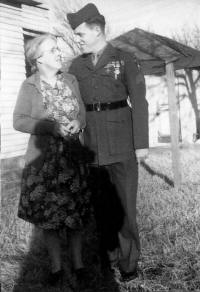
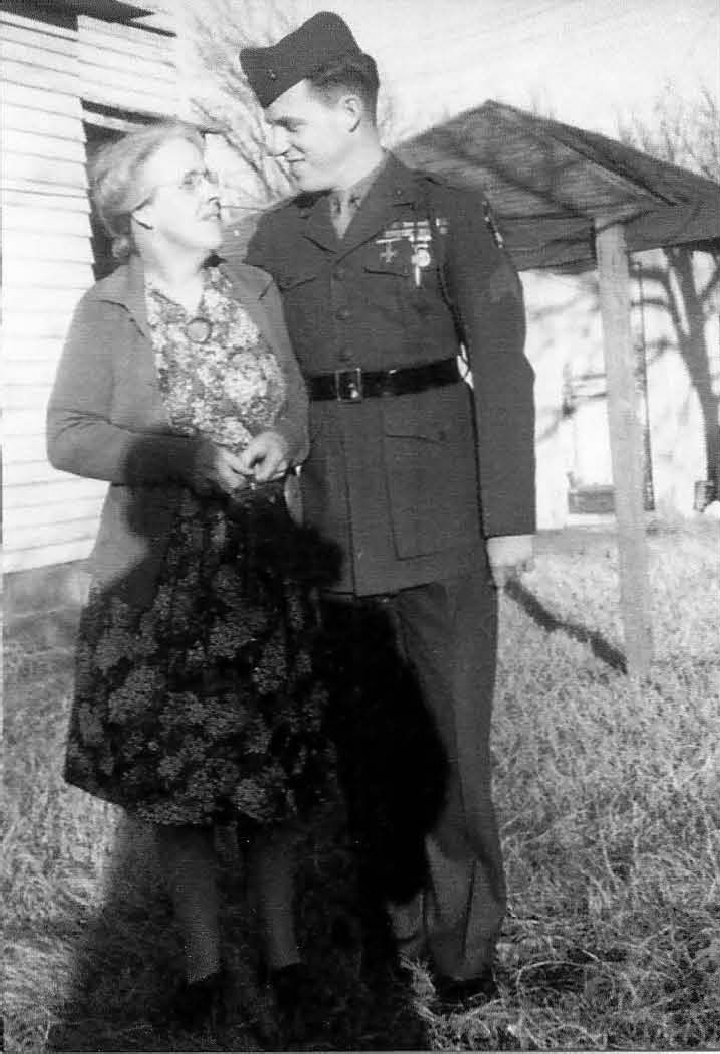
Robert Damon & his mother, 1946
(Click picture for a larger view) |
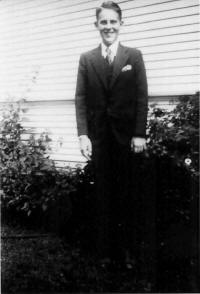
Robert Damon circa 1934
(Click picture for a larger view) |
He was in defense work at Pearl Harbor, Hawaii, when the attack was made on December 7, 1941. After
returning to Seattle the following summer, he enlisted in the Marines, although he had been granted
exemption because of his plans for entering the ministry.
On December 4, 1943, he was united in marriage to Charlotte H. Anderson of Cove, Washington in San
Diego, California. He left in about three weeks for Honolulu. He was in the battles of both Saipan
and Tinian, then returned to Saipan until after the close of the war when he was sent to Japan with
the occupation forces for a few weeks. He returned to the United States in January 1946, and he
and his wife made their home in Seattle, Washington.
A fellow Marine who returned to his home in Walla Walla, Washington just a few weeks ago said when
he learned of Robert's death, "It's not right; he was always the good one of the bunch. He never
said any bad words, he was so clean living and good." He also said he was easy with the men under
him and they liked him so well.
In a letter to personal friends he recently stated: "I participated in the two weeks campaign which
pushed the enemy from Hoengsong to the high ground beyond Hoengch'on. Only the grace of God made
it possible for me to carry out my duties. It is evident that I still have work to do or would not
have been passed over (or around) by the enemy fire."
Robert leaves to mourn his going, his wife Charlotte, son, Robert Vincent II, age 3 1/2, Kathleen
Ann, age 8 months, his father and mother, Mr. and Mrs. V.L. Damon, an older sister, Mrs. Margaret
Zucher of Pasadena, California, two brothers, William Burns of Walla Walla, Washington, and Albert
M. of Sterling, also a host of relatives and friends.
More Information on Robert Damon:
Robert V. Damon met his wife Charlotte at Seattle Pacific College. He was getting a Master's
Degree at the University of West Seattle and was 99 percent complete with his studies when he was
recalled to active duty in the Marine Corps after the outbreak of the Korean War.
Sergeant Damon's widow married Laddie Mommsen in 1959. Mr. Mommsen formerly served in the Army
in Africa and Italy during World War II. He adopted Robert's children and their names were
changed to Robert and Kathleen Mommsen. Robert now lives in Ketchikan, Alaska, where he was at one
time a bush pilot and now works on an inland ship. Kathleen Damon was born August of 1950, one month
after her father left for the Korean War. She was a baby when Sergeant Damon was killed in
action in Korea. Kathleen Pugerude now lives in Forest Grove, Oregon. Mr. and Mrs. Laddie
Mommsen live in Lynnwood, Washington.
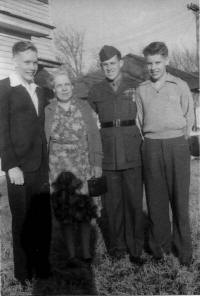
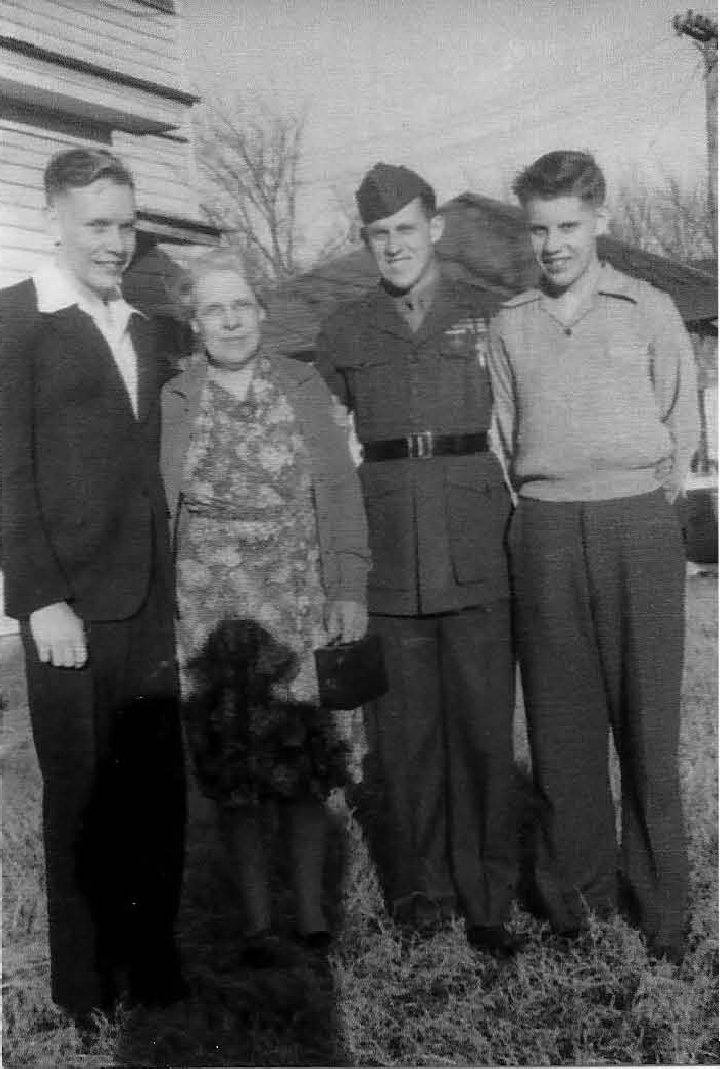
Robert Damon & his mother, Myra, and brothers 1946
(Click picture for a larger view) |
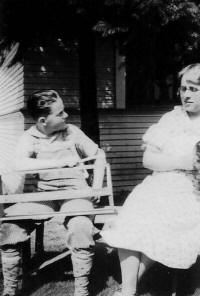
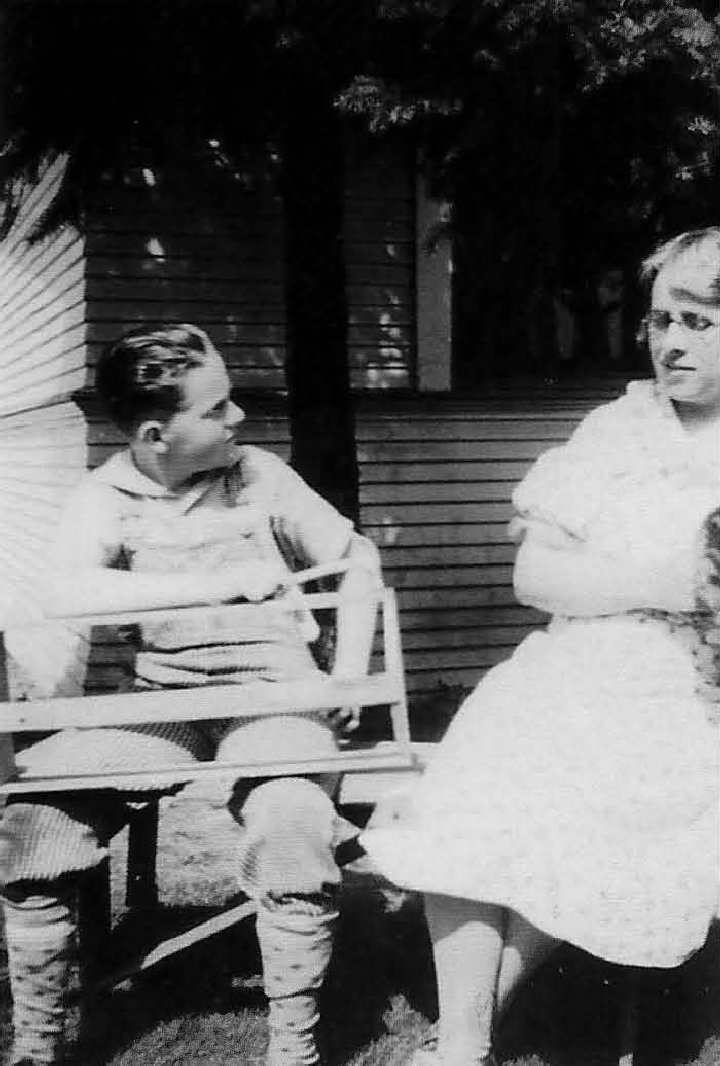
Robert Damon & his mother about 1934
(Click picture for a larger view) |
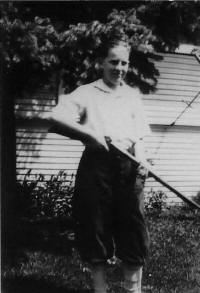
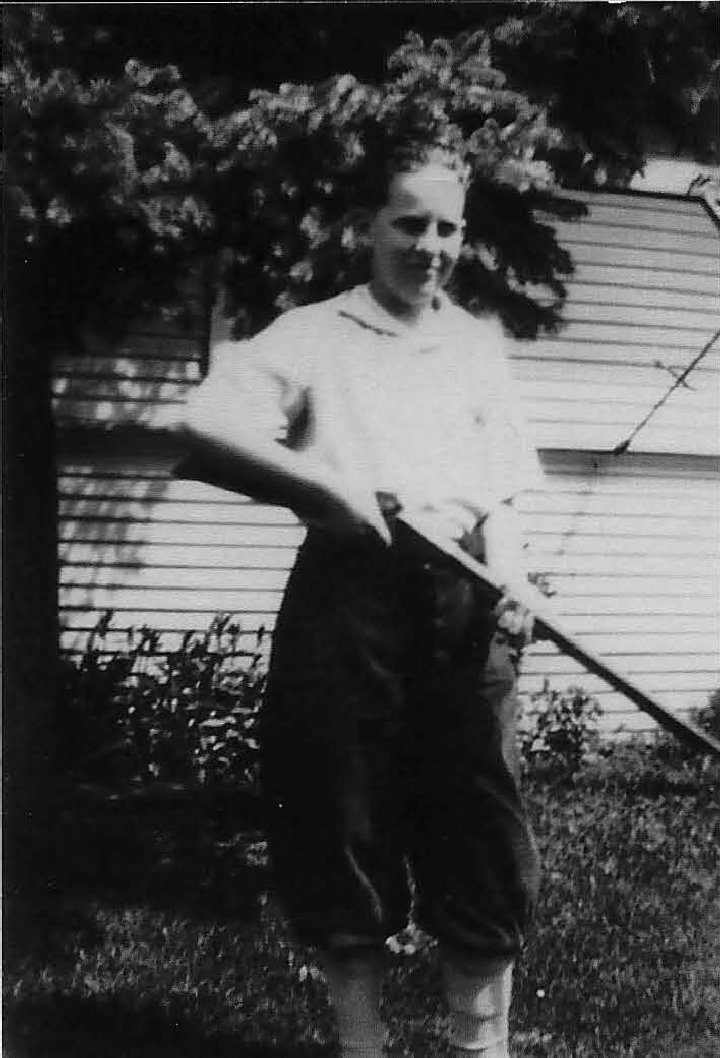
Robert Damon about 1934
(Click picture for a larger view) |
Some Thoughts from Albert Damon, brother of the late Sergeant Damon:
Robert was eight years older and went away to Seattle Pacific College at the time I entered the 3rd
grade in Chewelah, Washington. When I was in the 6th grade in a country school in Cloverland,
Washington, we came home Sunday noon December 7, 1941 from the church our father served and I turned
on the radio while my parents were probably in the kitchen fixing dinner. I heard the news
and took it to them, the bombing of Pearl Harbor. Robert was in Honolulu, working in the shipyard.
He had taken a year off from college to earn money to return. We were very anxious about him
and later learned that he was at the boarding house away from the shipyard, but that getting to
work for some time was a difficult experience. Later he came back to Seattle to school and
began trying to enlist and did--in the Marines. He served at Saipan and Tinian. After
the war he returned to school but joined the Reserve and was called up for service in the Korean
War. While going to school before being called back, he served a church in West Seattle near
Alki Point. I stayed with him and his wife, Charlotte, at that time, for a few weeks, probably
the summer of 1946.
During his first years in college, about the time I was in 3rd and 4th grade, when he came home on
visits. He had a name for me--"Step-and-Fetch-It." I was proud to "wear it" and do whatever
he asked. He was a very special big brother!
I was a senior in college (1951), living a few blocks from my parents in the town of Sterling, Kansas,
when news came of Robert's death. Our father was a professor in Sterling College. My
senior year I lived with three classmates in a house apartment. It was in the night when my
father called. It was a great shock to the family, but especially to our parents.
Robert and Charlotte's son, Bob Mommsen, has probably told of a large amount of research that he
has done on his father Robert's Marine unit and that a few years ago he visited the sites in Korea
where Robert served.
This week I found in our collection of photos a picture of Robert with our mother and another with
his mother and two brothers, Burns and myself. This was taken in Sterling, Kansas, about the
time he returned from World War II. It is dated January 1946. I was 15 and a sophomore
in high school. Burns would have been about 18. (Robert's parents, his older sister
Margaret, and middle brother Burns are deceased.)
Back to Remembrance Contents
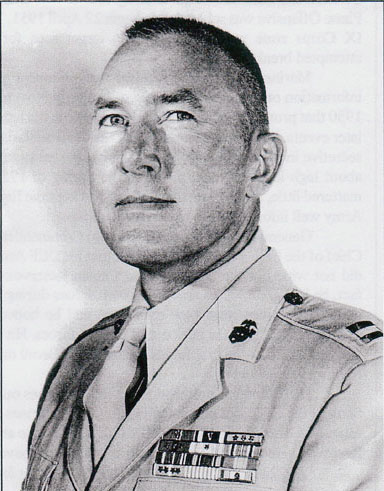
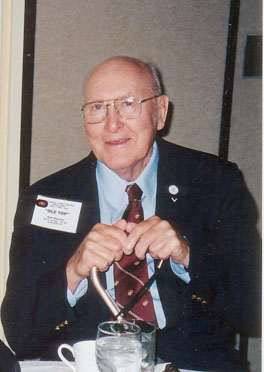
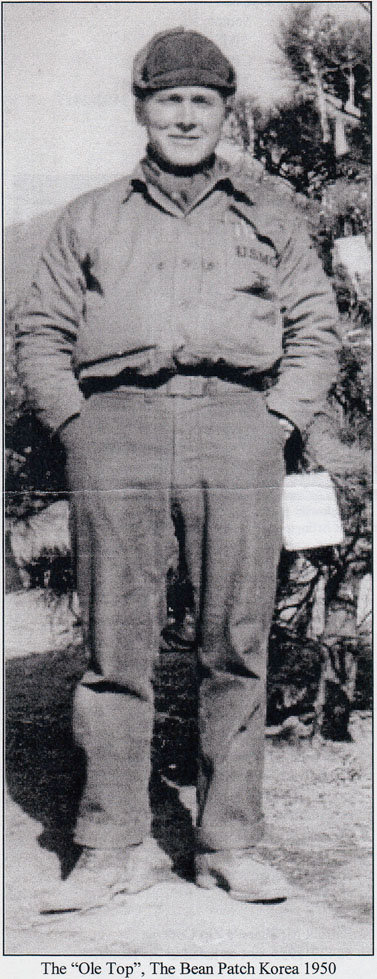
Phil "Ole Top" Dierickx
|
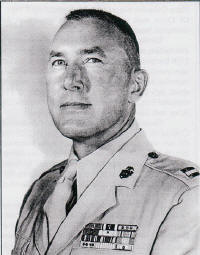
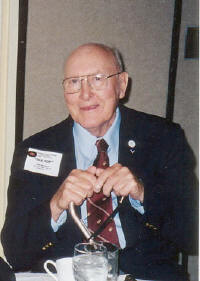
Phil Dierickx
(Ole Top)
Jacksonville, NC |
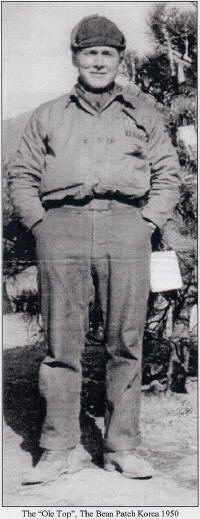
(Click a picture for a larger view) |
Author, Chuck Hall
I never got to meet him,
Nor serve in his command.
But I knew many like him,
Who bravely made their stand.
From what the "Bandits" tell me,
He dearly loves the "Corps"
Took real good care of comrades,
And took that one-step more.
'Twas up in frozen Chosin,
When things looked bleak and bad
He used his strength and wisdom,
And everything he had.
For those who fought beside him,
Who never will forget
He gave them will and courage,
Resolution, faith, and grit.
The "Corps" has many heroes,
And stories they all tell.
"Ole Top's" a hero in my book,
He served his hitch in hell.
USMC April 1939-1969. 6th Marines to Panama Canal & then to Iceland. 1940-41 guard duty to prevent Germans
from taking over the island. Korean War: Brigade - personnel Sgt. Major and then 1st Sgt. of Baker Co.
1st Battalion, 5th Marines. 2nd wave - Inchon Invasion. Chosin Reservoir campaign - Hill 1040. Participated
in the guerilla hunt. Left Korea March 5, 1951. Vietnam 1967-68 as adjutant.
PHIL "OLE TOP" DIERICKX", a participant in the Korean War Educator's oral history project to document
the memoirs of Korean War veterans, died peacefully at 2:30 a.m. on August 12, 2001, from cancer and
complications thereof. He was a retired member of the United States Marine Corps, and a highly respected
member of the Baker Bandits.
The Ole Top was operated on February 11, 2000 for a tumor in his left lung. Three ribs were removed as
was a large part of his lung. He survived the surgery, and continued to keep in contact with the Baker
Bandits who loved and respected him. USMC veteran Milton "Mickey" Donaldson said, "The Marine Corps
lost a great leader when Phil retired years ago. The world lost one of its extraordinary citizens, and
we of the Baker Bandit family lost a loyal, dedicated and interesting friend and brother. May God bless
him and all of his family."
The Guidon publication of the Baker Bandits is edited by Shelton Emmett. The August issue states, "'The
Ole Top' is short for (The Old Top Sergeant), in which capacity he very ably served Baker Company, First
Battalion, 5th Marine Regiment in the Korean War in 1950 and 1951. He is one of the founding members
of the organization known as "The Baker Bandits" and has always been a pillar of the same. He headed
up and financed the effort to have each member of the 'Baker Bandits' recognized for their service with
the company by awarding them a plaque. He was a Marine's Marine."
There was no funeral service as Phil's earthly remains were donated to the University of North Carolina
Medical School for medical research. In lieu of the funeral service, a memorial mass was held at The
Infant of Prague Catholic Church in Jacksonville, North Carolina on 22 August 2001.
Ole Top's family requests that donations in his memory be made in his name to:
The Marine Corps Museum of the Carolinas,
P.O. Box 1046, Jacksonville, NC 28541.
Back to Remembrance Contents
Donald Leon Elster
Information pulled at daughter's request.
Willis Frahm - COMING SOON
Back to Remembrance Contents
Al Gavin
|
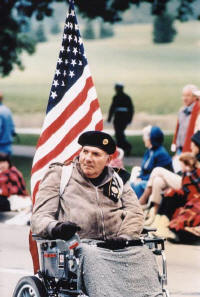
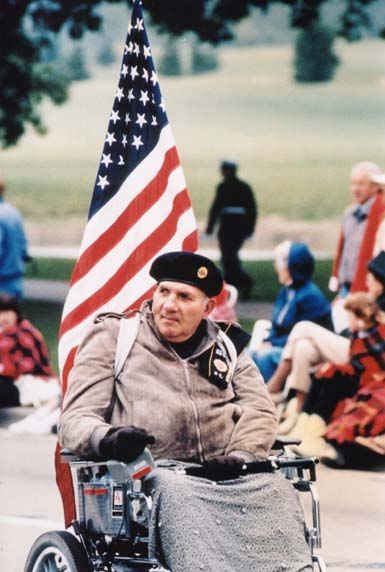
In Remembrance of Al Gavin
(Click the picture for a larger view) |
The Remembrance Page was opened on August 13, 2001 with this outstanding photograph of veteran and
American patriot Al Gavin of Wisconsin. When he died on May 9, 2001, his family requested that donations
in his memory be given to The Korean War Educator Foundation. The donations helped cover some of
the first expenses for this website.
Alfred "Al" William Gavin is pictured here riding along Monona Drive during a Memorial Day parade
for East Madison and Monona, WI. In 1950, he entered the U.S. Army and served in the 3rd Armored
Division of the US Army at Ft. Knox, Kentucky. He became openly afflicted with multiple sclerosis
while in the Army and was discharged in 1951. Al died at his home on May 9, 2001 after over a half
a century battle with MS.
He was born on February 24, 1931 in Richland Center, WI, the sixth child of seven of Rube Earl and
Frieda Elizabeth Klingermann Gavin. His mother died when he was four years old and he was raised
as a foster child on the Stockwell Farm outside of Richland Center. At age 14, Alfred spent his
summers working on cattle boats and traveled to six foreign countries. He also hitch hiked through
the entire United States prior to joining the Army.
Al held a variety of jobs throughout his lifetime, including working as a heavy equipment operator
helping to build the VA Hospital in Madison and the 44th expressway in Milwaukee. He also drove
moving van semi-trailers on the New York to L.A. run. He attended two years of cooking school at
MATC Madison; cooking one year at the Brodmore Hotel in Colorado Springs, CO, and in Madison at
Hills Coffee Shop. He also was a baker at Lanes Bakery.
After attending two years of Layton School of Art in Milwaukee, he painted commercial art portraits
and two Saturday Evening Post covers in the 1950s. Between the late 1950s and 1960s, working from
his wheelchair he created three businesses to keep himself employed: Gavin Lawn Service, Mardee
Vacuum Cleaning Service, and Mardee Wholesalers.
When Volunteer Service Bureau was created in Madison, Alfred became their first volunteer driver,
logging over 5,000 miles the first year. He spent many years volunteering with the Multiple Sclerosis
Society Madison chapter and serving on the board. He chaired their summer picnics and Christmas
parties. He also volunteered at Methodist Hospital, VA Hospital and Forest Products Labs of Madison.
He served six years as a volunteer with the Madison Area Technical College, uptown campus, in the
Occupation Assistant Program ending in 1992.
He was a life member of the Monona Grove American Legion Post #429, of which he served as Post Chaplain
for two years. He was also a life member of the Disabled American Veterans.
On November 9, 1963, Alfred married Mary Jane Wolf of Madison. The couple had three children: Scott
Kevin (Vicky) Nelson of Green Bay, WI; Catherine Heidi Elizabeth (Todd) Dobbratz, Madison; and Carl
Alfred Eric (Vickie) Gavin, Madison. Ten grandchildren, a brother Mack Gavin of Janesville, WI,
and many nieces and nephews also survive him
From 1986 through 1997, Al Gavin rode in the Memorial Day parade in Monona, WI. His favorite hobby
was painting portraits and landscapes in oils. His favorite saying was, "Every day is a good day
because the Lord made it!" Al will be most remembered for his love of children and the ease with
which he communicated with them.
Back to Remembrance Contents
William J. Keeler
William J. Keeler was born and raised in Cohoes, New York to Irish parents Timothy and Anna Mae Kelley-Keeler.
He was the eldest son and one of eight children.
Bill was only a teenager when, like many of his generation, he voluntarily enlisted in the United
States Marine Corps in 1943. He was a member of the 1st Marine Division (D/2/5) and served
in active combat in the Pacific Theatre from 1943 until the war ended. He was honorably discharged
from the Marine Corps in 1946. He was trained as a heavy gun AAA crewman.
In 1950, he again voluntarily enlisted in the USMC as a reservist and was called into active duty
once again to serve in the Korean War. He participated in the Inchon landing and fought in
the epic Chosin Reservoir battle with the First Marine Division (K/4/11). He sustained serious
injuries in Korea, including severe frostbite and traumatic neck and hip injuries after he was thrown
off a cliff from the force of a grenade blast which knocked him unconscious. While he was
trained as a heavy gun crewman, he was reassigned to infantry duty while in Korea due to mass casualties
within his unit.
Bill was hospitalized for months after being evacuated from the Chosin Reservoir with severe frostbite.
He was once again honorably discharged from the USMC in August 1952. He was awarded numerous
medals and awards, including a Good Conduct Medal, National Defense Service Medal, Asiatic-Pacific
Campaign Medal, World War II Service Medal, United Nations Medal, Korean Service Medal, Purple Heart
Medal, a Bronze Star, and a Presidential Unit Citation for extraordinary service along with the
First Marine Division against enemy aggressor forces in Korea.
Bill returned home to Cohoes, New York, and completed his GED in 1954. He was employed at the
Watervliet Arsenal for 33 years, and retired as a Police Captain. He met his wife Peggy there,
married, and had four children. He often worked second jobs to support his family. He
was a proud, humble, hard-working, and generous man who embodied all of the characteristics of the
greatest generation. He especially loved being a father and grandfather.
He was a member of the Veterans of Foreign Wars, Disabled American Veterans, Northeastern New York
Chapter of the Chosin Few, and was a communicant of St. Agnes Church in Cohoes.
He died suddenly at home on February 24, 2001, at the age of 75. He was buried with full military
honors at the Gerald B. Solomon-Saratoga National Cemetery in Schulerville, New York.
He predeceased his late wife Peggy and is survived by his four proud children: sons Brian, Bill and
Kevin Keeler, daughter Karen Keeler-Kruszeski, and ten grandchildren: Carolyn, AnnMarie, Billy,
Megan, Andrew, Shawn, and Katelyn Keeler, Kenneth and Keith Kruszeski, and Cassie Wood. "Pop"
will always be missed.
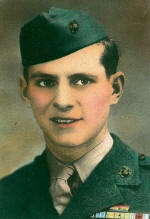
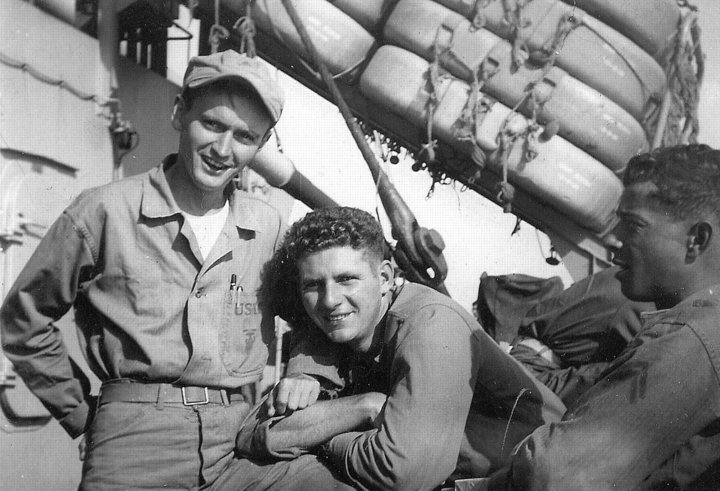
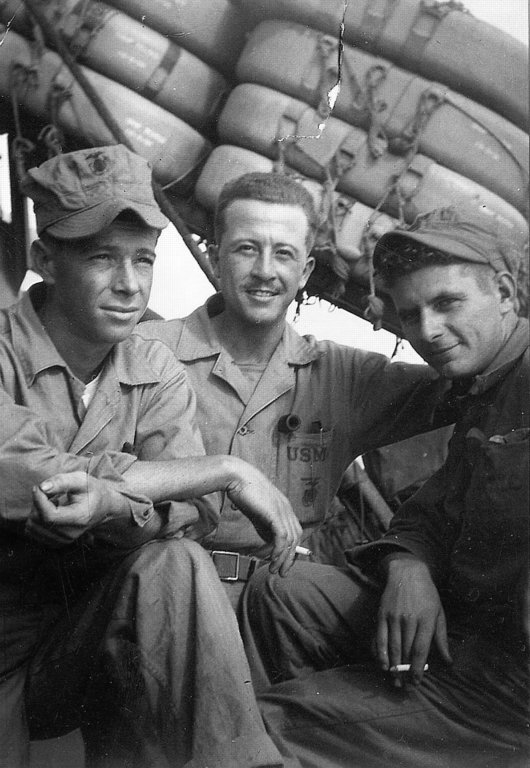
William J. Keeler, USMC, World War II (Pacific) and Korea |
William J. Keeler (center), USS Mitchell - Korea 1950
(Others unidentified) |
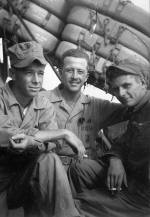
William J. Keeler (far right), USS Mitchell - Korea 1950
(Others unidentified) |
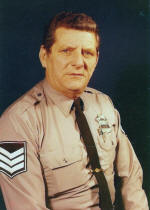
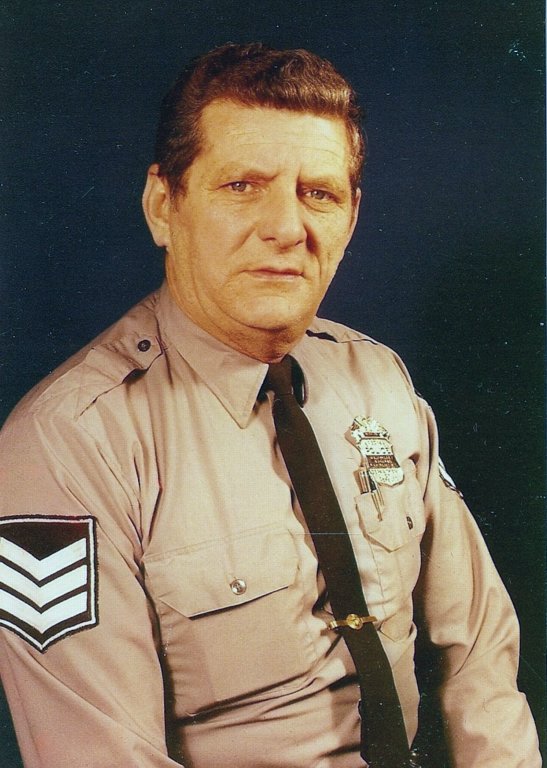
William J. Keeler (age 51) - Watervliet Arsenal Police, Watervliet, NY |
| (Click a picture for a larger view) |
Back to Remembrance Contents
Mike Luosey
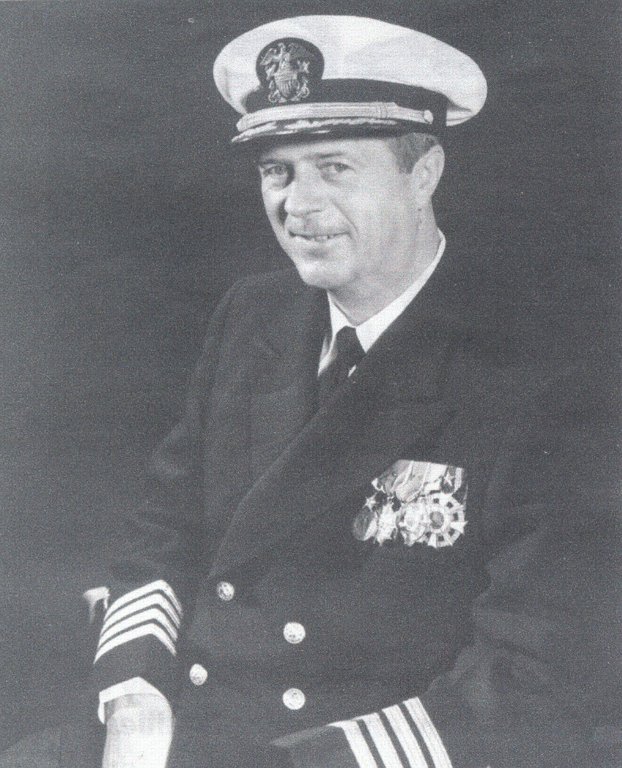
|
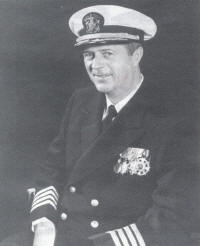
(Click picture for a larger view) |
Maine has a rich maritime history, and Bangor's native son, Captain Michael J. Luosey's distinguished
Korean War record is part of that tradition. The Bangor High Class of 1929 graduate was Deputy
Commander Naval Forces Far East under Admiral Turner Joy. Mike commanded the Korean Navy, and
founded the modern Korean Marine Corps. He was in command of all allied navies as the war got
underway in 1950, and he ran the Inshore Blockade and Escort Force at the age of 38. On August 6, 1951,
Korean President Syngman Rhee pinned the Republic of Korea Order of Merit on Commander Michael Joseph
Luosey. Since the beginning of the war in July 1950, Luosey was one of nine officers and men so
honored. On another occasion, he was awarded the Military Order of the Silver Star.
In his 31 years of service, Mike was the commanding officer of five of the nine ships he was onboard
during his career. He sailed on a survey ship, three destroyers, two battleships, two heavy cruisers,
a supertanker, and was a Destroyer Squadron 8 Commander (two divisions), and Commander, Military Sea
Transportation Service.
Michael J. Luosey was born on April 15, 1912 to his parents, Patrick J. and Delia (Muldoon) Luosey who
lived on Larkin Street in Bangor, Maine. A chronology of Mike's career in the United States Navy
(1929-1960) follows:
- 1929 - Graduated 4th in Bangor High School Class of 1929. Got appointment to US Naval Academy
at Annapolis, MD.
- 1933 - Graduated 3rd, and honored as Flag Bearer for the Naval Academy's Class of 1933. Ensign
Luosey was one of half the class of 245 that received commissions, hence a naval career.
- 1933/35 - First assignment on new Cruiser USS Portland CA 33 as a deck officer, then gunnery officer
turret #3, then Assistant Navigation Officer.
- 1935-June 1937 - Ordered to destroyer USS Wickes DD75. Mike was promoted to Lieutenant Jr.
Grade. The ship was mothballed in 1937, and turned over to England in 1940 in World War II.
- 1937/38 - Mike was named Commanding Officer of the survey ship USS Hannibal. This marked his
first time to be solely accountable for a naval ship. Surveyed new iron ore fields in Trinidad,
oil in Venezuela, and Costa Rican harbors.
- 1939/40 - Lt. Luosey was on the Battleship USS California, Flagship of the Fleet, which patrolled
the Pacific Far East. Upon leaving Pearl Harbor and returning to its homeport in California in
June 1940, Mike was assigned to post graduate work at the Naval Academy at Annapolis. He went
on leave to Bangor. All shore duties were cancelled because of trouble brewing in Europe.
The California was ordered to sea while Mike was home, but efforts to reach him failed. So his
orders were changed to report to the Battleship USS Wyoming BB32 AG17.
- 1941 - On December 7 the Pearl Harbor attack found Mike teaching at the Naval Academy and responsible
for two companies of Midshipmen, reporting to Vice Admiral Myron S. Tisdale, Commandant until 1942,
and then to Vice Admiral Turner Joy. These key officers later called on Mike's service.
Mike at once requested sea duty, but as he said in a 1980 interview with niece Delia Pooler, "I had
brought in the new classes, and I had had success as a company officer because my two companies won
the regimental competition my three years I was there. So I was "in" with the Commandant because,
I guess, he thought it was leadership on my part. So he wouldn't let me go until we brought in
the new class in 1943."
- 1943 - On October 14, Lt. Commander Luosey was named Commanding Officer of the six-month-old USS
Sproston DD577. Ready for combat, he piloted Sproston from Casco Bay in Maine through the Panama
Canal on November 4 to San Francisco, and with Adm. Ephraim McLean left to liberate the Philippines.
They used the Samar approach, and were part of the Leyte invasion of the Lingyan Gulf of North Luzon.
Sproston was the first ship to enter and open Subic Bay. Luosey was in charge of a crew of 341.
According to Naval history records, "February 4, 1944, at 0230, Sproston fired her first shots in anger.
She shelled Kurabu Point in the Kurabu-Zaki area of Paramushiro, acting as an anti-aircraft and as submarine
screen for the cruisers. Captain Luosey issued a memo congratulating the crew for their enthusiasm
and for a job well done, adding that Paramushiro was believed to be the first Japanese home island to
be shelled by an American warship. [Saga II of the USS Sproston DD/DDE 577 by George Ress, 1995, page
17.]
- 1944 - On September 13, Luosey was promoted to a Commander, and while CO, the Sproston shot down
nine Japanese planes and sank one submarine. Mike was the Navy's youngest captain at that time,
and served 16 months on this famous fighting ship. The Sproston supported troop landings by shore
bombardment, and escort for major war operations. The ship was in the Third Fleet until October
1, when it joined the Seventh Fleet.
- 1945 - February 6 Luosey took command of a new destroyer USS Bordelon DD/DDR 881 from Orange Texas
shipyard. This ship was 14 feet longer for extra fuel, and two knots faster than Sproston.
She was designed for the vast Pacific. After break in, the ship visited Portland, ME where Mike
Luosey's sisters, Mary C. (Luosey) Pooler and Anna Luosey enjoyed dinner at the captain's table.
In the Pacific, the picket ship Bordelon was in Destroyer Division 16, and escorted an aircraft carrier
into Japan, then past China, and joined the Philippines Liberation celebration.
- 1947 - February 6 Cdr. M.J. Luosey flew to Bremerton, Washington, and after nine days as Chief Executive
Officer, became Commanding Officer of the Heavy Cruiser Chicago CA 136. During a 1980 interview,
Mike said, "My goal as a naval officer was to obtain command that ultimately would mean a capital ship
which in the old Navy was battleships. I was interested only in the Line Command of the Navy surface
ships. I had no interest in submarines. I had no interest in the Naval Aviation. And,
when the time came and I was eligible for so-called "Major command," there were no battleships.
Several options were missile cruisers and the majority were Destroyer Squadron Commanders which I did
attain, but of short duration because of my hepatitis."
- 1950 - June of 1950 saw the outbreak of the Korean War. Mike was flown to Korea and on July
9 he was named Deputy Commander Far East under Admiral Turner Joy. Considerable confusion had
led to Mike's assignment. Here is the naval history: "Luosey's first days were spent in extemporizing
logistic support at Pusan for U.N. ships, in establishing liaison with the Army, and in gaining the
confidence of the Koreans. Inshore sectors were established along both coasts south of the 37th
parallel, and a detachment of Korean Marines was sailed for Kusan by LST in an attempt to hold that
port. On the next day the Marines were landed, and a large store of government rice evacuated,
but possession of Kusan was brief. Heavily engaged on the 17th by an entire North Korean regiment,
the 600-odd Marines were lifted out two days later to begin a minor epic of landings, forced marches,
engagements, and retreats, which by the end of the month had brought the survivors to Cinju. Mike
himself later said that he had to work with so many different groups that he asked for and got direct
reporting officers from General MacArthur's command and the Navy. History continues, "Little by
little order emerged from chaos. By late July coordination with the British west coast element
had been established and the Korean Navy was back in effective action."
- 1951 - August 6, Korean President Sygman Rhee awarded Korea's top two decorations: Taeguk Presidential
Citation with two laurels, and the Republic of Korea Order of Merit to Cmdr. Michael J. Luosey.
Mike was extremely proud of his accomplishments in Pusan and Inchon. He told his nephews about
the types of small boats the ROK navy used, and they did more damage with the PT boats than with destroyers,
etc.
- 1952 - June 1 the Navy reported it "relieved Commander Michael J. Luosey as Commander Republic of
Korea Naval Forces (COMROK NAVFOR) and the Chief of the Naval Advisory Group ROKN on this date."
The Korean Marines presented a sword to Mike that is inscribed to him in black lacquer and mother of
pearl. Mike considered himself a good friend of President Rhee, having taught him square dancing,
etc. Mike believed one reason for his excellent rapport, as expressed in the 1980 interview, was
because he strongly believed and voiced his high regard for the intelligence, dedication, and loyalty
of the Koreans under his leadership. In the 1970s, Mike was invited to return to Korea and he
asked nephew Joel Pooler to join him, but Mike's health didn't permit his travel. A Korean school
is said to be named after him.
- 1953/54 - After hostilities, Mike went to the Naval War College to study military strategy, and
as he said, "study how staff people think." He also taught there in Rhode Island.
- 1955/56 - Captain Michael J. Luosey commanded USS Caloosahachee, a super tanker in the Atlantic
Service.
- 1956 - Captain Luosey was given top responsibility as Director of Navy Recruitment where he started
a high school program.
- 1958 - Captain M.J. Luosey was placed in command of Destroyer Squadron 8 (two divisions, eight ships)
based at Norfolk, VA. But shortly afterwards he contracted hepatitis, and was laid up for four
months.
- 1959 - Unable to continue sea service, Mike was reassigned as Commander of Military Sea Transportation
Services (MSTS).
- 1960 - June - after six years as a Captain, he was offered Vice Admiral in retirement. He
declined and as described by daughter Bridget who wrote: "Dad never recovered from leaving the
Navy...part of why he was retired had to do with poor health. I remember when we lived in Norfolk
and I was in the 5th grade (1958) Dad came back from sea and was in bed for months with hepatitis...he
was the strangest color yellow and weak as a kitten. Apparently they offered him the position
of Rear Admiral for his retired rank. Dad, standing on his dashed dreams and Irish pride, let
them know that he didn't want to be a "tombstone Admiral" and if he couldn't work at it, he didn't want
it. Mom thought more practically, and since it affected retirement benefits, etc., she thought
he should take the title. Looking back...Admiral Luosey just doesn't sound the same. Dad's
always been 'Captain Luosey,' and it just sounds right.
Back in the State of Maine, Mike Luosey served as executive vice president of the Augusta Chamber of
Commerce, Hallowell City Manager, and Director of American Red Cross, Augusta. Mike lived in Hallowell,
Maine, until his death June 29, 1998. About Mike's funeral, his daughter Bridget wrote, "Did you
know that at his funeral, he had insisted on a Maine Pine casket, and then we covered his casket with
Navy color flowers and a banner that said, "BEAT ARMY" (which was his favorite saying and the last three
words of the Grace before meals, "Amen, Beat Army"), and as his casket was slowly wheeled out of the
church, the organ played a slow and stately "Anchors Away."
Awards & Honors
Mike Luosey retired with two Navy Distinguished Service Medals, Legion of Merit with
Gold Star, Bronze Star with Gold Star and Combat V, American Defense Service Medal, Fleet clasp,
Asiatic-Pacific Campaign Medal with four stars, American Area Campaign, World War II Victory Medal,
Japanese Occupation, China Service, Korean Campaign with eight stars, United Nations Ribbon, Philippine
Liberation with two stars, Korean Presidential Citation with two laurels, and the Navy Occupation
(European Clasp).
Contributors to this segment of the KWE: Mike's children, Dennis Luosey of the Augusta area and Bridget
Luosey who lives in Nevada with husband Grant Siwinski; Bridget's children, Magen E. Calland who lives
in Virginia with husband Paul, and Michael Everhart and his wife Laura who lived in West Gardiner, Maine,
and now live in Tennessee with daughters Marguerite and Delia. Others include nephews Andrew Adam,
Joel Pooler, niece Delia and their mother (Mike's youngest sister) Kay Luosey Pooler of Augusta; first
cousins Michael and Patrick Lucey from Bucksport; and nephews Ronald of Holden, and Victor Pooler of
Syracuse, NY, whose mother Mary C. Luosey Pooler was Mike's oldest sister. This segment uses excerpts
from The Pooler Family [Chapter 13, "The Luoseys and Your Irish Ancestors"] by Victor H. Pooler,
copyright 2000, Pooler & Associates, Syracuse, NY.
Back to Remembrance Contents
Brigadier General Ralph J. Maglione, Jr.
Brigadier General Ralph J. Maglione, Jr., was born in Akron, Ohio, on December 11, 1926. He
attended Kent State University from 1946 to 1949. He entered the aviation cadet program and
was commissioned a second lieutenant in the U.S. Air Force and received his pilot wings upon graduation
in 1950 at Williams air Force Base, Arizona. He was named a distinguished graduate and awarded
a regular commission for his outstanding performance during the training program.
His first assignment following pilot training was with the 27th Fighter Escort Wing, Bergstrom Air
Force Base, Texas. In November 1950, his wing deployed to Korea where General Maglione flew
104 combat missions in F-84E aircraft. He received a Silver Star for action while attached
to the 21st Infantry Regiment, 24th Infantry Division, in the vicinity of Sanghong-jong-ni, Korea
on 27 May 1951.
General Maglione returned to Bergstrom from Korea and in 1956 set an overwater distance record for
single-engine fighter aircraft when he flew his F--84F nonstop from RAF Sturgate, England, to Austin,
Texas. That same year General Maglione was a member of the Strategic Air Command gunnery team
in the annual United States Fighter Weapons Meet at Nellis Air Force Base, Nevada.
In 1958, when the 27th Fighter Escort Wing converted to the F-101A Voodoo, he demonstrated the aircraft
at the International Air Show in Liege, Belgium, after flying nonstop from Andrews Air Force Base,
Maryland, to Liege. This nonstop flight set an unofficial world speed record.
General Maglione was assigned to the 81st Tactical Fighter Wing, RAF Bentwaters, England, in January
1959, where he flew the F-101 as flight commander and operations officer with the 78th and 92d Tactical
Fighter Squadrons.
From November 1962 to July 1965, he was assigned as Action Officer, Officer Assignments Division,
Deputy Chief of Staff for Personnel, Headquarters United States Air Force, Washington, D.C.
During this assignment he completed requirements for his bachelor of arts degree in economics at
the University of Maryland in 1964.
He was Commander of the U.S. Air Force Thunderbirds from July 1965 to February 1967 during which
time the aerial demonstration team performed throughout the world. In July 1968, he was graduated
from the National War College, Washington, D.C., and received his master of science degree in international
affairs from George Washington University, Washington, D.C.
General Maglione was Chief, House of Representatives Liaison Office, Office of Legislative Liaison
in the Office of the Secretary of the Air Force, Washington, D.C., from July 1968 until April 1971.
He then became Commander, 3525th Pilot Training Wing, Williams Air Force Base, Arizona.
He assumed the duty as Director of Personnel, Military Assistance Command Vietnam, September 27,
1972. He was promoted to the grade of brigadier general effective September 1, 1972, with
date of rank August 29, 1972. He was a 1980 inductee in the Western Reserve Aviation Hall
of Fame.
General Maglione was a command pilot with more than 5,100 flying hours. Besides the Silver
Star received in Korea, his military decorations and awards include the Legion of Merit, Distinguished
Flying Cross, Air Medal with five oak leaf clusters, Air Force Commendation Medal with one oak leaf
cluster, Army Commendation Medal, Purple Heart, Presidential Unit Citation Emblem, and Air Force
Outstanding Unit Award with one oak leaf cluster.
He was married to the former Caroline E. Stofcho of Cleveland, Ohio, and they had one daughter, Annette
Feathers. General Maglione died July 15, 1990 and is buried in Arlington Cemetery. His
wife Caroline died April 30, 1998 in Bradenton, Florida and was buried with her husband in Arlington.
Annette is also deceased.
Back to Remembrance Contents
Ulrich Myller
"There is not a single day now that I don’t think of Ulrich Myller! Most days I drive by the large
and beautiful red brick buildings where we trained in OCS. There is no outward change in the buildings
during the past 60 years at Fort Belvoir, Virginia.
Myller was my best friend during the Korean War! We had been officer candidates at Fort Belvoir and
were commissioned 2nd Lieutenants on 26 August, 1952 in the Army Corps of Engineers. Myller had
been last in the class and I close to it, but we never let this bother us. We had seen over 70 individuals
come and go, and only 36 of us had survived.
When Myller and I received orders for Korea, we were on the same ship that left Oakland for Yokohama,
Japan. It was a 16-day voyage in early January of 1953. We always addressed each other using last
names. During this voyage I really got to know Myller and found him to be a very talented individual.
I can still see him now playing the piano in the ship’s hole with it going from side to side.
Myller and I got lucky on arrival in Tokyo. We were able to spend an additional 10 days there before
shipping out to Korea. Myller spent the latter part of January, 1953 eating sushi in Tokyo. I hated
sushi! On arrival in Korea I was located at K-55 and Myller only 17 miles north of me. I saw and
talked with him frequently. In May, 1953 he told me he was returning to Tokyo in June and asked
me to go with him. I declined to go saying I was very busy, but would see him when he returned.
When I arrived at his unit on the day of his expected return, I discovered that the plane had crashed
killing all aboard. The unit lost 2 officers and 16 enlisted men. Myller was one of the officers."
- Thurman Howerton
Back to Remembrance Contents
Kenneth E. Page
|
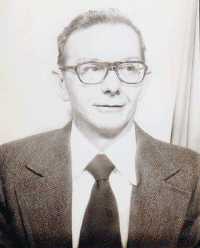
(Click the picture for a larger view) |
The Korean War Educator joins with the rest of the Korean War community in expressing sympathy to
the family of Ken Page, Troy, New York. Ken died on February 7, 2002, in Samaritan Hospital, Troy,
after being hospitalized for pneumonia.
Born in Potsdam, New York, he was the son of Arthur and Mabel Houle Page, and the loving husband
of Margaret Connor Page, his wife of 35 years. The couple was married on May 7, 1966, and Ken and
Margaret were residents of Troy for the past 32 years.
Ken was a graduate of Syracuse University in 1959. He graduated in 1962 from the Syracuse University
School of Law, where he received his jurist doctorate degree. That same year, he was appointed,
through the honors program, as an assistant attorney general for the State of New York. He retired
in 1990 as chief of the Litigation Bureau.
He was a U.S. Navy veteran during the Korean War from 1951-1955. He was the chapter director of the
Northeast New York chapter of the Korean War Veterans Association, Inc. He also served as the group's
attorney for all legal affairs, and was the editor and compiler for the book, Renssalaer County
Heroes: Korean War 1950-1953, The Forgotten Remembered. The book was printed in January of 2000
on behalf of the Northeast New York Chapter of the KWVA.
Ken was also a member of the Amphibious Forces Association, and a life member of the Veterans of
Lasingburgh (VFW #1019). He was active in genealogy research, and was a communicant of Our Lady
of Victory Church, Troy.
He is survived by his wife, Margaret; daughter, Kathryn E. Lane and her husband Flint, Princeton
Junction, NJ; a son, Paul K. Page of Malta; three brothers, Stanley Page of Rochester and Ronald
and Larry Page of Parishville, NY; two sisters, Evelyn Campbell of Timberville, VA and Beatrice
Chappell of Plattsburgh; two granddaughters, Amanda and Kacy Lane; and several nieces and nephews.
The words of Ken's friend and fellow researcher, Martin O'Brien of Augusta, Maine, echo the sentiments
of Ken's many other friends and acquaintances: "Although I never met Ken, we worked together via
cyberspace for some time now. He was a true friend and I will miss him very much. He has contributed
a great deal on behalf of Korean War veterans everywhere."
Ted Barker, one of the founders of the Korean War Project on the Internet, had this to say about
Ken's passing: "Mr. Ken Page of Troy, NY and Rensselaer County KWVA member, passed away on February
8th 2002. He battled illness all through January. Ken served in the Navy from April of 1951 through
March of 1955 on the USS TACONIC (AGC 17). Ken was a very good friend of mine, a pen pal for several
years. I will miss him and so will all of the hundreds of people that he assisted over the years.
He was a stalwart for his veteran chapter and his friends and spent considerable time raising funds
for the Korean War Project.
For years, Ken researched the HONOR ROLL at the KIOSK on the Mall where the database resides to provide
a wonderful link to those young men who did not live through the war. He found information and photographs
of these men to send to the American Battle Monuments Commission for inclusion in this KIOSK HONOR
ROLL. This work was done on his personal income and all of us doing research on the War will be
eternally grateful for his unselfish efforts. We recently featured a news article on Ken, and his
other email pen pals, Ed, Ray, Sylvia, Art, and Marty, who, every day work to fill in the blanks
for a time and place, long ago.
The work goes on and so will Ken's memory. So long, my friend." - Ted Barker
Back to Remembrance Contents
Cpl. Charles A. Peugeot Jr.
Charles Peugeot Jr. was born on March 24th, 1931. He lived on Pine Bridge Road in Ossining, New York.
After he graduated from Ossining High School in 1949, he joined the New York State National Guard
and requested to be assigned to the 101st Signal Battalion, Company A, which was stationed in Ossining.
On October 15th, 1950 the 101st Signal Battalion was inducted into the U.S. Army. This happened because
the Korean War was on and skilled Signalmen were needed. His unit was sent to Fort Gordon, Georgia
for training. The U.S. Army Signal Center at Fort Gordon, "The Home of the Signal Corps", trains
more soldiers than any other branch training center of the United States Army.
Corporal Peugeot was next sent to Japan with his unit for more training. From there the 101st Signal
Battalion was sent to Korea. They landed at Inchon on April 8th, 1951. His unit was attached
to the IX Corps. Its mission was to provide communications for the Corps Headquarters and for units
operating directly under the Corps.
Upon arrival, the 101st Battalion was immediately put into play in support of Operation RUGGED. Launched
on April 5, it was an advance toward the high ground north of the 38th Parallel.
During his time in Korea corporal Charles Peugeot’s unit was also involved in 3 major campaigns of
the war: the first UN counteroffensive, the CCF Spring offensive and the UN summer-fall offensive.
Peugeot had a thing for guns. He was always fixing them or working with them in some way. Since they
were in a combat zone all the men carried weapons, mostly M1 Carbines.
The Battalion was close enough to the front to have to sleep on the ground in sleeping bags. They
would wake up to the artillery gunfire going over their heads and exploding in the hills beyond
them. Once some of them spotted a North Korean soldier off in the distance and they all began to
fire at him. No one knows if they hit him. However this is unlikely, since he was out of the range
of their rifles anyway.
One event that really affected the men in the battalion was when a truck drove up from the front
lines and stopped at their camp. It was filled with dead American Soldiers, stacked up like rolls
of carpets. Blood was dripping from the tail gate.
According to accounts told by First Sergeant Eugene Hughes, who was the Team Chief of the squad Peugeot
was in, his job was as a “Stretch Wire”; one who climbs telephone poles to work on the communications
equipment there. He ran four-channel cable for FM radio equipment.
Hughes liked Peugeot, and thought he was as friendly a kid as any of them. “He was always joking
with the boys. Some of them were from the south, and Peugeot would kid around with a Corporal
Smith saying, ‘You must be related to Stonewall Jackson.’” Smith was one of the men that was close
to Peugeot. There was also a Sergeant Brown as Hughes recalls. Other men in the company that Peugeot
knew were Lieutenant Cav, Lieutenant Frangello, Lou Tarrentally, Joe Valardo (from Ossining) and
Bob Taggert.
Chipyang-ni, South Korea
On a warm Sunday afternoon , July 8th, 1951, Sergeant Hughes sent Corporal Peugeot and one other
man on a mission--most likely to get supplies in a three-quarter ton truck. This man and Peugeot
always stuck together because they were best friends. While on this mission something happened and
a gun went off. It may have been that the two of them were cleaning the rifle. Corporal Charles
Peugeot Jr. was killed. They said it was his best friend that had accidentally shot him. No one
knew for sure. The corporal's body was brought directly to Graves Registration and burial. His best
friend did not return to the unit either. He had a nervous breakdown and some say he never recovered.
The company had a service for Peugeot. A Catholic priest setup an altar on a table outside on a grassy
hill. The men gathered around as the priest read from the Bible. The Captain, who was a Catholic,
knelt in prayer. As he did, Hughes heard his leather pistol holster squeak. He says for some reason
he always remembers that moment. Eugene Hughes says he will never forget that event. It has
bothered him all these years. He somehow feels responsible for the death of Charles since he had
sent him on that mission.
Note: Eugene Hughes is 78 years old. He is a World War II veteran who served in a Signal Battalion
in Europe, as well as a Korean War veteran. He was shipped back to the States and out of the army
in September, shortly after Peugeot’s death. - Written by David Egerton
Back to Remembrance Contents
Robert L. Risher
In memory of Corporal Robert L. Risher, age 20, stepson of John W. Hurley and son of Leda Risher Hurley,
East Cleveland, Ohio. Robert was a member of Company M, 187th Airborne, when he was killed in Korea
on Easter Sunday 1951. Left to mourn his loss were his parents, a brother Harry K. Risher, stepbrother
Raymond J. Hurley, and Robert's fiancee, Rosalie Doyle of Baltimore, Maryland.
Robert attended Collinwood High School in Cleveland, and was employed by the W.S. Tyler Company before
enlisting in the U.S. Army. He enlisted in May 1949 (serial number RA15260083), and after taking
his training at Ft. Campbell, Kentucky, he was transferred to Ft. Meade. When the Korean War broke
out, he and his unit were sent to Korea in July 1950.
His body was returned to the United States in October of 1951, and he was buried in the Lakeview Cemetery,
Cleveland, Ohio, with the East Cleveland Post No. 1500 VFW in charge of his funeral on October 27, 1951.
Back to Remembrance Contents
Roy Rivers Roberts
Cpl. Roy Rivers Roberts passed away in October 2010. He had been under the weather for quite some
time. He was with the 19th Regiment of the 24th Division and was sent to Korea when the fighting
first started since he was in Japan already. His "claim to fame", as he called it, was on October
23, 1950 when he and Cpl. John Moore of Louisville, Kentucky, went looking for some chickens or eggs
to eat. They came into a small village and met a North Korean with his hands up. Corporal
Moore said something in Korean and six more North Koreans came out of the building to surrender.
This story was in the Stars and Stripes October 28, 1950 edition.
PWs Interrupt Chow Foraging
- Written by Sgt. Allen Waters, S&S Korea Bureau
25th Infant Division in Korea
"Some guys go Red-hunting and find eggs, but this is the first time I have ever heard of a guy going
out for eggs and bringing back Reds," said Cpl. John W. Moore of Louisville, KY. It seems
that Corporal Moore and Pvt. Roy R. Roberts of Los Angeles decided one morning to go out and get
some eggs or chickens for breakfast.
The division was making its final drive on Pyongyang and the column was moving so fast supplies were
unable to keep up. So, armed only with a pistol, they started out for the nearest village.
As they approached the first building, a Red Sprang out of the door with his hands over his head,
shouting something in Korean. Moore walked to the door and shouted, "Ire-wa," meaning "come
here", and seven more Koreans ran outside with their hands over their heads.
Moore and Roberts were slightly annoyed by this interruption of their chow call, but they took their
prisoners back to the convoy and set out again for the village. On their second try, they
got their breakfast."
Roy's brother told the Korean War Educator:
"Roy once told me that when he was at the Chosin Reservoir he had C-rations and was eating atop a
pile of dead North Koreans and horses and freezing his butt off. As for any of the battles
he was in, he didn't ever mention them. He was stationed in Japan when the war broke out and
was there in the first 40 days. He wasn't sure if he was ever coming home.
I was in ROTC in high school (Roosevelt High in Los Angeles) when the war broke out, but as soon
as I turned 17 I told my mother I wanted to join the Army and she said okay. I took my basic
in Camp Campbell, then went to Ft. Benning for paratrooper training. Before I could finish,
the war stopped. I so wanted to get over there, but my brother, who had been honorably discharged
by then, told me that I was lucky it was over before I could get there. In reading all I can,
I guess he was right."
Frank Vallesteros Villela
Mr. Frank Vallesteros Villela, who currently
resides in West Hills, California, with his wife Armida C.
Villela, served in the United States Army Infantry in the
Korean War and is a survivor of the “Siege of Outpost Harry”
with the command of “Hold at all Costs.” Mr. Villela was a
Corporal with Company A (Able), 5th Infantry Regiment, 5th
Regimental Combat Team and attached units. The battle raged
between June 10 and June 18, 1953 during the last weeks of
the Korean War.
The Hawaiian regiment was a unique and
diverse cultural and ethnic blend who were assigned over the
course of the war to the majority of the divisions in the
U.S. Eighth Army. Corporal Villela was stationed in Korean
for a total of one year and six months from 1952-1954 on
Outpost Harry and other locations such as the Punch Bowl,
Korea.
According to the Award Distinguished unit
citation (1953) by Paul Hawkins:
Company A (Able), 5th Infantry Regiment,
5th Regimental Combat Team and attached units
distinguished themselves by extraordinary heroism in
performance of exceptionally difficult tasks in the
vicinity of Songnae-Dong, Korea. On the morning of 12
June 1953, these units relieved other United Nations
forces defending a vital outpost and successfully
withstood five separate attacks by overwhelming enemy
forces during the next 24 hours. After earlier mass
attacks had been halted by combined defensive fires, the
hostile element attacked under a tremendous artillery
and mortar barrage during the evening and gained a
foothold on the right flank of the position. Refusing to
withdraw, the United Nations units closed in
hand-to-hand combat and destroyed the enemy forces.
After an artillery barrage, waves of enemy troops
assaulted both the right and the left flanks of the
outpost but were again annihilated. In a final effort,
another onslaught of hostile forces charged against both
the front and the flanks of the United Nations forces
and again succeeded in entering the trenches. The
courageous defenders launched a series of
counterattacks, routed the enemy and restored the
position. The complete devotion to duty and outstanding
courage exhibited by the members of Company A and the
attached units in hand-to-hand combat were instrumental
in the successful defense of the key position. The
magnificent fighting sprit of these organizations
reflects great credit on themselves and the military
service.
Corporal Frank Villela wrote about his
experience in Outpost Harry, Korea. He stated:
"The memory that will never go away is
unserved. I, have seen bodies stacked like logs in the
trenches. Bodies ripped into pieces by mortar rounds, by
bullets. I have smelled the stench of dead bodies,
helped with the wounded, and stepped on the dead along
with carrying a wounded soldier down Hill 814. I have
the guilt of having survived when others did not. The
5th RCT stopped massive attacks with waves of enemy
forces until we ran out of ammo leading to airstrikes
that fired in on our position. I heard the boiling
rounds flying back and forth. The memory will never go
away, and I have lived with the guilt for over 50 years
so others may not have to live that experience. And in
that day and that night, I did the best a man could do."
Corporal Villela wrote the following poem,
entitled, "The Guy with Bad Knees":
I dunno why you love me
I dunno why you care
I am losing my memory
I am losing my hair
I lost my car key around
Here somewhere
I am part of furniture
I am stuck to that chair
Mr. Villela experiences Post Traumatic
Stress Syndrome (PTSD), and as his grandson, I have seen
throughout the decades the effects that the war has on my
grandfather. He spoke very little to none, and he shook
frequently. He states that he relives the experience every
night and feels a tremendous amount of guilt because he felt
that he should have died with the rest of his warrior peers.
My grandfather is a goo, moral man who has been responsible
throughout his life--becoming a financial success because of
his reserved, simple approach to life. Well, with assistance
from a loving wife who has cared for him for over 60 years.
They both suffer from illnesses, along with being cancer
survivors.
Mr. Villela has recently been diagnosed with
a rare, incurable lung disease and is frequently taken to
the hospital. However, Frank is an active member with his
local veterans group in Northridge, California, and with the
VFW #(2805) in Canoga Park, California. Since he has been
participating in interactions with other Veterans, he has
opened up, sharing his experiences and becoming more social
with communication. Mr. Villela just recently had his
birthday at the young age of 83.
Posted by Roman M. Armstrong, “A hero’s
grandson”
October 9, 2014
Back to Remembrance Contents
Francis Xavier Zimmer IV
View a tribute to Francis Zimmer and to other Korean War veterans at this South Dakota-based website:
http://koreanwarmemorial.sd.gov/
|